
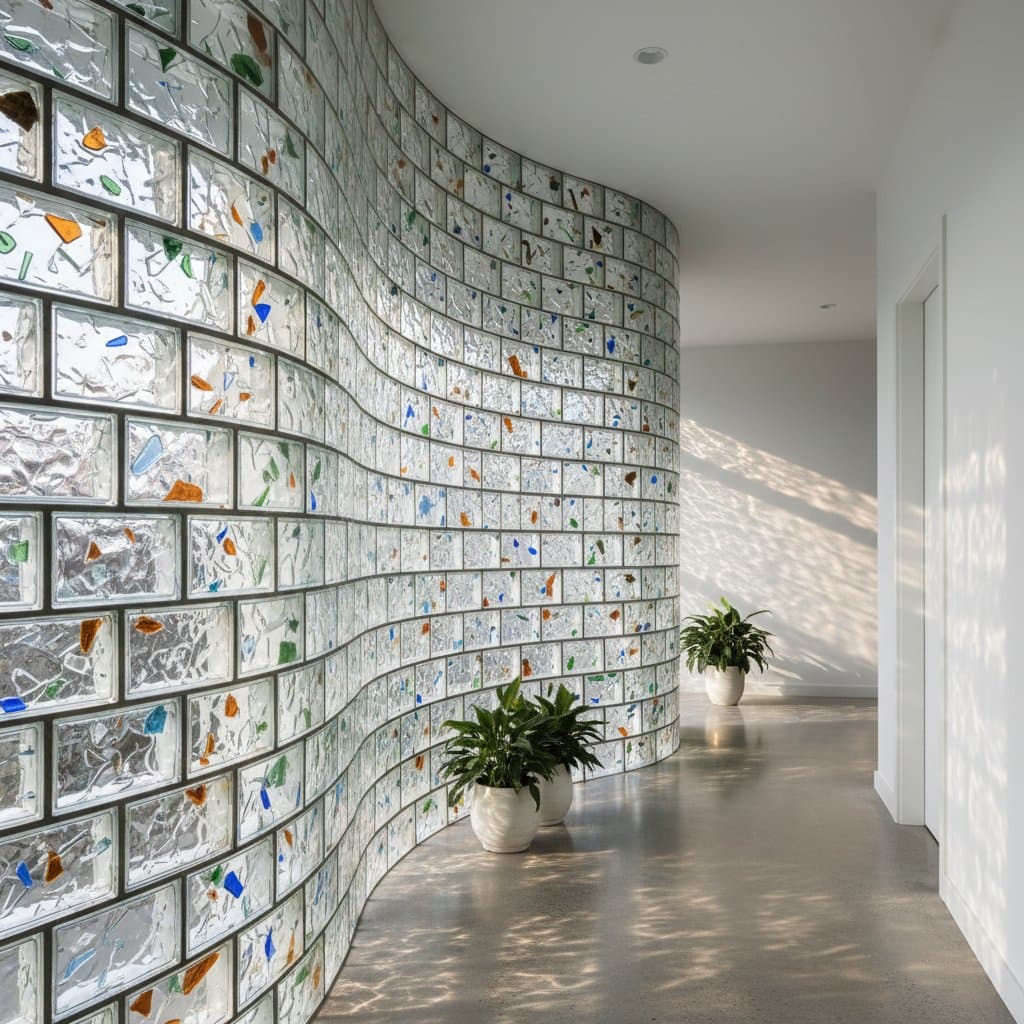
2026's Eco-Bricks: Recycled Glass Transforms Masonry
Recycled glass bricks, often called eco-bricks, are reshaping how builders and homeowners think about masonry. These blocks use crushed post-consumer glass mixed with binders to form structural or decorative units. They look similar to traditional clay or concrete bricks but carry a smaller environmental footprint and a distinct translucent shimmer that sets them apart in design.
What Eco-Bricks Are
Eco-bricks made from recycled glass combine finely ground glass cullet with cementitious or polymer binders. The mixture is molded under pressure and cured to create dense, durable blocks suitable for walls, facades, and landscape features. The glass content gives them unique reflective qualities and makes them resistant to moisture and staining.
Pros and Cons
Pros
- Uses waste glass that would otherwise go to landfills
- Offers striking visual effects with light reflection and color depth
- Resists water absorption and freeze damage better than many clay bricks
- Reduces demand for virgin sand and aggregates
- Often lighter than standard masonry units
Cons
- Can cost more due to specialized production and shipping
- Limited local supply in some regions
- Requires compatible mortar and installation methods to prevent cracking
- May not suit traditional appearances where uniform matte finishes are preferred
- Harder to cut cleanly without proper tools
Typical Costs
Material costs for recycled glass bricks usually range from about 8 to 16 dollars per square foot, depending on color, translucency, and finish. Installed costs run roughly 20 to 35 dollars per square foot, including mortar, labor, and support materials. Decorative applications with backlighting or custom colors can climb higher. Costs rise with small batch orders, complex patterns, or remote delivery.
Lifespan and Maintenance
Eco-bricks can last 50 years or more when laid correctly. They resist fading because the color comes from the glass itself, not surface coatings. Maintenance is minimal. Wash occasionally with mild detergent and water. Avoid acidic cleaners that could dull the surface. Check mortar joints every few years for cracks or gaps. Reseal joints or replace damaged units as needed, but full replacement is rare.
Specs to Check
Before buying, confirm the following:
- Compressive strength: At least 3,000 pounds per square inch for load-bearing walls
- Water absorption: Under 5 percent for freeze-thaw durability
- Unit size: Common sizes match standard bricks, about 8 by 4 by 2 inches, but decorative types vary
- Edge shape: Square or chamfered edges affect joint appearance
- Fire rating: Non-combustible materials should meet code for structural walls
- Color and finish: Consistency across batches, especially when mixing translucent and opaque pieces
Planning and Prep
Plan for proper drainage and base support just as you would for concrete or clay brick. Ensure the site has:
- A stable, compacted base free of organic material
- Proper slope away from structures for water runoff
- Access for handling heavier pallets safely
- Dry storage if work pauses between courses
If building near grade, add gravel under footings for drainage. For walls above four feet, check local code for footing depth and reinforcement rules.
Installation Overview
The basic installation process is similar to standard masonry but requires more care in handling to avoid chipping the glass surface.
- Lay out the pattern. Snap chalk lines or use spacers for consistent joints.
- Prepare the mortar. Use high-bond, flexible mortar designed for low-absorption units.
- Butter each brick. Apply even mortar coverage on ends and base.
- Set from the corners. Work inward, checking level and plumb often.
- Strike joints. Smooth or flush joints while mortar is workable.
- Clean faces. Wipe mortar residue before it hardens to prevent haze.
- Cure properly. Protect from freezing or heavy rain until mortar sets.
For decorative walls or interior panels, builders sometimes use clear epoxy joints instead of mortar to enhance light transmission.
Patterns and Appearance Options
Eco-bricks come in a variety of finishes:
- Translucent blocks: Allow light diffusion, ideal for interior partitions
- Opaque bricks: Look similar to ceramic or concrete units, suitable for exteriors
- Mixed-color blends: Combine recycled glass of different hues for mosaic effects
- Textured surfaces: Add grip for outdoor steps or decorative facades
Common patterns include running bond, stack bond, and herringbone. Choose running bond for strength, stack bond for modern looks, and herringbone for visual movement on patios or walls.
DIY or Hire a Pro
DIY fits when:
- The wall is short or non-structural
- The layout is simple with straight lines
- You have experience mixing mortar and checking level
Hire a pro when:
- The project supports loads or needs engineered footing
- You plan lighting behind translucent bricks
- The design uses curved or elevated surfaces
- Access is tight or lifting equipment is required
Working with glass units requires eye and hand protection. Always wear gloves and goggles when cutting or handling edges. Use a wet saw with a diamond blade to control dust and prevent chipping.
Common Failures and Fixes
Cracking: Often caused by rigid mortar or uneven base settlement. Use flexible mortar and proper control joints.
Hazing: Residue left from mortar film. Clean with a pH-neutral cleaner and soft brush.
Loose joints: Result from poor compaction or freeze-thaw cycles. Repoint with compatible mortar.
Color mismatch: Happens when mixing batches. Always blend from multiple pallets before installation.
Quick inspection once a year helps catch small issues before they spread.
Regional and Climate Notes
In cold climates, choose bricks rated for freeze-thaw exposure. The low absorption rate of glass helps resist spalling, but mortar choice matters just as much. Areas with high salt exposure, such as coastal zones, should use sulfate-resistant binders. In hot, sunny regions, light-colored glass bricks reduce heat buildup and glare. For seismic zones, follow local reinforcement guidelines and tie walls securely to frames.
Environmental Benefits
Each recycled glass brick diverts roughly one to two bottles worth of waste from landfills. The production process uses less energy than firing clay bricks, since glass melts at lower temperatures than raw clay requires for vitrification. Many manufacturers use renewable electricity and capture curing heat to lower emissions. Some even combine glass cullet with reclaimed fly ash or slag for added sustainability.
Alternatives to Consider
If recycled glass bricks are not available or exceed your budget, compare these options:
- Recycled concrete blocks: Lower cost, good strength, but heavier and less decorative
- Compressed earth blocks: Natural look with low embodied energy, but need sealing in wet climates
- Autoclaved aerated concrete (AAC): Lightweight and insulating, though less durable against impact
- Reclaimed clay bricks: Authentic patina and history, but limited supply and inconsistent sizing
Glass bricks strike a balance between aesthetics and environmental performance. They sit between purely structural materials and artistic finishes.
Estimating Quantities
To estimate how many bricks you need, measure the wall area in square feet and multiply by five for standard-sized units. Add at least 10 percent for cuts and waste. Plan your base depth at about six inches of compacted gravel for freestanding walls, then allow for mortar joints of about three-eighths inch.
Safety and Code Reminders
Call to locate buried utilities before digging footings. Follow local permit requirements for retaining walls or structural facades. When cutting glass bricks, use water to suppress dust and wear a respirator if dry cutting is unavoidable. Keep the work area clean to avoid slips from glass fragments. Ensure scaffolding or ladders are stable since glass bricks can be slippery when wet.
Buying and Spec Checks
Confirm that the product carries third-party testing for compressive strength, water absorption, and fire rating. Ask for batch certificates if buying large quantities. Match mortar color to the brick tone or use transparent joint materials if you want a continuous glass look. Order extra bricks for breakage since special orders can take weeks to replace.
Energy and Light Benefits
One of the strongest appeals of recycled glass bricks is their ability to transmit or reflect light. When used in exterior walls with insulation backing, they can reduce the need for artificial lighting during the day. Interior feature walls gain a sense of depth and sparkle without added fixtures. For outdoor uses, such as garden walls or path edges, glass bricks catch ambient light and improve visibility at night.
Pro Tips for Success
- Keep bricks clean during installation. Residue is harder to remove once cured.
- Mix mortar in small batches to maintain workable consistency.
- Dry-fit the first course before applying mortar to confirm layout.
- Protect edges with temporary padding when moving stacked units.
- Allow full cure before applying sealers or lighting systems behind the wall.
These steps improve finish quality and limit costly rework.