
Quick Take
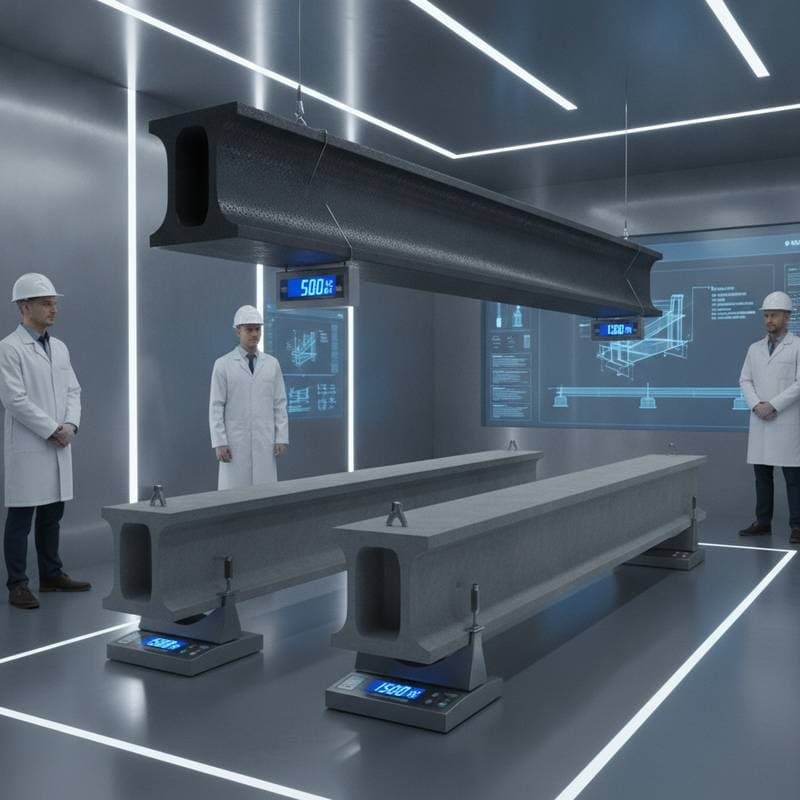
Graphene concrete alters conventional assumptions about strength and mass in construction materials. It achieves up to three times the strength of standard concrete while weighing roughly half as much. Success hinges on exact mixing ratios, controlled curing conditions, and verified material quality. The primary expenses arise from sourcing, dispersion equipment, and batch testing rather than from the graphene itself.
Pre Project Checks
Homeowners and builders should complete targeted evaluations before specifying graphene concrete.
- Identify locations where reduced mass provides the greatest advantage, including upper level floors, extended spans, and cantilevered elements.
- Assess site conditions for consistent temperature control and access to precision mixing equipment.
- Verify that the design team has recalculated foundation loads, anchorage points, and lateral force resistance based on lighter structural weights.
- Confirm dry, sealed storage for graphene additives to prevent moisture exposure.
- Request laboratory reports that document compressive strength and density results for the proposed mix.
- Review the curing protocol to ensure moisture retention methods match project climate conditions.
Warning Signs
Several indicators suggest a supplier or mix may not deliver expected performance.
- Absence of independent laboratory data confirming mechanical properties.
- Use of vague terminology that conceals the graphene source or dispersion method.
- Prices substantially below typical market rates, often indicating insufficient graphene loading.
- Assertions that the material requires no curing or will never crack.
- Missing documentation for local code compliance or freeze thaw durability.
- On site mixing performed without calibrated dosing systems.
- Substitution of graphene concrete without prior structural engineering review.
Cost Expectations and Adjustments
Graphene concrete remains a premium product. Budget 1.5 to 3 times the cost of conventional high performance concrete per cubic yard. Savings appear through reduced volume, lighter transport, and decreased reinforcement.
Structural slabs and decks typically range from 250 to 400 dollars per cubic yard. Precast panels produced under controlled factory conditions cost 20 to 40 dollars per square foot. Steel reinforcement can decrease by 15 to 30 percent in optimized designs. Lighter components reduce crane time and handling expenses by 10 to 20 percent.
Adding graphene powder without dispersion control creates weak zones. Always require proof of uniform particle distribution through microscopy or batch sampling. Structural engineers must re evaluate load paths and vibration criteria whenever section thicknesses are reduced.
Repair Decisions
Structural Members
Graphene modified overlays or jackets can restore capacity to cracked or corroded decks and beams at lower added weight. Bond these repairs only after thorough surface preparation. Full replacement remains necessary when reinforcement corrosion or extensive delamination compromises safety.
Foundations
New foundations on marginal soils benefit from the high strength to weight ratio that lowers bearing pressures. Effective drainage and grading must precede any concrete placement. Graphene mixes address neither chronic moisture issues nor poor soil preparation.
Floor Systems
Sound base slabs accept thin graphene overlays to correct surface wear while adding minimal thickness. Complete slab replacement is warranted only when differential movement cannot be stabilized.
Vertical Elements
Existing walls that remain plumb and dry can receive graphene coatings to seal microcracks and increase surface hardness. Replacement is appropriate solely when repeated water intrusion or misalignment persists after repair attempts.
Project Team Requirements
Successful outcomes depend on coordinated expertise from the outset.
- Engage a structural engineer experienced with high performance composites to validate revised load calculations.
- Involve the architect during schematic design to confirm code compliance and fire resistance for thinner sections.
- Select a general contractor who has completed comparable work or can supply detailed mixing and curing procedures.
- Retain a materials laboratory consultant to validate trial batches before full scale production.
Simultaneous supplier and contractor evaluation prevents later conflicts between design assumptions and actual mix capabilities. Professional project management typically increases fees by 10 to 20 percent yet reduces costly field adjustments.
Priority Focus Areas
Allocate resources to applications that produce measurable structural gains. Emphasize weight reduction that directly lowers foundation and framing costs. Capitalize on improved barrier properties for corrosion protection in aggressive environments. Defer purely decorative uses until material costs decline. Avoid unverified thin coatings marketed as graphene enhanced.
The clearest advantages appear in roof decks, bridge components, and cantilevered balconies where mass reduction yields immediate engineering benefits.
Work Sequence
Follow a deliberate order to protect performance.
- Complete site drainage verification to eliminate standing water near foundations.
- Obtain structural confirmation that lighter members satisfy stiffness and deflection limits.
- Conduct supplier trials under actual site temperatures and humidity.
- Place a mock up panel to evaluate workability, finish quality, and curing behavior.
- Execute the main placement while recording batch data and environmental conditions.
- Maintain consistent moisture during curing until compressive tests meet design targets.
- Proceed with subsequent trades only after strength verification.
Curing must never be accelerated to meet schedule deadlines, because rapid drying introduces microcracks that negate graphene benefits.
Material Characteristics
Graphene consists of a single layer of carbon atoms in a hexagonal lattice. Within concrete it functions as nano scale reinforcement that bridges microcracks and improves bonding among hydration products. The outcome includes higher compressive, tensile, and flexural strength values.
The low density of graphene reduces overall mix weight even at low addition rates. This change permits thinner members that carry equivalent loads. Graphene also decreases permeability, slowing reinforcement corrosion and extending service life in marine or deicing salt environments.
Uniform dispersion remains essential. Clumping caused by inadequate mixing creates stress concentrations. Surfactants or polymer carriers help maintain stable suspension throughout the batch.
Ongoing Care
Graphene concrete exhibits superior resistance to cracking and chemical attack. Annual inspections of joints, sealants, and surface coatings remain necessary to preserve these advantages. When repairs are required, use compatible graphene modified materials after bond testing.
Implementation Steps
Begin with a single structural element or test panel. Compare weight, placement characteristics, and compressive results against conventional concrete. Consult a structural engineer regarding the effects of reduced mass on vibration, fire resistance, and overall system behavior. Document every mix proportion and curing record. When executed with consistent controls, graphene concrete produces stronger, lighter, and more durable structures that establish a higher performance standard.