
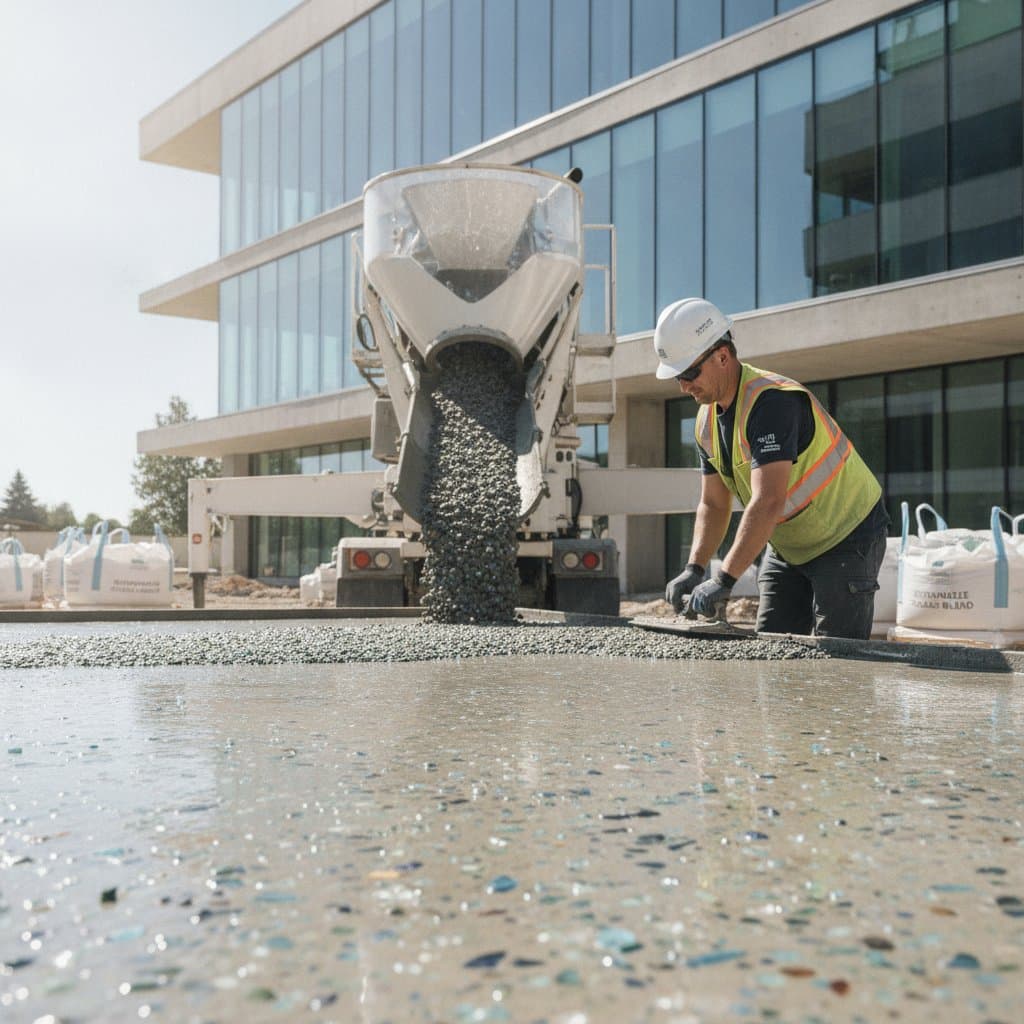
Recycled Glass Concrete Offers a Practical Path to Sustainable Construction
The construction industry continues to adopt materials that cut waste and limit carbon output. Recycled glass concrete stands out as a reliable option that converts discarded bottles and industrial glass into durable building components. This approach substitutes crushed glass for portions of traditional sand or gravel while maintaining structural performance.
Core Performance Data
- Average installed cost falls between 110 and 150 dollars per cubic yard, allocated roughly 60 percent to materials, 30 percent to labor, and 10 percent to equipment.
- Glass aggregate can replace 10 to 40 percent of coarse or fine aggregate by volume.
- Compressive strength typically reaches 3,000 to 6,000 PSI after 28 days.
- Initial curing requires seven days, with full design strength developing by day 28.
- Glass type and particle size must be chosen according to finish goals, load requirements, and alkali reactivity limits.
How Recycled Glass Integrates into Concrete Mixes
Recycled glass concrete replaces natural aggregates with cleaned and graded post-consumer or post-industrial glass. Suppliers sort, wash, and crush the glass to precise sizes that promote consistent bonding with cement paste. The finished surfaces often display a reflective quality that suits both interior and exterior applications.
Three main forms serve different purposes. Fine glass powder functions as a partial cement replacement and improves density. Crushed chips create decorative effects similar to terrazzo. Foamed glass provides lightweight insulation for nonstructural fills.
Each ton of glass aggregate reduces landfill volume and decreases the need to quarry virgin sand and gravel. When glass powder replaces a share of cement, overall embodied carbon declines further.
Material Selection and Site Preparation
Evaluate local supply, color consistency, and reactivity before ordering. Most projects require Portland cement, graded glass aggregate, a pozzolanic additive such as fly ash or silica fume, controlled water content, and reinforcement where loads demand it.
Building codes generally reference ASTM C33 for aggregates and ASTM C150 for cement. When glass exceeds 20 percent of total aggregate, expansion testing for alkali-silica reaction becomes necessary. Confirm acceptance with the local building department before ordering materials.
Prepare a compacted, well-drained subgrade. Wash glass aggregate to remove dust, then screen it to the target size range from three-eighths inch down to one-sixteenth inch.
Batching, Placement, and Initial Finishing
Combine cement, water, and admixtures first, then introduce glass aggregate. Mix for a minimum of five minutes to achieve uniform distribution without excessive grinding. Place the concrete promptly and consolidate with vibrators or screeds.
For exposed-aggregate finishes, allow partial curing before grinding the surface with diamond pads. This step reveals the glass particles and produces a polished appearance suitable for floors or countertops.
Curing, Quality Checks, and Protection
Maintain moisture for at least seven days using wet coverings or misting systems. Test compressive strength at seven and 28 days. Inspect surfaces for uniformity and signs of alkali reaction before applying a compatible sealer.
Managing Alkali-Silica Reaction and Surface Issues
Alkali-silica reaction can cause expansion when certain glass types contact cement alkalis. Specify low-alkali cement and include pozzolanic additives. Limit glass content to 25 percent or less unless laboratory testing confirms safe performance.
Surface dullness often results from overmixing. Shorten mixing cycles and monitor equipment speed. Color variation between batches is minimized by pre-blending glass from multiple sources and casting test panels.
Ongoing Care and Inspection
Examine polished surfaces every six months for cracks wider than one-sixteenth inch. Reapply sealer every three to five years and re-polish interior floors when gloss fades. Avoid acid cleaners and de-icing salts that can etch glass.
When to Engage Professionals
Countertops and small stepping stones remain feasible for experienced do-it-yourself builders and can reduce labor costs by 25 to 40 percent. Structural slabs larger than 200 square feet require contractors familiar with specialty aggregates. Request mix designs and verify licensing before work begins.
Practical Steps for First-Time Users
Test a small batch to confirm workability and final color. Keep moisture levels steady throughout curing. Document exact proportions for future repairs. Coordinate with regional recycling centers to maintain a reliable supply of clean, sorted glass.