
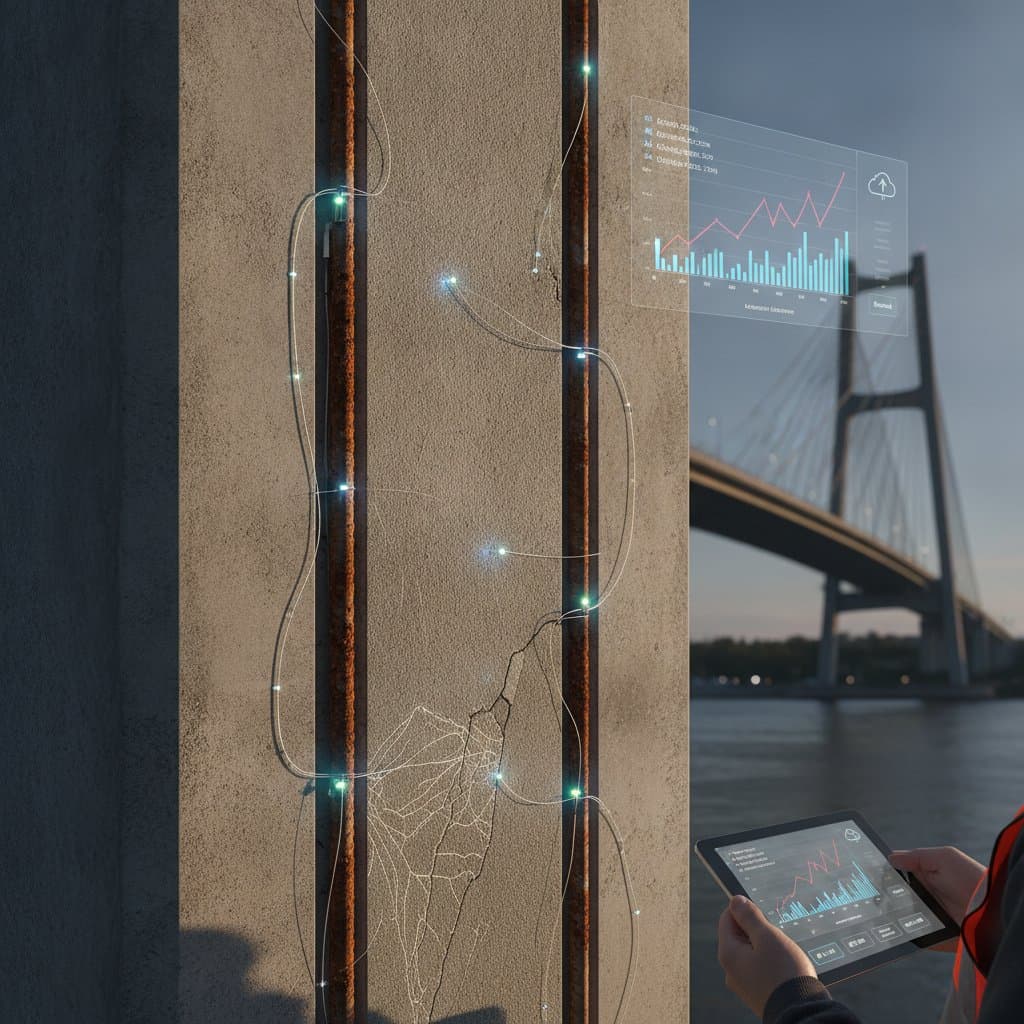
Understanding Concrete Sensors That Predict Structural Failures Early
Concrete sensors form a core component of structural health monitoring systems. These compact devices measure internal conditions such as moisture, temperature, pH, strain, and corrosion potential. Continuous data collection allows engineers to identify stress zones and schedule repairs before visible cracks or failures develop.
Traditional surface inspections occur at intervals and often miss early internal changes. Embedded sensors provide ongoing readings from within the material where deterioration typically originates. This approach safeguards occupants and assets while extending service life for bridges, tunnels, foundations, and parking structures.
Why Predictive Sensing Matters
Internal concrete chemistry shifts over time due to water infiltration, salt exposure, and temperature cycles. Microscopic defects form and propagate without detection. Sensors convert these physical and chemical changes into measurable signals that support proactive intervention.
The approach benefits transportation networks, commercial facilities, and industrial sites. It also advances sustainability targets by limiting unnecessary demolition and material replacement. Maintenance teams move from reactive fixes to planned interventions that lower overall costs and operational interruptions.
How Smart Concrete Sensors Work
Each unit incorporates transducers that convert physical or chemical conditions into electrical signals. Common sensor categories include strain gauges for deformation tracking, temperature probes for thermal monitoring, corrosion detectors for reinforcement assessment, moisture meters for humidity measurement, and pH sensors for chemical balance evaluation.
Wireless models transmit readings to cloud platforms where algorithms compare current values against established baselines. Alerts notify teams when thresholds are exceeded and indicate the affected location and severity level.
Planning a Monitoring System
Successful implementation begins with a defined strategy that addresses placement, power supply, and data security.
Site Assessment
Review exposure to de-icing salts, freeze-thaw cycles, heavy traffic, or chemical contact. Focus on joints, beams, and load-bearing supports where cracks commonly initiate. Space sensors at intervals of several square feet in vulnerable zones according to structural drawings.
Required Measurements
Document concrete cover depth, reinforcement location, and existing crack dimensions. These values guide sensor selection and installation depth. Capture initial readings immediately after placement to establish reference points.
Environmental and Communication Considerations
Temperature and moisture variations influence electrical resistance and sensor accuracy. Select devices rated for local conditions. In coastal or industrial settings, prioritize corrosion monitoring. Thick concrete or dense reinforcement may require signal repeaters or wired connections.
Sensor Options and Selection
Embedded wired sensors install before the pour and supply continuous power with reliable transmission. Replacement after curing is difficult, and costs range from moderate to high.
Wireless embedded sensors use batteries or energy harvesting and simplify data collection. Range and battery duration remain limited, yet installation is more accessible for many projects.
Surface-mounted sensors attach with adhesive or anchors after concrete hardens. They capture only external conditions and suit smaller-scale or temporary monitoring.
Acquire roughly ten percent additional units to accommodate units damaged during placement.
Tools and Materials
- Drill with masonry bits
- Trowel and float
- Protective gloves and goggles
- Wireless gateway or data logger
- Sealant or epoxy
- Laptop or mobile device with visualization software
Installation Steps
- Mark sensor locations on structural drawings before concrete placement.
- Verify battery status, calibration, and identification codes.
- Position sensors at specified depths while keeping antennas or leads accessible.
- Pour concrete while preventing displacement or voids around each unit.
- Connect gateways after curing and confirm signal strength.
- Record baseline values under stable conditions.
- Configure analytics software and define alert thresholds.
Cross-check readings from sensors in comparable locations to confirm consistency.
Maintaining Long-Term Performance
Schedule periodic reviews of data trends and sensor condition. Replace batteries or units as needed and update predictive models with new environmental data. This ongoing process sustains early-warning capability and maximizes return on the monitoring investment.