
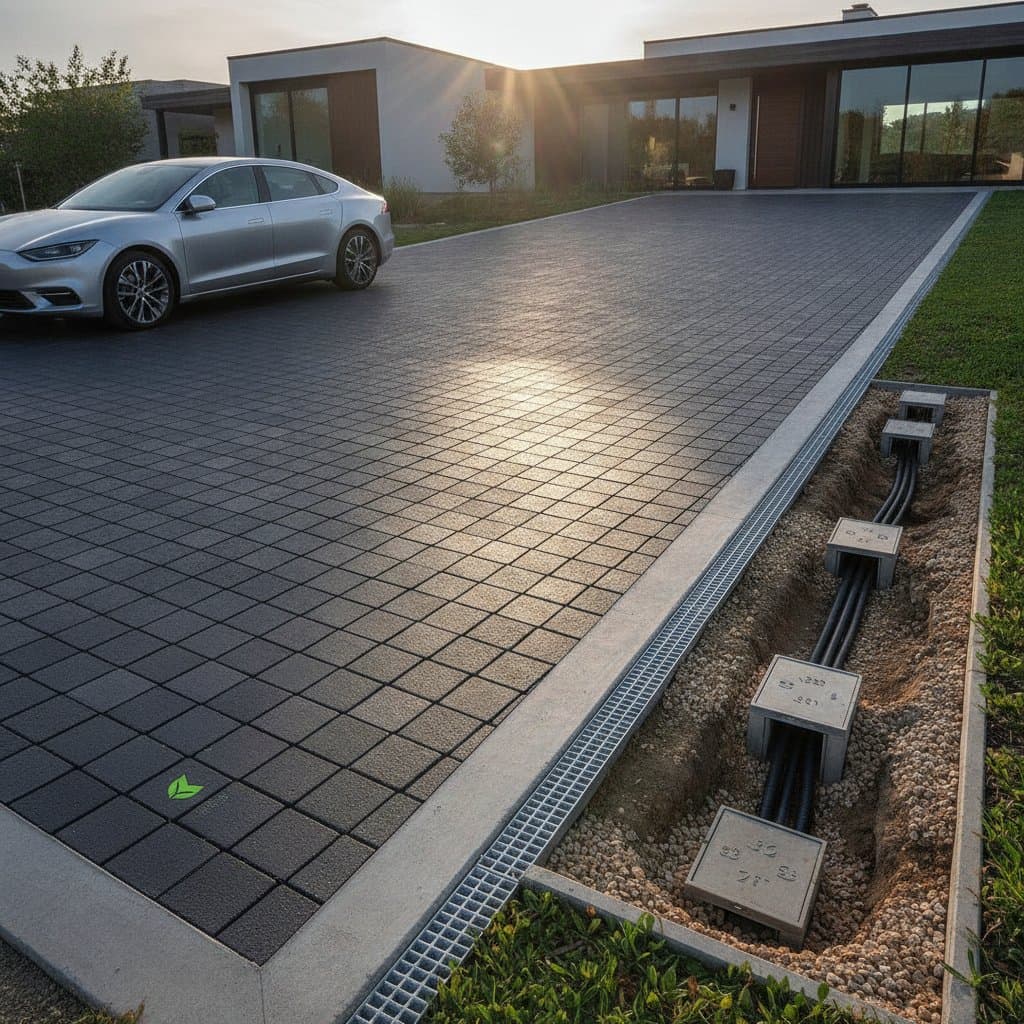
Solar Driveways Require Careful Site Preparation
Quick Assessment
A solar driveway converts an ordinary surface into an energy-producing asset. It generates electricity while handling vehicle and pedestrian traffic. Primary concerns include installation expenses, long-term durability, and integration with home electrical systems. Key cost factors involve the paving material, wiring configuration, and connection to the inverter.
Site Evaluation Steps
Examine the location thoroughly before selecting products. Assess slope, shade patterns, and water drainage. The surface must drain quickly and remain unobstructed to sustain energy production.
Perform these basic checks to determine feasibility:
- Observe surrounding rooflines and trees to measure direct sunlight exposure on the driveway area.
- Record shade levels during morning, midday, and evening hours.
- Identify locations where water collects after rainfall, as pooled water impairs performance and reduces lifespan.
- Examine the current pavement for cracks, frost damage, or oil stains, since unstable ground or inadequate drainage will compromise any solar pavers.
- Verify available capacity in the electrical service panel and access for conduit routing to the driveway.
These evaluations indicate whether the site supports solar paving or requires preparatory work on grading and electrical infrastructure.
Potential Issues
- Significant shade cast by trees or structures.
- Inadequate drainage leading to water accumulation.
- Visible cracks or uneven surfaces indicating foundation problems.
- Slopes directing water toward buildings.
- Absence of viable routes for electrical conduit.
- Regions experiencing frequent freeze-thaw damage to standard pavements.
Such conditions raise expenses or hazards. Shade diminishes energy yield. Drainage problems increase upkeep and risk electrical issues. Unstable bases result in paver failure and financial loss.
Correction Options and Estimated Expenses
Solar driveways consist of modular panels or pavers equipped with photovoltaic cells. Units link via waterproof cables to an inverter and then to the household system.
Common solutions include:
- Drainage improvements through grading and trench drains, costing 5 to 15 dollars per square foot based on soil type and terrain.
- Foundation reconstruction involving excavation, gravel compaction, and sand bedding, ranging from 8 to 20 dollars per square foot.
- Solar paver placement at 60 to 100 dollars per square foot, covering wiring and inverter components.
- Electrical integration between 2,000 and 6,000 dollars, varying with run length and system size.
Attempts to install over deteriorated pavement without addressing underlying problems lead to premature failure from moisture or shifting.
Project expansion often occurs when adding features such as lighting, snow melting, or vehicle charging during trenching.
Maintenance Approaches
For existing concrete or asphalt, address cracks and drainage prior to any solar consideration. Proceed with full replacement only upon base instability or surface deterioration.
Individual solar modules can be swapped when performance declines or seals degrade. Systems support isolated replacements.
Address corroded wiring connections without delay. Inverters typically require replacement before the pavers reach end of life.
Overlay options exist for sound driveways. These lower-cost films adhere to the surface but generate less power and demand more frequent renewal.
Project Team Assembly
Solar installations involve multiple specialties. Assemble participants at the outset.
- Select an inspector experienced in paving and electrical standards to identify defects early.
- Engage an engineer for structural calculations, drainage plans, and regulatory adherence.
- Use a general contractor to manage excavation, base preparation, and final surfacing.
- Include an electrician for system sizing and utility approvals.
- Rely on manufacturer-certified installers to uphold warranties.
Simultaneous evaluation of team members confirms alignment. Professional oversight adds 10 to 20 percent to total cost yet avoids later corrections.
Installation Sequence
Allocate resources to maximize returns and minimize risks:
- Establish correct grading and drainage ahead of electrical components.
- Create a robust base resistant to seasonal shifts.
- Place conduits and junction boxes prior to surface work.
- Apply the solar layer after completion of heavy operations.
Beneficial additions feature controllers routing power to storage or chargers, along with integrated snow-melt systems.
Avoid complex patterns that hinder wiring or zones with limited sun exposure.
Retain effective existing drainage features.
Work Order
Follow this progression for optimal results:
- Document sun exposure and drainage patterns.
- Adjust slopes and reinforce the subgrade.
- Lay protective conduits.
- Construct the base layer.
- Position the solar units.
- Complete electrical connections and verify function.
- Seal all joints and confirm water flow.
Drainage and structural elements precede power systems. Finishes come after validation.
A single oversight, such as uninspected conduit, can necessitate surface removal later.
Ongoing Care
Regular cleaning removes dirt, oil, and snow that hinder output. Use gentle cleaners and brushes. Skip harsh deicers. Check seals seasonally.
Track production via monitoring apps. Rapid declines indicate problems requiring prompt attention.
Reapply protective coatings periodically. Exchange faulty units immediately to maintain balance.
Payback periods depend on local sun exposure, utility rates, and equipment longevity. Benefits arise from reduced bills and lower maintenance demands. The surface serves dual purposes as access and generator.
Review all warranties covering mechanical, electrical, and environmental factors before signing agreements.
Begin exploration with sunlight and drainage assessments. These steps involve minimal expense and clarify site readiness.