
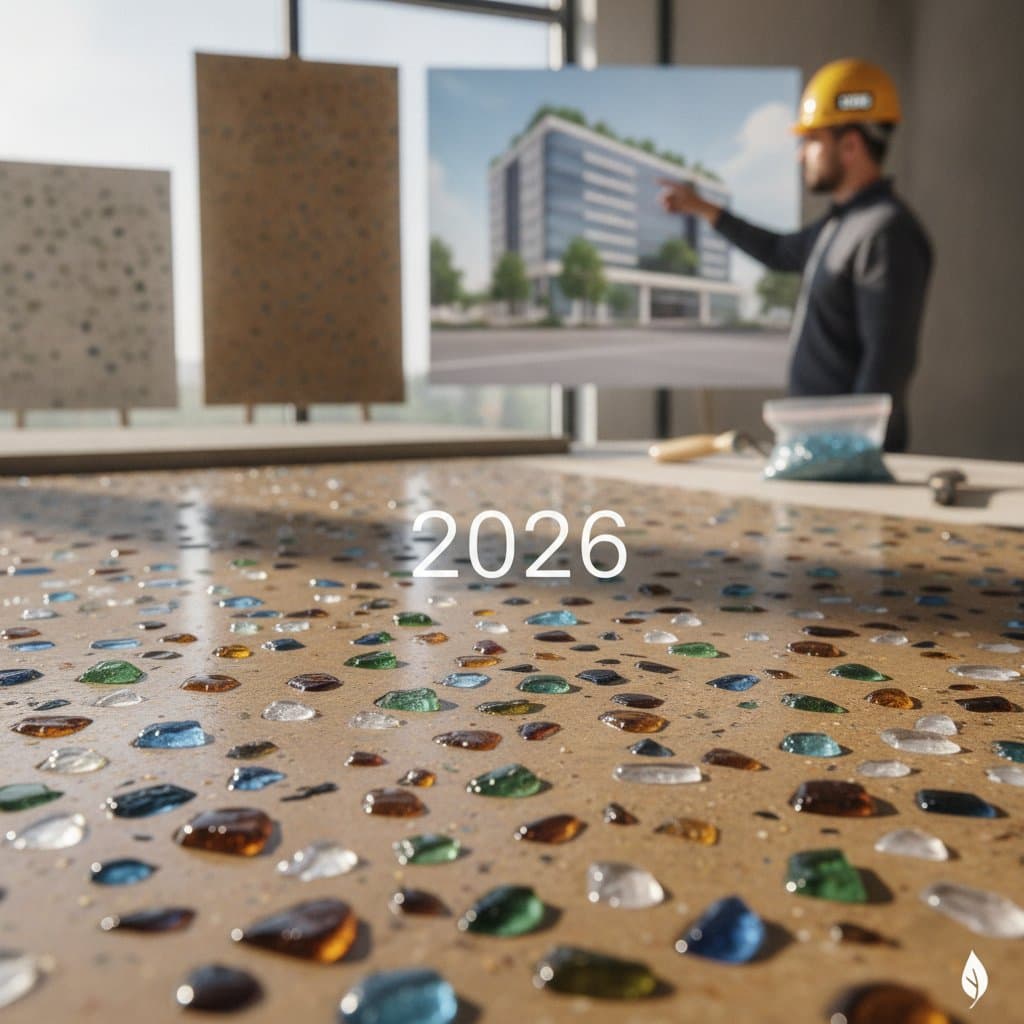
Recycled Glass in Concrete: 2026's Sustainable Trend
Concrete serves as the backbone of modern construction, yet its environmental footprint drives demand for sustainable alternatives. Recycled glass offers one effective option by converting waste into an aggregate that improves durability and visual appeal. This approach supports green building goals while delivering practical performance benefits.
Key takeaways
- Cost range spans 110 to 140 dollars per cubic yard, with materials comprising 55 percent, labor 35 percent, and equipment 10 percent.
- Crushed glass particles measure between one eighth inch and three eighths inch for decorative applications.
- Standard curing requires seven days before basic handling and 28 days to reach full strength.
- Recycled glass replaces 10 to 30 percent of fine aggregate by weight in typical mixes.
- Primary decision factors include aesthetic goals, surface finish needs, local glass availability, and target compressive strength.
How Recycled Glass Functions in Concrete
Recycled glass concrete substitutes finely ground or crushed glass for portions of traditional sand or gravel. The glass originates from bottles, windows, or industrial waste streams. When processed correctly, it integrates with cement paste to provide both structural reinforcement and reflective surface qualities.
Glass remains nonporous and chemically stable after proper treatment. Its angular particle shape enhances mechanical interlock within the mix. This property contributes to higher overall strength while producing a distinctive sparkle valued in countertops, floors, and landscape elements.
Common Glass Types
- Post consumer glass collected from bottles and jars through recycling programs.
- Post industrial glass sourced from manufacturing rejects such as tempered panels.
- Colored glass selected for aesthetic surfaces and terrazzo style finishes.
- Clear glass applied in structural mixes where appearance remains secondary.
Planning and Cost Factors
Project success depends on mix design, local material access, and finishing objectives. Some jurisdictions require verification that recycled aggregates meet ASTM C33 standards. Structural uses often need laboratory confirmation of compressive strength and expansion resistance.
Recycled glass concrete typically costs 10 to 20 percent more than conventional mixes because of added processing steps. Materials account for the largest share at 55 percent, followed by labor at 35 percent and equipment at 10 percent. The added expense frequently proves worthwhile for projects pursuing green certification or distinctive visual results.
Site and Material Preparation
Begin with clean, level formwork and compacted subgrade to minimize settlement risks. Gather Portland cement of Type I or II, uniformly sized recycled glass aggregate free of contaminants, potable water, plasticizers or pozzolanic admixtures, and appropriate reinforcement such as steel mesh or fibers.
Glass contains reactive silica that can trigger alkali silica reaction with cement alkalis. Incorporate fly ash, slag cement, or silica fume to bind excess alkalis and stabilize the matrix against expansion.
Execution Steps
- Prepare a trial batch by replacing 10 percent of fine aggregate with crushed glass. Test slump, air content, and compressive strength, then adjust proportions as needed.
- Combine ingredients in a drum or paddle mixer, adding glass gradually for even distribution without overmixing.
- Place concrete into forms and apply vibration sparingly to prevent particle segregation. Lightly trowel decorative surfaces to expose glass before curing.
- Maintain moisture for at least seven days using plastic sheeting or curing compounds. Delay grinding for polished finishes until at least 14 days have passed.
- Apply a penetrating sealer suited to the exposure conditions and reapply every two to three years in high traffic zones.
Quality Checks and Problem Solving
Examine cured surfaces for cracks, discoloration, or uneven aggregate exposure. Light polishing corrects minor surface flaws. Verify bond integrity between glass and paste to avoid delamination, and confirm compressive strength through regular testing.
Common issues include cracking from alkali silica reaction or rapid drying, which responds to pozzolanic additives and controlled curing. Uneven color often stems from inconsistent batching and improves with uniform glass sizing. Surface dullness requires continued polishing through finer grit stages. Weak edges benefit from added reinforcement and careful form removal timing.
Ongoing Care and Performance
Clean surfaces with pH neutral products and inspect annually for cracks wider than one sixteenth inch. Properly installed and maintained installations achieve service lives of 50 years or longer depending on mix quality and environmental exposure.
Practical Implementation Guidance
Wash and dry glass before use to eliminate contaminants. Blend varied colors and sizes for custom visual effects while keeping glass content below 30 percent to maintain strength. Store material dry to avoid clumping and select low shrinkage cement in humid or coastal settings.
Recycled glass concrete converts waste into a durable, attractive building material that meets both structural and environmental objectives across floors, countertops, and slabs.