
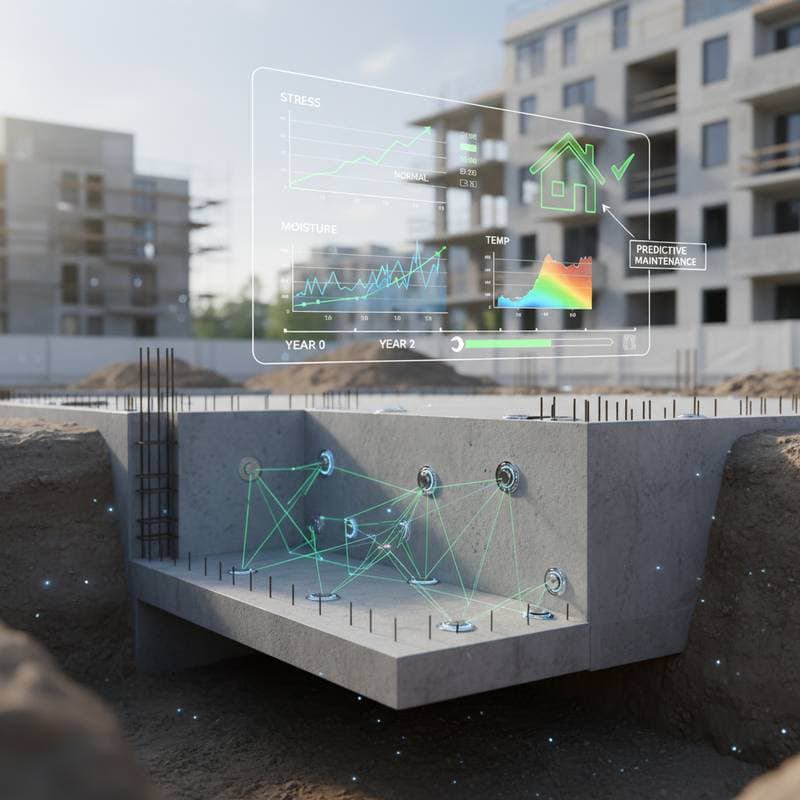
Predict Foundation Issues with Smart IoT Concrete Sensors
Smart technology is reshaping how buildings are designed, constructed, and maintained. IoT-enabled concrete sensors support real-time data collection from within a structure foundation. These sensors detect early signs of stress, moisture intrusion, or structural weakening long before visible damage appears. This guide explains how the sensors work, what benefits they provide, and how integration occurs in both new and existing construction projects.
Key Details
- Typical cost range falls between 1.50 and 3.00 dollars per square foot for integrated sensor systems, with about 60 percent for materials and 40 percent for installation.
- Sensors record data at intervals as short as every 10 minutes, with accuracy within plus or minus 1 percent moisture content and plus or minus 0.5 degrees Fahrenheit temperature.
- Installation depth usually places sensors 2 to 4 inches below the surface or near reinforcement zones.
- Systems can identify potential foundation issues 2 to 5 years before visible cracking or settlement.
- Required components include smart sensors, wireless transmitters, data analytics software, and secure cloud storage.
Planning for Integration
Whether constructing a new building or retrofitting an existing foundation, planning ensures effective sensor deployment.
Permits and Compliance
Most building codes do not yet require IoT sensors, yet systems must comply with electrical and wireless communication regulations. Check with local authorities before installation, especially when the system transmits data to external networks.
Budgeting and Cost Allocation
For new construction, integrating sensors during pouring adds minimal labor cost because installation occurs alongside reinforcement. In retrofit applications, small core holes may be needed to embed sensors, which increases cost by roughly 15 to 25 percent. Always include expenses for software subscriptions, which usually account for 10 percent of total cost.
Choosing the Right System
Select sensors rated for the foundation environmental conditions. Cold climates require sensors with extended temperature tolerance and frost detection capability. Humid regions call for models with high moisture resistance and corrosion-proof housing. High-load structures need sensors capable of reading compressive strain above 5,000 PSI.
Step-by-Step Sensor Installation
Position Sensors Before Pour
Place sensors on or near reinforcement bars. Secure them with plastic ties to prevent movement during concrete placement. Confirm alignment with design drawings. Keep leads accessible for connection to transmitters. Avoid placing sensors too close to edges to prevent damage.
Pour and Consolidate Concrete
Proceed with the pour as usual, ensuring vibration or tamping does not shift sensor placement. Maintain consistent coverage depth to achieve accurate readings.
Connect and Calibrate
After initial curing, connect the sensors to the wireless gateway. Calibration involves comparing sensor readings with manual measurements to confirm accuracy.
Begin Data Collection
Set up monitoring intervals and notification thresholds. The system should alert users when temperature or moisture levels exceed preset limits.
Analyze Early Data
Review graphs and trend lines to identify anomalies. For example, if one area retains higher moisture than others, it might indicate drainage issues or inadequate curing.
Ensuring Quality and Reliability
During the first 7 to 14 days, closely monitor curing conditions. IoT data can help adjust temperature or moisture control methods to optimize strength gain. After curing, perform visual inspections and compare findings with sensor data to validate performance.
Use manufacturer-provided software or third-party platforms with predictive modeling. These tools convert raw readings into actionable insights such as stress maps, crack probability, and long-term stability predictions.
Troubleshooting Common Challenges
Concrete and rebar can reduce wireless signal strength. Use repeaters or wired gateways to maintain reliable data transmission. Temperature swings or poor calibration can cause inaccurate data. Recheck calibration periodically and update software firmware to maintain accuracy. Most sensors use long-life batteries, yet always plan for replacements. For remote sites, consider energy-harvesting systems that draw power from vibrations or light exposure.
Maintaining the Predictive Monitoring System
Review sensor data weekly for unusual trends. Check gateway connections and power supply quarterly. Clean and reapply protective sealant at exposed nodes annually. Update software and security protocols as recommended by the manufacturer.
Track warning signs such as moisture readings more than 10 percent above baseline, which may indicate poor drainage. Temperature variations greater than 15 degrees Fahrenheit across similar zones can signal uneven curing or insulation problems. Strain levels exceeding 80 percent of design load require structural evaluation.
DIY Versus Professional Installation
If moderate construction experience and access to basic equipment exist, installing sensors during a small residential pour is achievable. Expect 30 to 40 percent cost savings by handling the installation directly. Always follow manufacturer guidelines for calibration and sealing.
Engage a licensed structural engineer or IoT specialist for large-scale projects, foundations deeper than 8 feet, or when integrating with complex building management systems. Professional installation ensures compliance with wireless standards and provides warranty protection for both sensors and software.
Long-Term Value of Embedded Monitoring
Smart IoT concrete sensors deliver continuous insight into building performance under real conditions. This approach supports maintenance planning based on measured data rather than estimates. Property owners gain the ability to address concerns early and extend structural service life.