
Quick Take
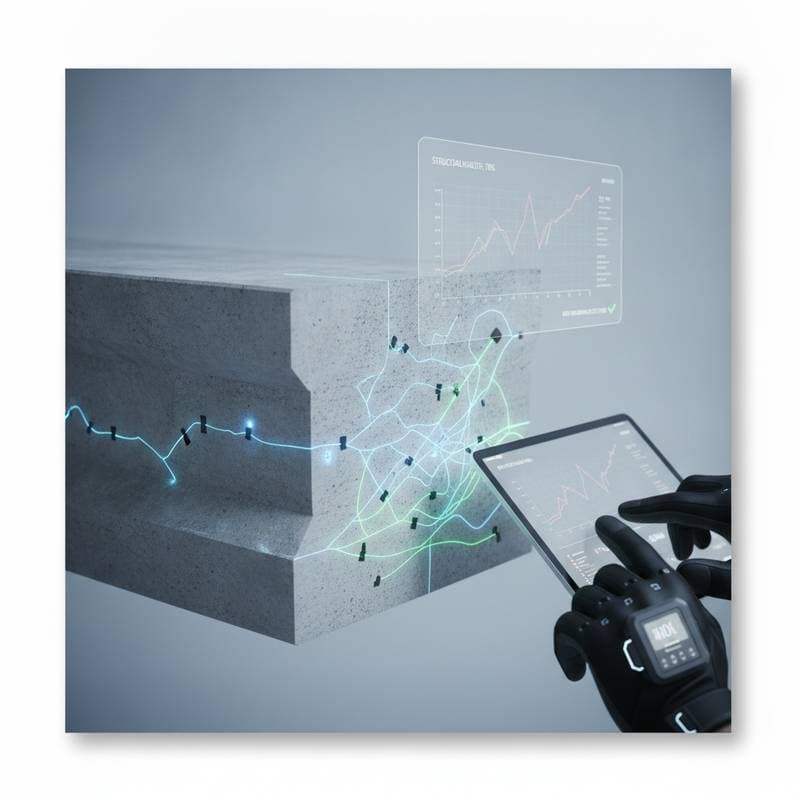
Concrete fails quietly before it fails visibly. Microcracks, trapped moisture, and chemical reactions work unseen until the structure loses strength. Repairing that damage later costs many times more than preventing it. Embedded concrete sensors now give owners early warnings so they can act before the structure becomes unsafe or too expensive to fix.
What To Check
A homeowner or facility manager can learn a lot before calling in specialists. Walk the property slowly and look for patterns that repeat.
- Check slabs, porches, and driveways for fine cracking or hollow sounds when tapped.
- Look under eaves and deck joints for seepage lines or white powder where water has leached minerals from concrete.
- In basements or garages, note damp patches that appear after storms.
- Observe changes in door and window fit, which can reflect slab movement.
- Review any prior patching work to see if it has separated or discolored.
These field checks give a reference point for what sensors should measure and where to place them.
Red Flags
- Consistent moisture under slabs with no clear drainage path.
- Rust stains or exposed rebar along joints.
- Surface scaling or flaking that worsens each season.
- Cracks that widen or shift with temperature changes.
- Vibration or heavy load areas showing surface dusting or pitting.
Any of these signals mean the internal chemistry of the concrete may already be changing.
Sensor Options and Costs
Sensor systems vary from small wireless pucks to embedded arrays tied to a monitoring platform. Basic sensors that read temperature and humidity within the slab start around a few hundred dollars per zone. Full systems that track pH, chloride levels, and strain can reach several thousand dollars for a large structure.
The real cost advantage lies in avoided repairs. A cracked foundation corner can cost several thousand dollars to stabilize. A full structural replacement can reach into the tens of thousands. The sensors pay for themselves if they give one early warning that prevents a major failure. Cheap surface sealers or patch kits rarely solve core moisture or corrosion problems. They hide symptoms and make later repairs more complex.
Repair Versus Replacement
When sensor data shows stable moisture and slow chemical change, targeted sealing or drainage correction is often enough. Replace only when readings show accelerating corrosion, deep cracking, or structural movement. For driveways and patios, slab replacement may be cheaper than chasing multiple surface repairs. For structural members like columns or retaining walls, preservation is usually better if reinforcement and drainage can be improved.
Team and Process
Bring in a structural engineer or materials specialist early to plan sensor placement and interpret data. A general contractor or concrete repair firm can handle installation and wiring. For larger or commercial properties, a monitoring service can track readings and send alerts. Coordination between these parties keeps data reliable and avoids rework. Professional oversight typically adds ten to twenty percent but reduces the risk of misdiagnosis and wasted repairs.
Scope Priorities
- Control water first through grading, gutters, and drainage.
- Stabilize structure and correct obvious settlement.
- Install sensors in areas with the greatest exposure or load.
- Review data after wet seasons to confirm stability.
- Only then consider cosmetic resurfacing or coatings.
Skipping steps leads to repeating damage under new finishes.
Protecting Structures with Data
Concrete sensors extend the life of old and new structures by turning hidden conditions into trackable data. They let owners act on evidence, not guesswork. Start by identifying one high-risk area, such as a damp corner or cracked stoop, and discuss with a structural engineer how simple monitoring could confirm what the eye cannot see. Early knowledge keeps both repair costs and stress low.