
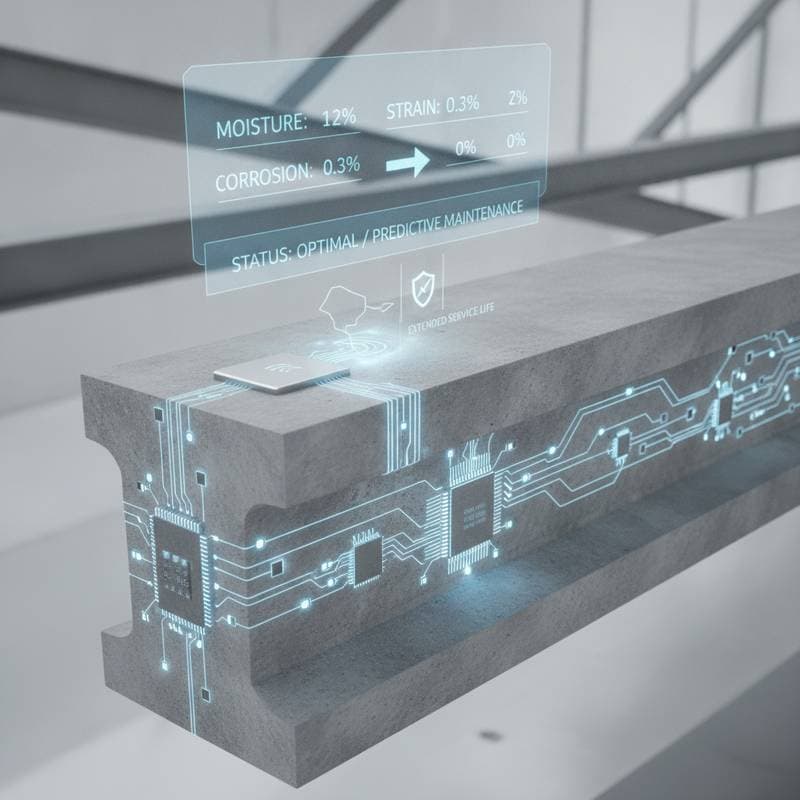
Embedded Sensors Enable Predictive Concrete Maintenance
Concrete is strong and durable, but it is not indestructible. Moisture, temperature swings, and chemical exposure slowly weaken it over time. Cracks form, rebar corrodes, and surfaces spall. Maintenance teams traditionally found these issues only after damage appeared. Embedded sensors now change that by turning concrete into a smart material that reports its own condition before failure starts.
What Embedded Sensors Do
Embedded sensors are small electronic devices cast directly into concrete. They track internal conditions such as moisture, temperature, strain, and corrosion activity. The data travels wirelessly to a monitoring system that alerts managers when the readings move outside safe ranges. Instead of waiting for cracks or surface damage, maintenance teams can act early while repairs are still simple and inexpensive.
These sensors form part of the Internet of Things. Each sensor works like a node in a network, sending continuous data for analysis. Software then detects patterns that signal stress, fatigue, or chemical attack long before they are visible from the outside.
Advantages and Limitations
The approach offers several clear benefits. It detects early warning signs that visual inspection misses. It reduces unplanned repairs and downtime. It extends service life through targeted maintenance. It provides continuous, objective data for engineers. It supports safer infrastructure management.
Limitations include higher upfront cost for sensors and the monitoring system. The system requires data management and calibration. Some sensors can fail under harsh conditions. Wireless transmission may be limited in dense concrete. Repairs on sensor-equipped areas may need specialized handling.
Cost Overview
Material costs for embedded sensors vary with type and function. Basic temperature and humidity sensors typically cost 15 to 50 dollars each. More advanced corrosion or strain sensors range from 80 to 300 dollars each. Installation adds roughly 2 to 4 dollars per square foot of monitored concrete, depending on layout and access.
The full monitoring system, including data receivers and software, can range from a few thousand dollars for small structures to tens of thousands for large facilities. The cost driver is the number of sensors and how detailed the data needs to be. When compared to the expense of major structural repairs or shutdowns, the investment often pays for itself within a few maintenance cycles.
Lifespan and Maintenance
Most embedded sensors last as long as the concrete itself if properly sealed and placed away from high-stress zones. Battery-powered models can run for 10 to 20 years before replacement. Some newer designs harvest energy from concrete strain or ambient vibrations, reducing maintenance even further.
Routine maintenance for the monitoring system involves checking calibration annually, verifying data transmission, and cleaning external receivers. If readings drift or sensors stop reporting, a technician can isolate the faulty unit and replace it through a surface port or external probe when practical.
Specifications to Verify
When evaluating sensor systems, confirm these specifications. The temperature range must suit expected service conditions. Moisture range and accuracy tolerance should match project needs. Corrosion potential measurement capability is useful if steel reinforcement is present. Wireless range and signal penetration through concrete require evaluation. Power source and expected lifetime affect long-term planning. Data format compatibility with analysis software or building management systems is essential.
Always verify that the sensors meet local building code and materials standards for embedded electronics.
Planning Steps
Plan sensor placement before concrete is poured. Identify high-risk areas such as near joints, rebar clusters, or chemical exposure zones. Sensors need firm contact with concrete but should not interfere with reinforcement placement. Mark each sensor location on as-built drawings for future reference.
Test the system for wireless connectivity before the pour. Once buried, it is difficult to reposition or repair sensors. Confirm that each unit is transmitting properly and that the receiving station records data correctly.
Installation Sequence
- Map sensor layout based on structural drawings.
- Mount sensors on rebar or support frames with non-corrosive ties.
- Route cables or wireless nodes to accessible points if needed.
- Calibrate sensors before concrete placement.
- Pour concrete carefully to avoid dislodging or damaging sensors.
- After curing, connect or activate the network and verify data flow.
Interpreting Data Patterns
Typical readings include internal temperature, relative humidity, and electrical potential between reinforcement and concrete. Rising moisture combined with a drop in resistivity often signals early corrosion. Excessive strain readings can point to settlement or overload. Software can flag these trends automatically, giving maintenance crews time to inspect and seal small cracks before they spread.
Professional Installation Requirements
Installing embedded sensors is generally not a task for nonprofessionals. It requires knowledge of concrete behavior, electrical safety, and wireless setup. Homeowners managing small slabs or driveways can use surface-mounted sensors to track moisture and temperature. Full embedded systems belong in the hands of professional engineers and contractors. Hire a professional when the structure supports heavy loads or serves as part of a building envelope.
Addressing Common Failures
Sensor failure can result from crushed housings, broken leads, or poor sealing. If a sensor stops reporting, check the power source and data receiver first. Wireless interference or damaged antennas are common issues. Moisture intrusion can also short out sensors.
Climate-Specific Considerations
Cold climates require sensors rated for freeze-thaw cycles and low-temperature operation. Coastal or deicing salt environments benefit from corrosion sensors that monitor chloride activity. In hot and arid regions, humidity sensors help track internal drying that can lead to shrinkage cracking.
Alternative Monitoring Methods
If embedding electronics is not practical, surface sensors and infrared scanning provide partial insight. Ground-penetrating radar can detect voids and rebar corrosion indirectly. These methods cost less upfront but do not offer continuous data.
Starting Predictive Monitoring
Predictive concrete maintenance begins with reliable information. Embedded sensors deliver that information in real time. They allow teams to plan repairs, control costs, and extend service life. By turning concrete into a self-reporting material, they provide a clear view of internal conditions every day.