
Quick Take
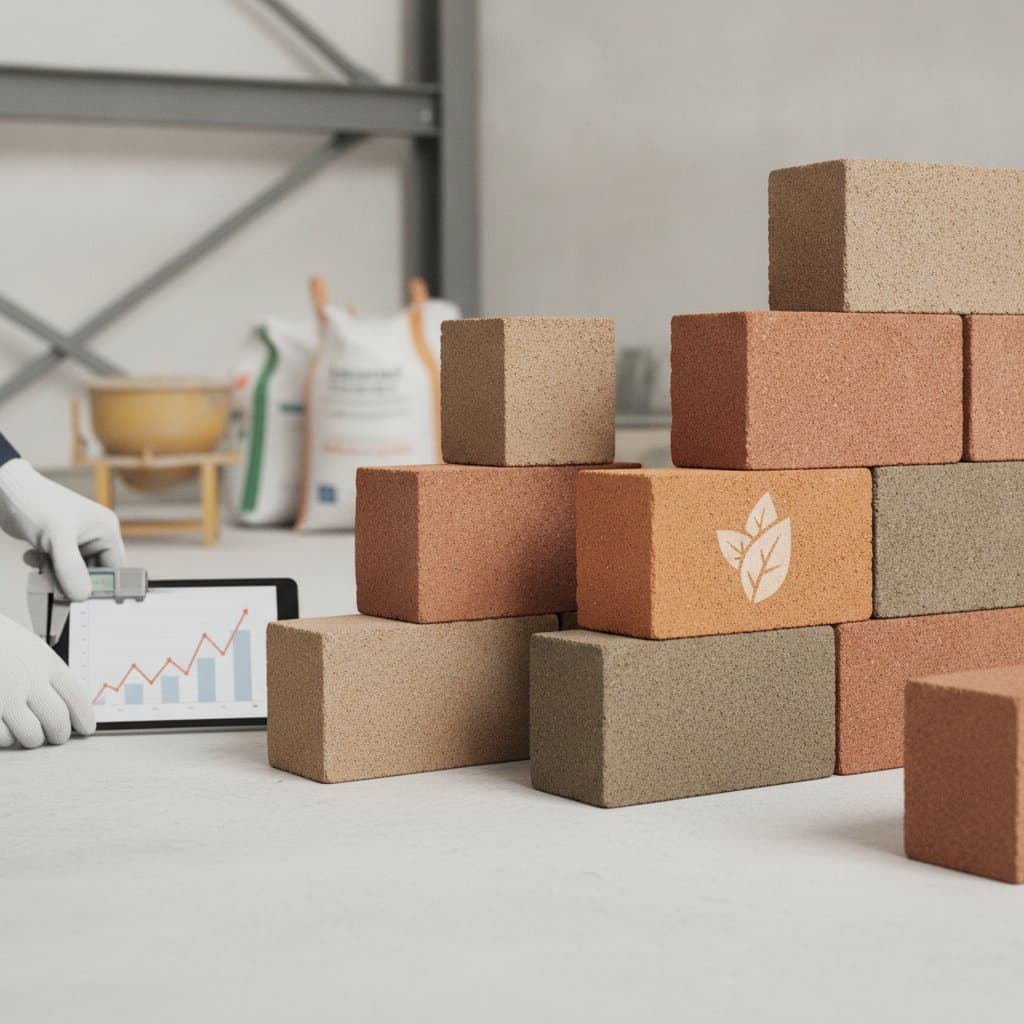
Geopolymer bricks replace traditional cement with industrial byproducts and mineral binders. They reduce carbon output, cure rapidly, and resist heat along with moisture. Primary risks include mix inconsistency, supply chain gaps, and inadequate curing control. Costs depend on source materials and setup, yet full system adoption often saves on energy, transport, and long term durability.
What To Check
A homeowner or builder can verify several factors before committing to a supplier or project that uses geopolymer masonry.
- Surface texture and uniformity. Inspect for dense, well formed edges. Crumbly corners or open pores indicate weak curing.
- Color consistency. Uneven tones frequently signal poor mixing or incomplete reaction.
- Moisture resistance. Sprinkle water on a sample brick. Properly reacted geopolymers absorb liquid slowly.
- Weight and sound. Tap two bricks together. A clear ring indicates strong internal bonding.
- Documentation. Request lab results covering compressive strength, water absorption, and thermal performance.
- Storage and handling. Confirm that pallets remain covered and dry. These bricks require controlled curing, so erratic moisture exposure weakens them.
Geopolymer materials typically rely on fly ash, slag, or calcined clays. Quality hinges on particle size, chemical composition, and the alkali activator applied. Local production control outweighs broad brand claims.
Red Flags
Watch for these warning signs during evaluation.
- Powdery surface that rubs off on fingers.
- Efflorescence that returns after washing.
- Visible cracks or honeycombing from uneven curing.
- Supplier unable to specify source and class of precursor materials.
- Mix ratios labeled proprietary without a technical sheet.
- Absence of local track record for structural testing or wall assemblies.
- Mortar failure or joint cracking after brief rain exposure.
- Claims of zero maintenance or self healing without supporting data.
These indicators point to inconsistent chemistry or weak process control. Once installed in a wall, defects can spread as moisture cycles move salts and cause shrinkage.
Likely Fixes and Rough Costs
Early problems sometimes allow limited repairs. Surface densifiers or silicate sealers cost roughly two to four dollars per square foot. They reduce dusting and minor porosity. Deeper defects may require partial wall replacement. Repointing with compatible geopolymer mortar runs five to eight dollars per square foot. Full rework rises substantially higher when bricks must be removed and replaced.
Cheap fixes such as acrylic coatings or cement based patching fail to last. They mask moisture movement instead of correcting it. Trapped dampness then leads to freeze thaw spalling or salt bloom that shortens service life.
Scope creep often arises from mixing systems. Pairing geopolymer blocks with cement mortars or finishes creates mismatches in expansion and water permeability. Maintain consistency throughout the wall system from mortar to plaster.
Repair vs Replace
Retain walls and masonry units when compressive strength tests meet code and absorption stays low. Replace units only if the matrix has disintegrated or the chemical binder proves unstable.
Repoint mortar joints with compatible alkali activated binders. Avoid cement mortars that prove too rigid and may crack adjacent units.
Keep coatings and finishes breathable. Silicate mineral paints or lime washes preserve moisture balance. Skip acrylic or epoxy films that trap vapor.
Reinforce structural integration with stainless ties or fiber bands only when cracking is structural rather than surface level curing shrinkage. Always confirm plans with a structural engineer experienced in geopolymer performance.
When preservation remains feasible, costs stay modest. Replacement brings disruption, dust, and disposal fees. Base decisions on mechanical testing rather than visual checks alone.
Team and Process
Geopolymer masonry remains unfamiliar to many trades. Coordination proves essential. Begin with an engineer or materials specialist who understands alkali activation. Have that professional review mix designs, curing protocols, and compatibility with local aggregates.
Involve an architect early for wall section design and moisture break detailing. Many failures originate at interface points rather than within the bricks themselves. A general contractor should price logistics, curing space, and sequencing.
For structural work, engage a testing lab to verify strength at multiple stages. Early field cubes or prisms cost little and prevent later disputes. Professional construction management adds roughly ten to twenty percent in overhead on large jobs, yet it keeps change orders under control.
Avoid linear hiring where each professional arrives after the previous one. Parallel vetting identifies incompatibilities early, before drawings lock in flawed assumptions.
Scope Priorities
High yield upgrades focus on the building envelope. Air sealing, roof drainage, and insulation frequently deliver faster returns than experimental finishes.
Combine geopolymer masonry with spray applied air barriers or mineral wool to improve energy efficiency. Use stainless or polymeric flashings that resist alkali, since water management governs longevity. Avoid direct soil contact with geopolymer blocks unless rated for below grade use, and add a drainage mat plus gravel layer to reduce risk.
Select breathable plasters for interior finishes and avoid vinyl wallcoverings so moisture can diffuse outward. Defer major interior reconfigurations until the wall system proves stable through one wet dry cycle.
Preserve existing durable elements where they perform well. New materials do not automatically enhance comfort or strength if detailing around them fails.
Budget and Sequencing
Plan work in logical order so each phase builds on prior risk controls.
- Control water first by grading soil away from walls, extending downspouts, repairing flashings, and keeping curing areas dry.
- Stabilize structure by verifying bearing, tying walls to diaphragms, and confirming load paths before adding finishes.
- Install services through chases or furring to avoid cutting bricks.
- Apply vapor permeable insulation that allows drying.
- Finish surfaces with lime or silicate paints after wall moisture levels stabilize.
Rushing the sequence leads to trapped moisture, poor adhesion, and early coating failure.
Costs vary by region. Expect geopolymer bricks at roughly one to one and a half times the price of midgrade clay units, offset by lower installation energy and less waste. Long term maintenance savings can close the gap within several years when detailing is sound.
Ongoing Care
Once built, geopolymer masonry requires light yet consistent attention. Inspect walls twice yearly for moisture streaks or cracks. Clean with neutral pH soap and low pressure. Skip acidic cleaners that can attack the binder. Repoint joints as needed with matching material.
Monitor runoff patterns, since overflowing gutters or downspouts erode even tough masonry. Keep vegetation trimmed away from walls to prevent shade driven dampness. When efflorescence appears, brush it dry and improve drainage rather than washing with water.
A materials engineer from a regional lab noted that these bricks remain strong yet still follow moisture physics. Control water and they last decades. That principle holds across masonry types.
For older homes, mixing geopolymer blocks with traditional lime or clay systems succeeds when transitions receive careful detailing. Use a bond break or control joint where materials meet. Avoid rigid connections that force movement cracks.
Source a few sample bricks from a local producer next. Examine them for consistency, weight, and moisture behavior, then compare results to conventional clay units. This check reveals whether the nearby supply chain supports full scale work.