
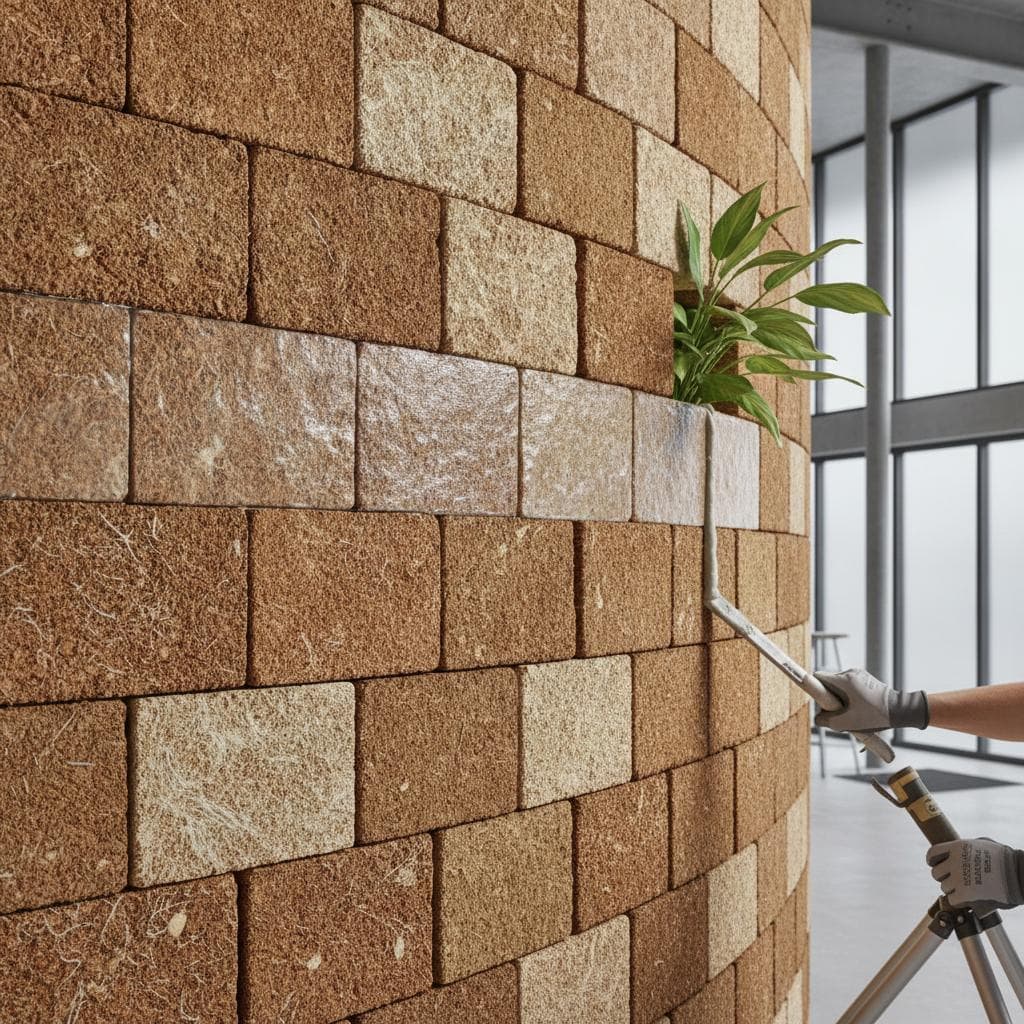
Mycelium Bricks Emerge as a Sustainable Clay Alternative
Quick Take
Mycelium bricks attract interest as a low-carbon substitute for clay masonry. Fungal growth binds agricultural waste into lightweight insulating blocks. Primary concerns involve moisture exposure and load durability. Final costs hinge on local production scale, required testing, and code compliance.
Red Flags
Review these indicators before selecting mycelium masonry for any project.
- Soft or spongy texture that persists after surface coating.
- Visible mold on units held in storage.
- Weak edge bonding during stack tests.
- Absence of third-party compressive strength reports.
- Producers who cannot supply fire or moisture resistance test records.
- Blocks delivered damp or sealed in plastic without ventilation.
- Growth on high-sugar waste that raises long-term decay risk.
More than one of these signs warrants verification of the material source. Poorly cured bricks can fail within months.
Repair versus Replacement
Choices between repair and replacement rest on exposure level, structural load, and surface finish.
Mycelium Blocks
Repair applies when damage stays limited to surface abrasion or small chips. Apply matching bio-composite filler and reseal the area. Replacement becomes necessary once blocks soften, separate between layers, or display renewed fungal growth. Internal breakdown removes any chance of restoring strength.
Clay or Concrete Comparison
Clay bricks endure for centuries when repointed. Mycelium bricks remain experimental, which leaves expected service life uncertain. The material offers insulation value, carbon storage, and low-energy production. These gains trade against lower mechanical strength and water resistance.
Coatings and Finishes
Recoat surfaces at the first sign of chalking or water stains. Replace full finish layers when blistering or detachment appears across multiple panels.
Scope Priorities
Address the highest-impact measures first. Mycelium performs best inside a system that respects its constraints.
- Air sealing and insulation. Mycelium blocks provide moderate thermal resistance alone. Pair them with airtight membranes and managed ventilation.
- Drainage planes. Install a ventilated cavity or drainage layer behind cladding in wet climates.
- Roof overhangs and flashings. Block splashback and saturation at base courses.
- Avoid subgrade placement. Mycelium cannot tolerate extended dampness. Position all units above grade with a capillary break.
- Retain clay or stone foundations. Never place organic materials in direct contact with them.
Lower-yield steps include excessive interior finishing or routing complex mechanical runs through the walls. Keep assemblies simple and dry.
Material Behavior and Performance
Mycelium develops when fungal threads colonize an agricultural substrate such as straw or sawdust. Heat treatment halts further growth and leaves a dense fiber matrix. The matrix supplies insulation and some fire resistance yet stays vulnerable to moisture.
Strength and Use Range
Compressive strength falls between 70 and 300 psi based on density and binder. This range sits well below the 2000 psi of clay brick, which restricts structural roles. Most projects use the blocks as non-load-bearing infill or insulation inside framed walls.
Density and Weight
Mycelium units weigh about one-third as much as clay units. Reduced mass lowers transport energy and eases handling. Lighter loads can also reduce foundation concrete quantities on smaller jobs.
Moisture and Decay
Persistent dampness presents the chief hazard. Cracks or unsealed faces allow water uptake. Saturation reduces stiffness and invites mold. Vapor-permeable coatings limit bulk water entry while permitting drying. A site test panel confirms real-world behavior before full installation.
Fire Resistance
Mycelium forms char under flame rather than melting. The char slows heat transfer yet does not prevent ignition. Lime render or mineral coatings raise fire ratings. The char layer provides some self-insulation but needs protection from repeated heat cycles.
Integration with Traditional Materials
Mycelium can adjoin timber, steel, or masonry when transitions receive careful attention.
- Timber. The materials share similar vapor behavior and movement. Maintain flexible joint seals to prevent cracking.
- Steel. Add thermal breaks that limit condensation and corrosion.
- Masonry. Insert a breathable membrane to stop moisture transfer from denser materials.
When attaching mycelium to existing structures, confirm the direction of moisture flow. Placing the material inside a wall that cannot dry outward traps humidity and accelerates decay.
Maintenance and Service Life
Dry, coated installations reach a service life of 20 to 40 years. Regular inspection supports that span.
Check lower wall courses for splashback or soil contact. Recoat surfaces every five to seven years according to exposure. Keep roof drainage unobstructed. Replace damaged sections quickly to limit moisture spread. Water entry leads to rapid deterioration, so early repairs cost less than full replacement.
Conducting a Pilot Installation
Begin with a small test wall or panel exposed to actual weather. Record performance through rain, sun, and freeze-thaw cycles. Share results with the architect, builder, and supplier before expanding the project.