
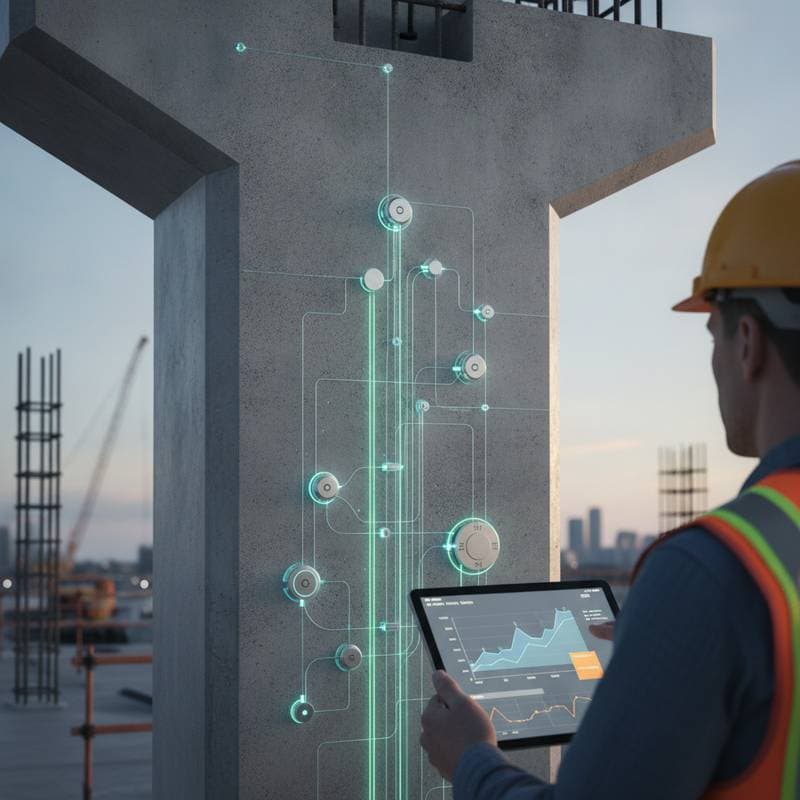
IoT Sensors Reduce Concrete Monitoring Costs by 60 Percent
Concrete structures such as bridges, parking decks, and foundations endure ongoing stress from temperature changes, moisture, and varying loads. Traditional assessments rely on periodic inspections and core sampling that consume time and cause disruption. IoT sensors embedded in concrete now deliver continuous data on strength, moisture, and temperature. This visibility supports longer service life, lower maintenance expenses, and earlier detection of problems.
Key Considerations Before Installation
- Budget allocation typically breaks down as 60 percent for sensors, 30 percent for installation, and 10 percent for data integration, adding 3 to 8 percent to total project costs.
- Accuracy targets include temperature within plus or minus 0.5 degrees Fahrenheit, relative humidity within plus or minus 2 percent, and strength estimates within 5 percent of laboratory results.
- Placement occurs 1 to 3 inches below the surface or at reinforcement depth, depending on the element type.
- Data updates occur every 15 minutes to 1 hour based on power settings and communication needs.
- Project variables such as size, exposure conditions, monitoring period, and system integration guide final specifications.
How IoT Concrete Monitoring Works
IoT sensors are compact devices that measure temperature, moisture, and electrical resistance. The readings allow prediction of curing progress, strength gain, and long-term durability. Wireless transmission sends information to a hub or cloud platform for analysis and display.
Two primary configurations exist. Embedded sensors are placed in fresh concrete to follow early curing and strength development. Surface-mounted sensors attach to completed structures to track environmental exposure and stress over time. Continuous data combined with analytics shifts maintenance from reactive repairs to planned interventions.
Developing a Monitoring Plan
Define the parameters to track and the reasons for monitoring. New pours emphasize curing temperatures and early strength. Existing structures focus on moisture entry, freeze-thaw effects, or corrosion risk.
Local electrical and wireless rules apply even when permits are not required. When data support structural certification, the system must satisfy ASTM or ACI requirements for calibration and data integrity.
Basic temperature and humidity sensors cost 200 to 500 dollars each. Multi-parameter units with cloud analytics range from 800 to 1,200 dollars. Labor during placement adds 2 to 4 dollars per square foot. Annual data services run 100 to 300 dollars per project.
Selection criteria include battery life of 1 to 3 years, wireless range of at least 100 feet, and compatibility with existing project software.
Site Preparation and Required Materials
For new construction, mark sensor locations that represent critical zones near reinforcement or at mid-depth. Protective housings guard against damage during placement and finishing. For retrofit work, clean surfaces and verify wireless signal strength before adhesive attachment.
Materials needed are IoT sensors rated for temperature, humidity, and strength, a data receiver hub, protective casings, calibration references, and standard safety equipment.
Installation Steps
- Calibrate each sensor against manufacturer references before deployment.
- Position embedded units at planned depths within fresh concrete or secure surface units to prepared areas.
- Pair devices with the gateway, confirm signal quality, and register them in the monitoring platform.
- Begin data logging and compare initial values against expected curing curves.
Maintaining Data Reliability
Review readings regularly for consistency. Sudden changes may signal sensor issues or physical damage. Automated alerts flag out-of-range values. When inconsistencies appear, verify battery and signal status, inspect for cracks or moisture, and recalibrate if readings exceed tolerance limits.
Addressing Common Issues
Metal reinforcement or dense concrete can weaken signals. Repeaters or relocated hubs restore connectivity. Battery life shortens under high-frequency logging, requiring scheduled replacement. Annual recalibration prevents gradual drift in measurements.
Ongoing System Management
Schedule weekly automated reports to observe trends in temperature, moisture, and strength. Retain records for lifecycle reviews and warranty support.
Professional Support Options
Self-installation suits small residential slabs and yields 20 to 30 percent savings, yet requires comfort with technical setup and data handling. Large or critical structures benefit from specialists who interpret results and confirm compliance with engineering standards.
Practical Recommendations
Install redundant sensors in key areas to protect against single-point failure. Select weatherproof gateways for outdoor reliability. Track trends across multiple readings rather than isolated values. Connect sensor output to predictive maintenance platforms so repairs occur before damage grows.