
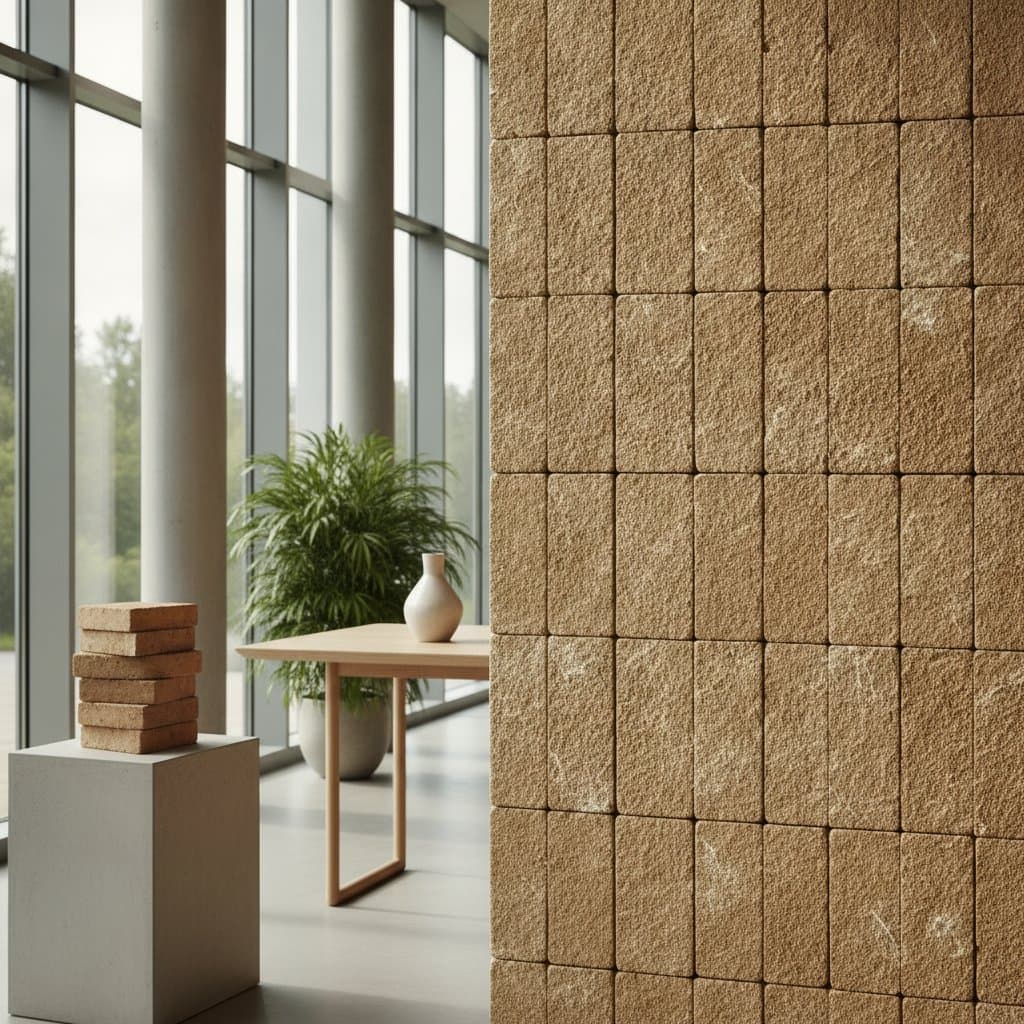
Understanding Mycelium as a Building Material
Mycelium forms the root network of fungi through threadlike hyphae. Grow these filaments on substrates such as sawdust, straw, or agricultural waste under controlled conditions to bind the material into a solid block. Heat treatment halts growth and yields a lightweight, durable brick that biodegrades at end of life.
Mycelium bricks belong to the expanding group of bio-based masonry products. They eliminate the need for high-temperature kilns required by clay bricks and therefore cut fuel consumption and carbon output during manufacture.
Planning and Feasibility Considerations
Review local building codes and permit rules before starting any project. Many areas still treat bio-based materials as experimental and may request extra engineering reports or test data.
Consider these factors during planning:
- Structural use remains limited to non-load-bearing walls, insulation panels, and interior partitions.
- Exterior applications require protective coatings or cladding to manage moisture.
- Thermal resistance reaches R-values of 3.5 to 4.0 per inch, matching many rigid foam products.
- Treated mycelium can meet Class B flame-spread ratings when manufacturers supply certification.
Materials and Production Requirements
Successful production depends on consistent inputs and environmental controls.
Required materials include:
- Mycelium spawn to start colonization.
- Organic substrate such as hemp hurd, rice husks, or sawdust.
- Rigid molds made of plastic or stainless steel.
- Sterilization equipment using steam or approved chemicals.
- A curing chamber that holds 70 to 80 degrees Fahrenheit and 60 to 70 percent relative humidity.
Step-by-Step Production Process
- Combine substrate with water to reach roughly 60 percent moisture content, then sterilize the mixture.
- Distribute mycelium spawn evenly through the cooled substrate.
- Pack the inoculated material into molds and compress lightly to remove large air pockets.
- Incubate the filled molds in darkness for five to seven days.
- Remove the bricks and heat them to 180 degrees Fahrenheit for several hours to stop growth.
- Apply a natural sealant or lime-based coating for added moisture and fire resistance.
Quality Control and Performance Testing
Test each batch for compressive strength, final moisture level, and dimensional consistency. Strengths typically fall between 100 and 300 PSI, adequate for non-structural uses. Check for uniform color and absence of musty odors that signal incomplete drying.
Troubleshooting Common Challenges
- Uneven growth usually results from poor mixing or low humidity; adjust incubation settings.
- Mold contamination calls for longer sterilization or drier substrate.
- Cracking during drying improves when temperature rises more slowly.
- Soft edges benefit from longer growth periods or finer substrate particles.
Maintenance and Long-Term Care
Inspect sealed surfaces once a year for cracks wider than one-eighth inch or changes in texture. Reapply protective coatings every three to five years in exposed locations. Interior installations in dry conditions can remain serviceable for decades.
DIY Potential versus Professional Fabrication
Small interior or decorative projects allow cost savings of 20 to 30 percent through home production. Larger or code-governed work benefits from professional equipment that delivers uniform density and documented compliance.
Pathways to Wider Adoption
Ongoing material research and updated testing standards continue to expand suitable applications. Builders who track these developments can integrate mycelium products into projects that value reduced emissions and local resource use.