
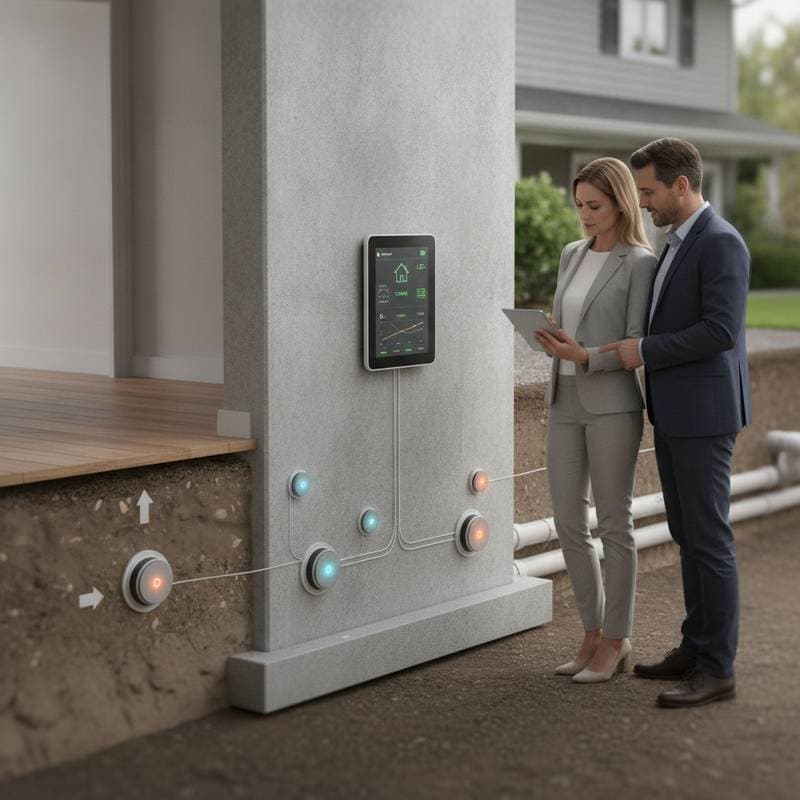
Smart Sensors Detect Foundation Shifts Early
Quick Take
Foundations move gradually over months before visible damage occurs. Smart sensors capture these small shifts in tilt and moisture. Early detection prevents expensive structural repairs later.
Homeowners face rising costs once cracks form in walls or doors begin to bind. Monitoring minor motion allows action before problems escalate. This approach can avoid tens of thousands of dollars in major excavation work.
Visual Inspection Steps
Begin with direct observation around the property. Walk the perimeter and note any visible changes.
- Check foundation walls for bows or leans that suggest soil pressure.
- Roll a tennis ball across floors to identify slopes.
- Test doors and windows for sticking or uneven gaps.
- Examine exterior grading for water pooling near the house.
- Inspect gutters and downspouts for proper drainage away from footings.
- Look in basements or crawl spaces for dampness or sagging supports.
These checks establish a baseline. Sensors then confirm whether movement is active.
Warning Signs of Active Issues
Certain indicators point to ongoing soil movement. Horizontal cracks in walls or step cracks wider than a pencil require attention. Doors that swing open without cause also signal frame distortion.
Gaps that widen between siding and trim over seasons indicate settlement. Persistent dampness after drainage fixes suggests deeper problems. Increasing sensor readings month to month confirm active trends.
Drainage and Repair Options
Water control forms the foundation of any solution. Proper grading and gutter extensions reduce soil saturation at low cost.
- Gutter corrections range from 500 to 1500 dollars.
- Surface regrading costs between 1000 and 3000 dollars.
- Perimeter drains require 4000 to 10000 dollars.
- Underpinning starts at 10000 dollars and can reach 40000 dollars.
Sensor systems provide data at a fraction of these prices. Basic wireless units cost 400 to 1000 dollars. Full networks with alerts range from 1500 to 3000 dollars plus annual fees.
When to Use Sensors Effectively
Place sensors at foundation corners and key interior points after drainage improvements. Track tilt changes under 0.1 degree as normal seasonal variation. Readings between 0.2 and 0.5 degree warrant closer drainage review.
Moisture data reveals whether soils remain wet after storms. Consistent wet zones near one wall often trace to runoff or leaks. Trend analysis over weeks guides decisions better than single snapshots.
Project Team and Sequence
Assemble an inspector, structural engineer, contractor, and technology installer at the start. Parallel reviews keep costs and scope aligned. Professional oversight adds 10 to 20 percent but prevents overlapping work.
Follow this order for best results. First redirect all roof and surface water. Then establish sensor baselines on dry soil. Reassess trends before any structural work. Address interior finishes only after stability is confirmed.
Long Term Monitoring Value
Sensors deliver the greatest benefit through consistent monthly reviews. Compare data against physical observations and weather records. Stable readings over time confirm successful repairs.
Upward trends prompt early engineer consultation before cracks develop. This practice supports lower insurance claims and sustained property value. Steady observation combined with targeted drainage keeps foundations sound.