
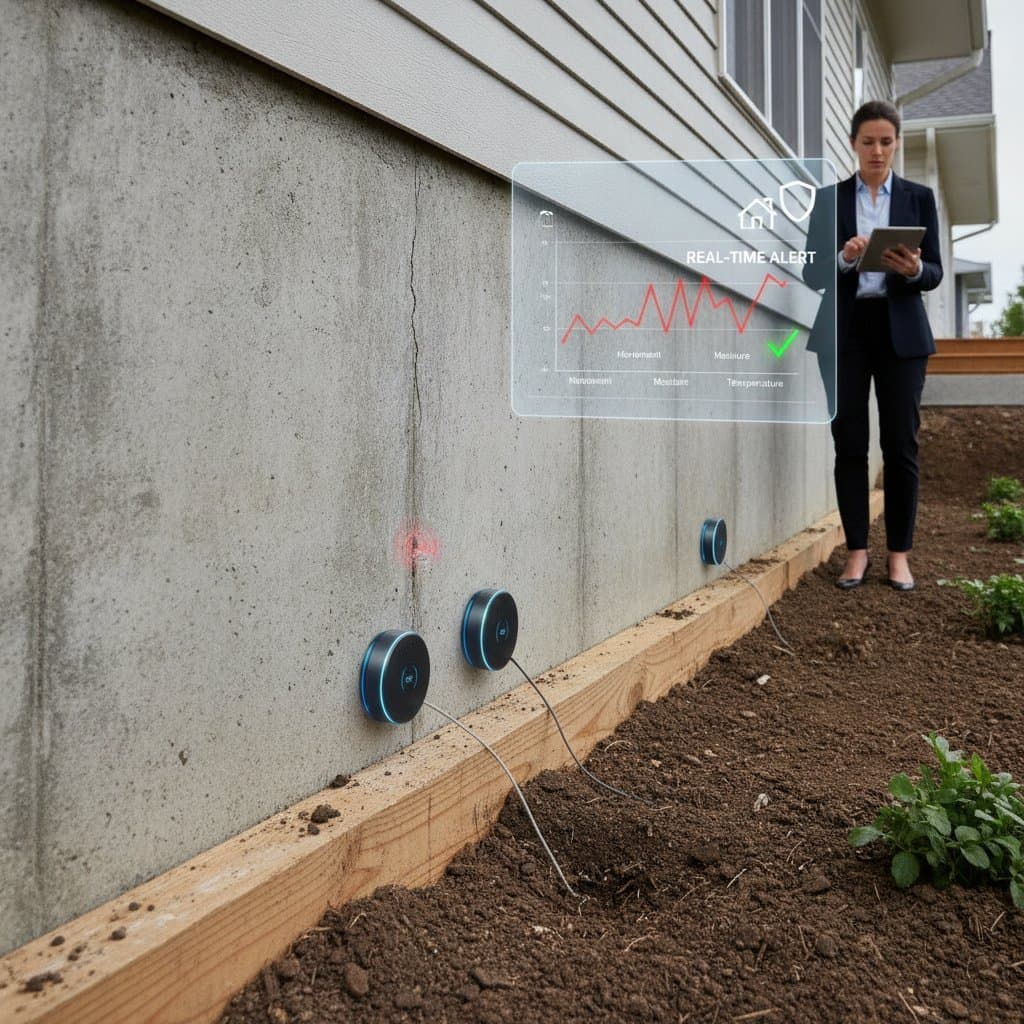
How Smart Sensors Protect Your Home Foundation
Your home foundation supports every wall, roof beam, and floor joist above it. When the base shifts or cracks, movement travels upward and creates larger problems. Smart sensors now track those early changes and send alerts before repairs become expensive.
Core Functions of Foundation Sensors
Smart foundation sensors are compact wireless units that measure soil moisture, temperature swings, and structural movement. Readings travel to a connected app or hub that notifies homeowners when values move outside safe ranges. Many units integrate with existing home systems such as leak detectors and sump-pump monitors.
Advantages and Limitations
- Early detection of minor shifts or moisture changes before visible cracks form
- Direct phone or hub alerts that prompt quick response
- Lower long-term inspection and repair expenses through predictive data
- Need for reliable Wi-Fi and periodic battery replacement
- Risk of false alerts when sensors sit in poor locations
- Higher initial cost for homes that require many units
Typical Price Ranges
Individual sensors begin at 50 to 150 dollars. Complete kits with multiple units, humidity tracking, and app features fall between 400 and 900 dollars. Professional packages that include installation and ongoing monitoring range from 1500 to 3000 dollars.
Final cost depends on the number of sensors, signal strength through concrete, and any added professional oversight.
Expected Service Life and Upkeep
Most units operate for five to ten years when batteries are changed every two to three years. Monthly app reviews reveal trends in moisture or vibration. Seasonal cleaning removes dust that can distort readings. Sensors that stop reporting or produce erratic numbers should be replaced.
Key Specifications to Verify
Confirm the moisture range covers both dry and saturated soil. Check that the temperature rating matches local extremes. Verify wireless range penetrates basement walls. Require readings at least every fifteen minutes. Ensure compatibility with any current smart-home platform.
Site Survey Before Purchase
Walk the foundation and record visible cracks, damp areas, or uneven floors. Plan sensor placement near corners, load-bearing walls, and known trouble spots such as window wells. Test Wi-Fi strength at each location and add an extender if needed.
Step-by-Step Installation
- Mark monitoring zones around the perimeter and interior walls.
- Attach sensors to clean, dry surfaces with the supplied hardware.
- Pair each unit through the manufacturer app or hub.
- Allow readings to stabilize, then record baseline values.
- Trigger test alerts to confirm notifications arrive correctly.
Common Layout Choices
Perimeter sensors focus on soil moisture around exterior walls. Interior sensors track movement on basement walls. Hybrid arrangements combine vibration, moisture, and temperature data for complete coverage. Select perimeter units when drainage is the main concern and interior units when settling or cracking appears.
When to Choose Professional Help
DIY installation works for accessible basements with strong Wi-Fi and simple app setups. Hire a technician when more than ten sensors are required, existing cracks need evaluation, or integration with other smart devices grows complex.
Troubleshooting Frequent Issues
False alarms often stop after recalibration or relocation away from HVAC units. Signal loss improves with a Wi-Fi extender or hub repositioning. Inconsistent data usually resolves after battery replacement or contact cleaning. Missing reports may require a firmware update or device reset.
Climate-Specific Monitoring Tips
Wet or coastal regions benefit from close moisture and drainage tracking. Freeze-thaw zones require temperature and soil-expansion data. Clay soils call for seasonal swelling checks that can affect footings.
Lower-Tech Monitoring Options
Manual crack gauges or basic moisture alarms provide simple tracking without wireless features. Sump-pump monitors add another layer of protection for homes that already face water issues.
Starting a Monitoring Program
Begin with two or three sensors in known problem areas. Review several months of data before adding coverage. Consistent early alerts help avoid uneven floors, sticking doors, and wall cracks.