
Introduction to Geopolymer Bricks
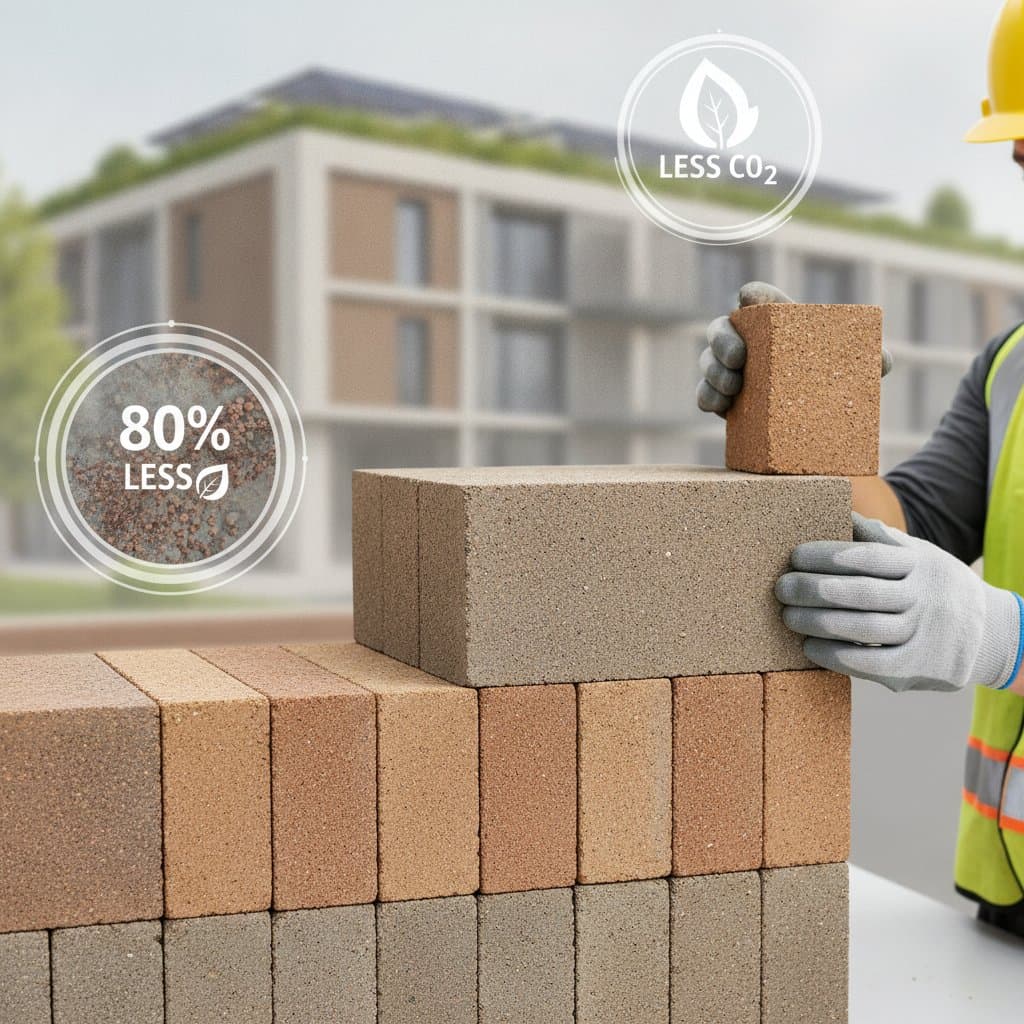
Geopolymer bricks offer a cement free alternative that reduces carbon emissions by up to 80 percent compared with traditional clay or concrete masonry. These units rely on aluminosilicate binders activated by alkaline solutions to achieve compressive strengths above 5000 PSI. Builders gain thermal stability and long term durability without the high energy demands of Portland cement production.
Core Materials and Their Roles
Several components combine to form a stable geopolymer matrix.
- Fly ash from Class F sources supplies silica and alumina in regions near coal power plants.
- Ground granulated blast furnace slag accelerates early strength gain and improves resistance to moisture.
- Alkaline activators consist of sodium hydroxide and sodium silicate blended at weight ratios between 1 to 1.5 and 1 to 2.
- Fine aggregates such as natural sand or crushed limestone maintain dimensional stability during setting.
Production Cost Considerations
Material and curing choices determine unit costs between 0.60 and 1.10 dollars per brick. Labor expenses remain comparable to conventional masonry, yet reduced mortar volumes and quicker setting times lower overall project expenses.
Production Sequence
Follow these steps to manufacture consistent, high strength units.
- Measure dry ingredients and combine fly ash or slag with fine aggregates in a mechanical mixer. Introduce the alkaline activator slowly until a uniform workable paste forms.
- Fill molds and apply vibration or mechanical pressure to eliminate voids and achieve even density.
- Permit initial setting at ambient temperature for a minimum of six hours before handling.
- Cure under controlled humidity or mild heat reaching 140 degrees Fahrenheit for seven to fourteen days to develop full structural integrity.
- Verify compressive strength through ASTM procedures to confirm values meet or exceed 5000 PSI for load bearing use.
Addressing Production Issues
Common defects arise from material or process variations.
Excess soluble salts or fluctuating humidity during curing produce efflorescence. Washing with a mild acid solution followed by stable moisture control removes deposits.
Rapid moisture loss or overly concentrated activators cause surface cracking. Lowering activator strength or extending cure times under slower conditions prevents recurrence.
Batch inconsistencies or raw material differences lead to uneven color and texture. Standardizing ingredient sources and employing mechanical mixing ensures uniform appearance.
Ongoing Maintenance Practices
Geopolymer masonry needs only routine attention to preserve performance.
Inspect surfaces for cracks wider than one sixteenth of an inch that may signal movement or joint failure. Examine mortar joints for erosion and clean all faces yearly with mild detergent and water. Repoint joints at ten to fifteen year intervals when wear appears.
Implementation Choices
Small scale projects allow experienced builders to produce and install units themselves while wearing proper safety gear and following precise batching. Labor savings of 15 to 25 percent are typical for such work. Larger structural applications require a licensed mason experienced with alternative binders.
Practical Advantages for Builders
Zero cement geopolymer bricks deliver reliable strength alongside reduced environmental impact. On site production or procurement from certified suppliers supports projects seeking lower lifecycle costs and improved thermal performance.