
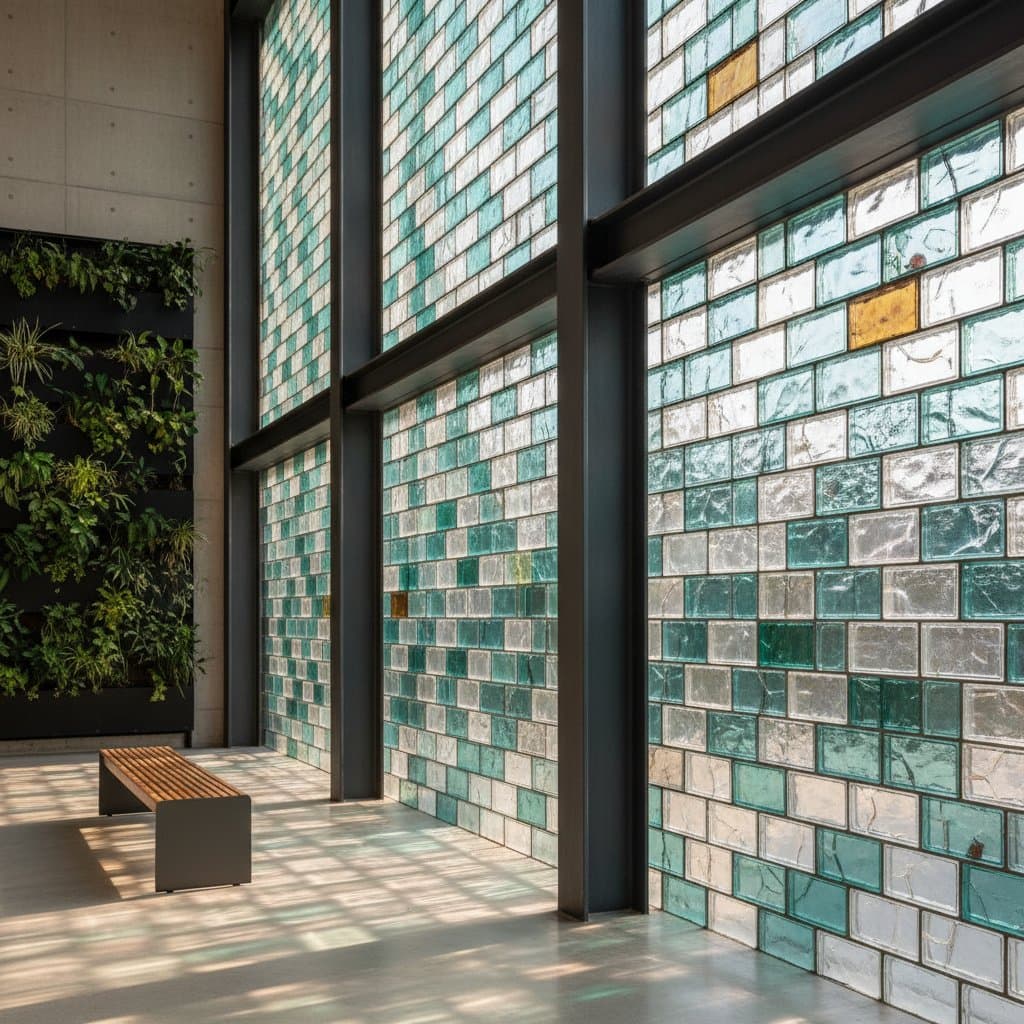
Recycled Glass Bricks: Pioneering Zero-Waste Construction by 2026
Recycled glass bricks consist of post-consumer or post-industrial glass that undergoes melting, molding, and cooling to form solid masonry units. These bricks resemble traditional glass blocks or clay bricks in appearance, yet they originate from waste glass destined for landfills. Architects and builders incorporate them into walls, facades, and decorative elements to achieve a balance of structural strength, light transmission, and environmental sustainability.
This innovative material supports the broader movement toward zero-waste construction practices. By repurposing glass unsuitable for bottle recycling, these bricks reduce reliance on virgin raw materials and lower energy consumption in production. They also expand creative opportunities in design, particularly for structures that require both durability and natural illumination.
Understanding Costs
The price of recycled glass bricks typically falls between $18 and $40 per square foot, varying based on factors such as clarity, color options, and surface finish. Installation expenses add $12 to $25 per square foot, depending on the intricacy of patterns, wall dimensions, and the selected mortar or adhesive.
Key elements that influence overall costs include:
- Custom pigmentation or integrated textures that enhance aesthetic appeal.
- Extensive or non-linear configurations that demand meticulous alignment and cutting.
- Challenging site conditions, given the weight and delicacy of the glass units.
- Integration of reinforcement systems for load-bearing applications beyond simple decorative uses.
Straightforward projects with uniform stacking and standard dimensions tend toward the lower cost range. Elaborate facades or accent walls push expenses higher due to added complexity.
Essential Specifications to Verify
Prior to purchase, evaluate these critical technical attributes to ensure compatibility and performance:
- Compressive strength: Target a minimum of 3,000 psi for non-structural walls; opt for higher ratings in load-bearing scenarios.
- Thermal expansion rate: Select units that align with the expansion properties of the chosen mortar or adhesive to minimize cracking risks.
- Dimensional tolerances: Standard sizes measure approximately 8 by 4 by 2 inches; always cross-reference manufacturer specifications.
- Slip resistance: For flooring or paving uses, confirm the presence of textured surfaces that meet safety standards.
- Fire resistance: Expect a one-hour rating in properly installed assemblies.
- UV stability: Ensure colored variants employ pigments resistant to degradation under prolonged sun exposure.
These specifications safeguard long-term integrity and compliance with building codes.
Step-by-Step Installation Guide
Successful installation begins with thorough preparation and follows a systematic process:
- Plan the layout: Mark guidelines with chalk lines for the base course and double-check overall alignment.
- Prepare the foundation: Ensure the surface remains level and free of debris; apply a waterproof membrane for outdoor applications.
- Prepare bonding materials: Mix specialized mortar for glass blocks or use polymer-enhanced adhesives for superior adhesion.
- Place the initial course: Position units with precision, using spacers to maintain uniform gaps.
- Build subsequent courses: Apply mortar in thin layers, wiping away excess to achieve clean joints.
- Incorporate reinforcements: Insert stainless steel rods or mesh in designated areas for added stability.
- Finish the joints: Tool the mortar to create smooth, dense seals that withstand environmental stresses.
- Clean the assembly: Remove any residue from the glass surfaces prior to curing.
- Apply perimeter seals: Use silicone or elastomeric sealants around edges to prevent moisture ingress.
- Allow curing and final inspection: Permit complete hardening before applying loads or finishing touches.
Maintaining edge supports and consistent joint widths proves vital for both aesthetics and durability. Refrain from striking the bricks directly; employ a rubber mallet with protective padding for any necessary adjustments.
DIY Installation or Professional Expertise?
Experienced individuals may tackle recycled glass brick projects themselves, provided they prioritize accuracy and methodical execution.
Consider DIY suitable when:
- The project involves a compact area, like a shower divider or landscape accent.
- The design employs basic patterns and off-the-shelf dimensions.
- Essential tools, such as a diamond-tipped saw, mixing equipment, and spacing aids, are available.
Engage a professional for more demanding circumstances:
- Walls exceeding 6 feet in height or span, where stability becomes paramount.
- Installations requiring structural reinforcements or custom engineering.
- Exterior, curved, or seismically sensitive placements.
- Environments prone to high winds or earthquakes.
A mason experienced with glass materials helps prevent issues such as uneven joints, moisture accumulation, or expansion-related fractures.
Adapting to Regional Climates
Recycled glass bricks adapt effectively across diverse environments when equipped with appropriate expansion joints and drainage features.
- Cold climates: Select freeze-thaw resistant variants and incorporate flexible joints to accommodate material shifts.
- Hot, sun-exposed regions: Prioritize UV-resistant colors; integrate shading elements to mitigate glare.
- Coastal areas: Employ stainless steel reinforcements and corrosion-resistant fixings.
- High-precipitation zones: Focus on robust sealing of exterior joints to block water penetration.
- Dry, arid conditions: Design for subtle thermal expansions during temperature fluctuations.
Regardless of location, meticulous attention to edge sealing and control joints ensures optimal functionality.
Sourcing and Verification Best Practices
When procuring materials, scrutinize product documentation for authenticity and quality.
- Verify the recycled content level, often reaching 95 to 100 percent in premium products.
- Request certification reports detailing compressive strength and thermal properties.
- Assess wall thickness and edge profiles for seamless integration with bonding agents.
- Purchase additional units to account for potential breakage during transport or on-site modifications.
- Consult manufacturer guidelines for precise joint dimensions and curing protocols.
Reputable vendors offer comprehensive support on storage, handling, and upkeep to maximize project success.
Expert Recommendations for Optimal Results
- Store units in an indoor, vertical position to shield against impacts prior to installation.
- Maintain slender, uniform mortar joints to promote a refined visual outcome.
- Schedule work to avoid direct solar exposure, which accelerates drying and uneven setting.
- Utilize soft rubber or plastic spacers to protect delicate edges during placement.
- Delay sealing until the assembly fully cures, ensuring adhesion integrity.
For any required cuts, operate a wet saw with steady water supply to manage dust and prevent overheating. Protective eyewear and respiratory gear remain essential during cutting or abrading operations.
Long-Term Care Strategies
These durable installations require minimal upkeep, yet routine practices preserve their condition.
- Perform biannual cleaning with a gentle soap solution and soft cloth.
- Inspect boundary sealants annually for signs of deterioration or separation.
- Ensure drainage features, such as weep holes, remain unobstructed in outdoor settings.
- Address individual damaged units swiftly to prevent progressive failure.
- Refresh sealants on visible joints periodically to maintain weatherproofing.
Consistent vigilance extends the lifespan and visual appeal of recycled glass brick features.
Advancing Sustainable Building Practices
By 2026, recycled glass bricks stand poised to significantly reduce construction waste, transforming discarded materials into enduring, light-enhancing components. Their adoption fosters innovative designs that prioritize environmental responsibility without compromising on performance or style. Builders embracing this technology contribute to a future where zero-waste principles define architectural excellence.