
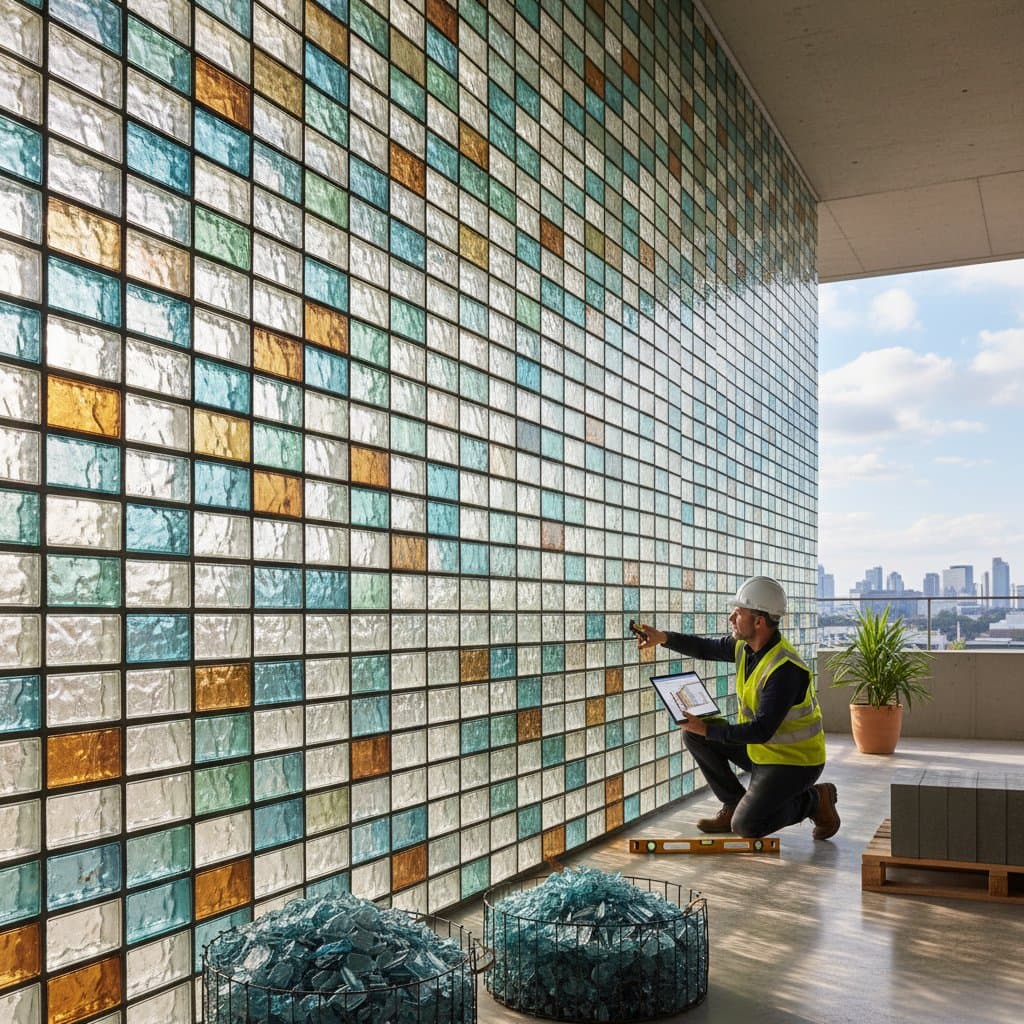
The Rise of Recycled Glass Bricks in Sustainable Construction
Overview
Recycled glass bricks represent a significant advancement in eco-friendly building materials. These blocks transform post-consumer glass waste into strong, translucent units that rival conventional masonry in strength while reducing carbon footprints. Key factors influencing their success include manufacturing consistency, precise installation, and effective management of moisture at connections.
Essential Field Inspections
Conduct thorough on-site evaluations to confirm the quality of recycled glass bricks during renovations or new projects. These inspections help identify potential issues early.
- Examine brick surfaces under daylight. Uniform color distribution, sharp edges, and absence of surface bubbles indicate high-quality production.
- Gently tap bricks against each other. A clear, resonant sound suggests dense internal structure; a muffled tone points to internal voids or inadequate fusing.
- Inspect packaging for moisture buildup. Condensation within wrappers may lead to etching or discoloration if materials remain exposed to outdoor elements.
- Confirm certification for compressive strength and water absorption rates, comparable to standard clay or concrete blocks.
- Review guidelines for mortar selection and application. Certain glass bricks require elastic or polymer-enhanced mortars to accommodate thermal movements and avoid fractures.
Such evaluations require only a short time investment yet safeguard against substantial future expenses.
Warning Signs to Watch For
Certain indicators reveal underlying problems in recycled glass bricks that could compromise longevity.
- Hazy or irregular surface patterns, often from inconsistent melting processes.
- Fractures or edge damage, typically resulting from improper cooling during production.
- Overly smooth finishes lacking texture, which hinder secure adhesion to surrounding materials.
- Lack of supplier documentation detailing recycled content levels or performance specifications.
- Joints exceeding recommended widths, frequently employed to mask dimensional inconsistencies.
- Discoloration from water exposure post-rainfall, indicating inadequate drainage or improper sealing.
Addressing these promptly averts extensive repairs and ensures structural reliability.
Common Repairs and Estimated Expenses
For isolated damage affecting individual bricks, direct replacement proves straightforward. Costs range from 8 to 15 dollars per unit, including installation, based on accessibility and the need for color coordination. Extensive facade work escalates to over 80 dollars per square foot when factoring in labor and scaffolding.
Hazy surfaces caused by mineral leaching respond well to gentle cleaning with diluted vinegar or specialized solutions, incurring negligible fees. Damaged mortar joints benefit from grinding and reapplication, priced at 6 to 10 dollars per linear foot.
Avoid inexpensive sealant applications, as silicone products often retain moisture internally, promoting freeze-thaw damage or salt deposits. Prioritize designs that facilitate water escape from behind the assembly.
Anticipate additional time for on-site modifications, such as custom shaping or integrating illumination features. Discuss these requirements upfront with suppliers and installers to control timelines.
Deciding Between Repair and Replacement
For Windows and Similar Glazing: Preserve existing glass blocks or bricks if they remain watertight and undamaged. Opt for full replacement solely in cases of fractures, infiltration, or compromised security. Carefully selected modern recycled variants can replicate the appearance of legacy installations.
For Wall Assemblies: Maintain the core structure if it demonstrates stability. Limit interventions to the exterior layer when evidence of water penetration or shifting appears. Evaluate flashings and drainage channels prior to any surface treatments.
For Joint Systems: Initiate with repointing efforts using mortars that match expansion properties. Proceed to comprehensive replacement only if adhesion fails or widespread cracking endures post-repair.
For Illuminated Features: Adding LED systems behind glass bricks generates warmth that may affect nearby components. Retain original setups provided ventilation prevents overheating. Redesign or substitute when elevated temperatures degrade joints or adhesives.
Assembling the Right Team
Engage an architect versed in masonry techniques and sustainable sourcing. This professional verifies adherence to building codes regarding fire resistance and load-bearing capacities.
Select a general contractor experienced in glass-based installations. Request visual evidence of past projects to assess their expertise beyond promotional materials.
Consult a structural engineer for load-bearing walls or transitions from denser materials to lighter glass alternatives. Such changes influence support requirements and foundation loads.
Incorporate a project manager to oversee coordination, adding 10 to 20 percent to the budget but minimizing delays in procurement and execution. Account for extended lead times on bespoke color formulations, which may span several weeks.
Prioritizing Project Elements
- Waterproofing the Envelope: Establish barriers and drainage mechanisms before placing glass units to exclude moisture ingress.
- Ensuring Structural Soundness: Confirm that lintels, frames, and supports align properly and resist corrosion.
- Optimizing Insulation and Sound Control: Account for the unique thermal and acoustic traits of glass bricks; incorporate air spaces or supplementary layers as required.
- Enhancing Visual Harmony: Deploy recycled glass bricks in locations that benefit from translucency and depth, reserving them for impactful rather than concealed applications.
- Boosting Overall Efficiency: Pair masonry upgrades with comprehensive sealing and insulation to maximize energy savings.
Focus on foundational protections yields superior outcomes over superficial enhancements.
Planning Budget and Workflow
Adhere to a sequential approach to minimize disruptions.
- Address site grading and perimeter drainage to eliminate pooled water near bases.
- Strengthen or renew framing elements ahead of masonry placement.
- Complete electrical and mechanical installations prior to enclosing surfaces, given the challenges of accessing sealed glass systems.
- Install bricks and allow joints to set completely before introducing sealants or lighting.
- Conclude with finishing touches, including trim, sealants, and final cleaning, following verification of water resistance.
Omission of any phase heightens vulnerability; even minor leaks can cause irreversible internal staining.
Long-Term Care Strategies
Recycled glass bricks endure for decades under proper conditions of dryness and routine upkeep. Clean surfaces with neutral soap solutions, steering clear of harsh chemicals. Annually review joints for gaps or shifts, and examine flashings after significant precipitation events.
A mason from the Midwest once observed, “Glass is honest. It shows every mistake.” This perspective underscores the importance of meticulous execution. Thoughtful walls signal maintenance needs well in advance of major issues.
Property owners who emphasize water management, precise construction, and regular assessments realize extended service life and optimal value. The rewards extend beyond appearance to encompass reliable performance.
For projects involving sustainable masonry, the fundamentals remain consistent: secure a solid, moisture-free base; procure certified products; and execute with rigorous sequencing.