
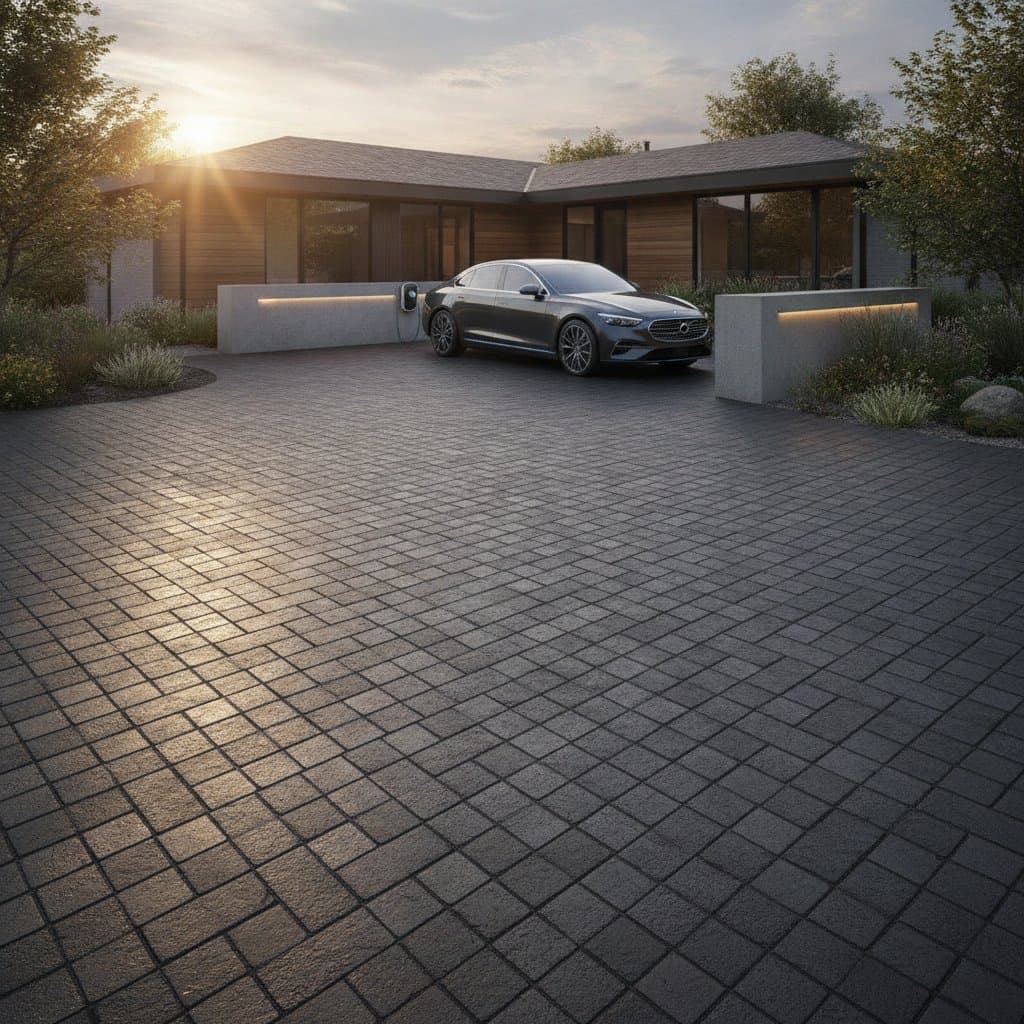
Solar Pavers Let Driveways Generate Home Electricity
Solar pavers are driveway or patio blocks that contain small photovoltaic cells sealed inside a durable surface layer. They work like rooftop solar panels but are built to handle foot and vehicle traffic. Each paver connects into a wired or wireless circuit that feeds energy to your home inverter.
The result is a hardscape that looks like masonry but makes electricity every time the sun hits it.
Pros and Cons
Pros
- Generates renewable power from an unused surface.
- Can blend with standard pavers for a natural look.
- Reduces roof clutter for homes with limited roof space.
- Durable surface resists UV and weather exposure.
- Adds long-term property value through energy savings.
Cons
- High upfront cost compared to regular pavers.
- Requires electrical integration by a licensed contractor.
- Efficiency drops if shaded or dirty.
- Limited patterns and color choices.
- Repairs can be costly if wiring or modules fail.
Costs
Expect most solar pavers to cost about $20 to $35 per square foot for materials. Installed systems usually run $45 to $65 per square foot. Costs depend on layout and wiring distance to the inverter. Costs rise with complex patterns, lighting integration, long conduit runs, or limited site access. Simpler layouts and short wire paths keep pricing lower.
Lifespan and Maintenance
Solar pavers often last 20 to 25 years if kept clean and properly sealed. The glass or resin surface should be washed a few times a year with mild detergent and water to remove grime that blocks sunlight. Inspect for cracked lenses, loose wires, or sunken pavers. Replace failed units promptly to avoid system imbalance. Some models allow individual paver replacement without disturbing adjacent units.
Specs to Check
- Compressive strength of at least 8,000 psi for vehicle loads.
- Slip resistance with wet surface coefficient of friction above 0.6.
- Ingress protection rating of IP67 or better to resist water and dust.
- Temperature rating that matches your climate.
- Connector type that matches your inverter system.
Planning and Prep
A solar paver driveway needs a stable, well-drained base. Excavate to allow for the base, bedding sand, and paver thickness. Maintain a minimum slope of 1 inch per 8 feet for drainage. Avoid placing wiring paths where vehicles turn sharply. Plan conduit routes before compacting the base. Mark all electrical lines for future reference. Call utility locate services before digging.
Installation Overview
- Plan layout and mark reference lines.
- Excavate and compact crushed stone in layers.
- Screed bedding sand evenly.
- Set solar pavers starting from a straight edge.
- Connect wiring under joints or through channels.
- Install non-solar edge pavers to lock the field.
- Fill joints with polymeric sand and compact lightly.
- Inspect voltage output before sealing the surface.
Only qualified electricians should connect the system to your home inverter or grid interface.
Patterns and Options
Common layouts include running bond, grid, or framed panels of solar pavers surrounded by standard stone. Some homeowners use solar pavers only in sunny zones. They mix them with regular units elsewhere. Choose darker tones for contrast or lighter ones to reduce heat buildup. Modular layouts make future expansion easier.
DIY vs Pro
You can handle base prep and layout as a DIY project if you have basic masonry tools and a small area. Hire a pro for electrical connections, large driveways, or when local codes require inspection. If the surface will carry vehicles, compaction and load design must meet structural standards.
Common Failures and Fixes
Most issues come from water intrusion, crushed wiring, or poor compaction. If part of the array stops producing power, check for loose connectors and damaged pavers. Surface fogging may signal moisture under the lens.
Regional and Climate Notes
In freeze-thaw regions, use a thicker base and frost-rated bedding sand. Coastal areas need corrosion-resistant connectors. Hot climates benefit from lighter-colored surfaces that reflect more sunlight and reduce heat stress on cells.
Alternatives
If cost or wiring complexity is a concern, consider rooftop panels, solar carports, or plug-in walkway tiles for smaller power gains. Standard concrete or permeable pavers remain better for shaded or high-traffic zones where solar exposure is poor.
Property Integration Steps
Solar pavers turn a passive driveway into an active energy surface. They cost more upfront but can offset utility bills for decades. Plan the layout carefully. Confirm electrical specs. Work with qualified installers for wiring and inspection.