
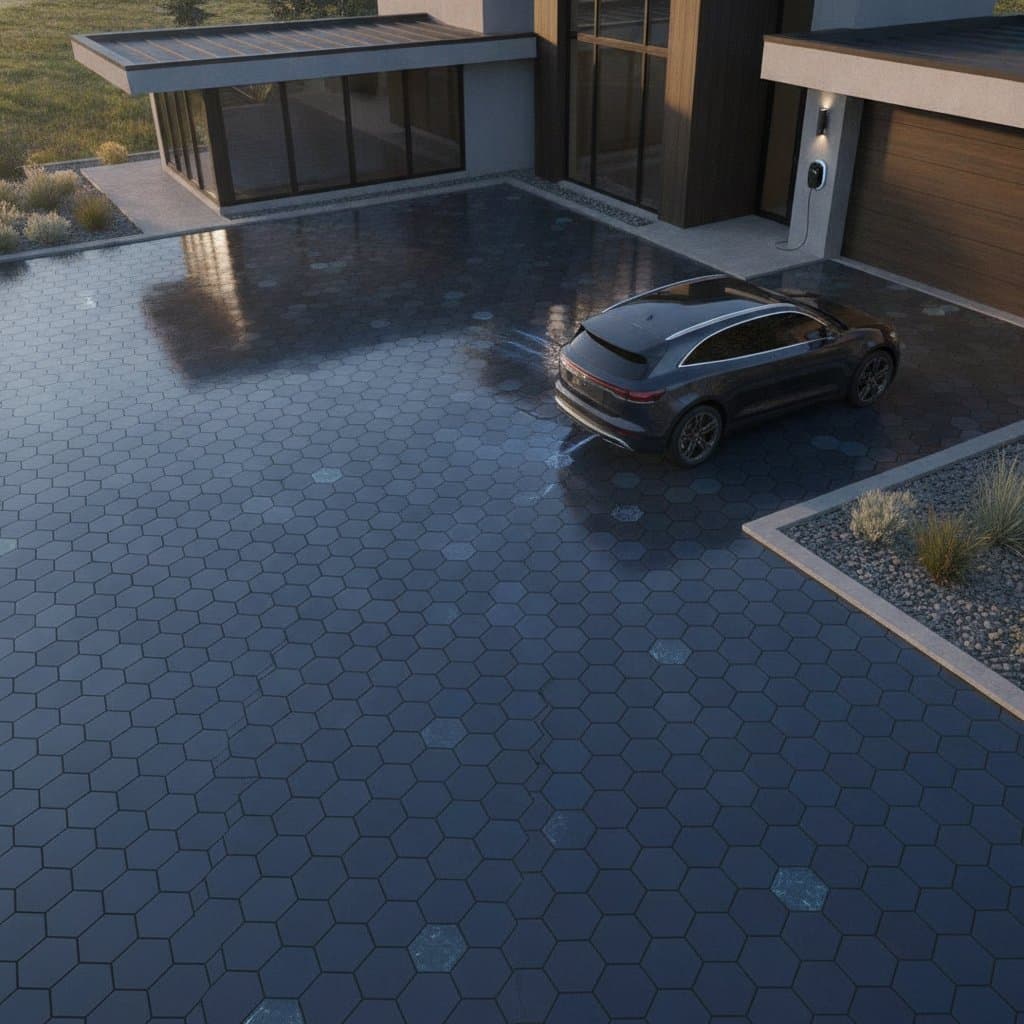
Building a Solar Paver Driveway That Generates Clean Energy
Skill level: Advanced DIY with electrical work requiring a licensed professional
A solar paver driveway merges renewable energy with durable hardscaping. The surface carries vehicle weight, improves property appearance, and converts sunlight into electricity. This guide covers system options, site planning, material choices, and installation steps while noting where professional help is essential.
Project overview
Solar pavers embed photovoltaic cells within tempered glass and reinforced concrete or composite modules. Sunlight reaches the cells and produces direct current electricity that can offset household use or return to the grid. The approach yields three practical advantages. It turns an otherwise unused surface into an energy source. It adds a contemporary look that can support property value. It advances sustainability goals without reducing function or style.
Reality check
The project requires careful layout, coordination with electrical codes, and physical effort. An experienced DIYer can handle excavation and paver placement after completing similar patio or driveway work. All wiring, inverters, and grid connections must be performed by a licensed electrician. Modules are heavier than standard pavers, so at least one helper is needed. A typical two-car driveway takes several days for base preparation plus additional time for electrical integration.
Understanding Solar Pavers
What solar pavers are and how they work
Each unit contains a photovoltaic layer protected by an anti-slip glass top and a load-bearing base. Low-voltage wiring links units into an array that feeds a controller or inverter. Because the pavers lie flat, output per square foot is lower than tilted rooftop panels. They still capture energy from surfaces that would otherwise remain unused and help reduce surface heat.
Types of solar paver systems
- Modular plug-in systems arrive prewired with waterproof connectors. They suit small or decorative areas but limit layout changes.
- Custom integrated systems pair standard pavers with embedded modules and planned wiring channels. They offer design flexibility yet need professional electrical planning.
- Hybrid paver fields combine durable standard pavers in high-traffic zones with solar units in lighter-load sections. They balance strength and energy production for driveways that see regular vehicle use.
When to call a professional
Any link between the array and household wiring requires a licensed electrician. Structural review by a civil engineer is advisable for driveways that will carry heavy vehicles. Excavation near utilities or major drainage changes also benefits from expert oversight. Paver placement itself can stay a DIY task when proper base and alignment methods are followed.
Planning Your Solar Paver Driveway
Assessing the site
Confirm at least six hours of direct sun using a solar path tool or repeated daytime observations. Note shade from trees or structures. Evaluate soil and drainage. Sandy or loamy soils drain well. Clay soils need a deeper base and possibly a geotextile layer. Maintain existing slopes that direct water away from the foundation.
Measurements to take
Measure driveway length and width, including curves. Divide total area by chosen paver size and add a 10 percent allowance for cuts. Plan an 8-inch compacted gravel base plus 1 inch of bedding material.
Environmental factors to consider
Account for freeze-thaw cycles with adequate drainage. Keep runoff paths clear. Choose pavers rated for local temperature extremes. Anchor edge restraints in unstable soils.
Obstacles to expect
Locate underground utilities before digging. Remove tree roots and replace voids with compacted gravel. On steep grades, add retaining edges to prevent movement.
Choosing Materials
Option 1: Tempered glass solar pavers
Transparent tops expose the cells and provide high light collection. They clean easily and suit moderate traffic when rated for vehicle loads. Cost is higher and glare may occur in direct sun.
Option 2: Composite solar pavers
Polymer-concrete units reduce weight and glare. They work well in mixed pedestrian and vehicle zones but tolerate less heat and heavy abrasion.
Option 3: Hybrid concrete with inset solar modules
Standard concrete pavers accept modular inserts in selected positions. The familiar installation process allows custom patterns while limiting power output to the number of active modules.
Gathering Tools and Materials
Hand tools
Use a tape measure, string lines, level, screed board, rubber mallet, and joint brush.
Power tools
A plate compactor, circular saw with diamond blade, and masonry drill speed the work. Rent equipment if needed.
Rental equipment
A mini excavator or skid steer removes old pavement. A dump trailer hauls debris. A trencher creates conduit paths.
Materials list with buffer
Order solar pavers plus 10 percent extra. Include crushed gravel, bedding sand, edge restraints, conduit, junction boxes, joint sand, and geotextile fabric.
Step-by-Step Installation
1. Excavate and prepare the base
Mark the perimeter. Excavate to 9 inches below final grade. Compact the subgrade. Add geotextile fabric on clay soils. Place gravel in 2-inch lifts and compact each layer. Maintain 1 inch of fall per 8 feet for drainage.
2. Install conduit and electrical placeholders
Run conduit along planned routes before bedding sand is placed. Secure it and leave extra length at ends. Leave all connections for the electrician.
3. Add bedding layer
Spread 1 inch of sand or fine gravel. Screed it smooth without compacting so pavers can be adjusted precisely.
4. Lay solar pavers
Begin at one corner. Set units without sliding. Keep 1/8-inch joints. Check alignment with a string line. Connect wiring per manufacturer instructions but do not energize the system.
5. Install edge restraints
Anchor plastic or metal restraints along exposed sides with spikes driven into the base.
6. Fill joints and clean surface
Sweep sand or polymeric filler into joints. Compact lightly and repeat until joints are full. Clean the surface with a soft brush.
7. Coordinate electrical connection
The electrician completes wiring through conduit to the inverter, tests output, and arranges any required grid approval.
Pro Tips
Order 10 percent extra pavers for waste and replacements. Use standard pavers in shaded zones to control cost. Follow manufacturer polarity and grouping charts. Delay work if soil is frozen.
Finishing and Long-Term Performance
Check the finished surface from several angles and adjust any rocking pavers. Clean glass tops with a non-abrasive solution. Apply joint sealer if specified. Low edging plants or border lighting can integrate the driveway with surrounding landscape while highlighting the solar installation.