
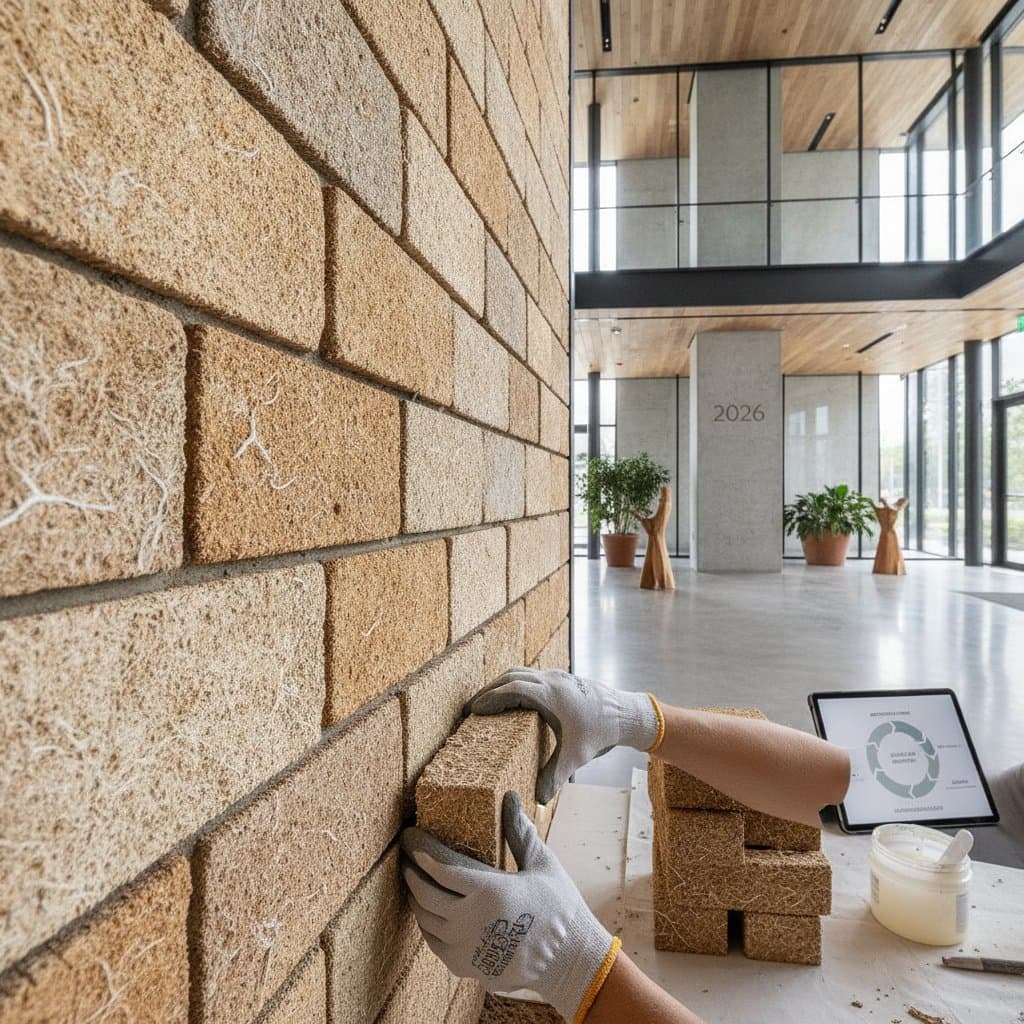
Understanding Mycelium Bricks
Building with mycelium bricks replaces traditional clay masonry with a renewable material that grows rather than fires in a kiln. Mycelium, the fibrous network of fungi, binds agricultural waste such as straw, hemp hurds, or sawdust into a lightweight composite. Grown at room temperature, the material forms durable, fire-resistant blocks or panels that become stable once dried and heat-treated.
This approach lowers embodied carbon because it avoids the high-energy kilns required for clay bricks. At the end of use, the blocks compost back into soil, supporting circular construction practices. Mycelium bricks suit non-load-bearing walls, insulation panels, and interior features. Hybrid assemblies with timber or light steel frames extend their use to larger projects when an engineer reviews the design.
Skill level required is intermediate. The work calls for experience with basic construction and mold handling, along with attention to moisture and temperature control. Physical effort stays moderate, mainly involving lifting substrate and moving molds. Structural applications always need review by a licensed engineer.
Choosing Between DIY and Professional Installation
Small batches of mycelium bricks can be produced at home for garden walls, planters, or interior partitions. Larger structural walls or code-compliant buildings require professional oversight to meet load, moisture, and fire standards.
DIY projects work best for decorative walls, acoustic panels, and small insulation blocks. Professional work covers structural walls, roofing elements, and large cladding systems that need testing and certification.
Selecting a Substrate
Hemp Hurd
Hemp hurds deliver good structure and moisture control.
- Lightweight and naturally mold-resistant
- Requires grinding for uniform texture
- Moderate cost
- Beginner friendly
- Best for interior decorative bricks
Sawdust
Hardwood sawdust produces a dense, fine surface.
- Easy to source and sterilize
- Can compact and limit airflow if too wet
- Low cost
- Intermediate skill needed for moisture balance
- Suitable for furniture panels
Straw
Straw supports fast colonization and light results.
- Rapid growth
- Lower density reduces strength
- Very low cost
- Beginner level with post-growth trimming
- Good for temporary garden features
Step-by-Step Production
- Mix the chosen substrate with water until it clumps without dripping. Add any nutrients and blend evenly.
- Place the mixture in heat-safe bags and steam for one hour. Cool completely before proceeding.
- In a clean space, add mycelium spawn at five percent of substrate volume. Knead gently, seal, and label the bags.
- Store in a dark, warm location. White mycelium spreads over several days. Discard any batch showing green or black patches.
- Pack the colonized substrate into molds without over-compressing. Cover with breathable fabric.
- Keep molds in a humid, clean area for several days while the mycelium binds the material.
- Remove the block once fully knit. Air dry until firm, then finish drying at low heat to halt growth.
- Apply a natural sealant such as beeswax or linseed oil for added water resistance.
Each finished brick should feel dry, sound hollow when tapped, and show no soft areas.
Installation and Maintenance
Lay bricks with tight joints and bond them using lime mortar or casein adhesive. For interior surfaces, finish with limewash or clay paint. Exterior applications need protective cladding such as wood siding. Inspect joints yearly and reseal as needed to prevent moisture damage.
Extending the Material in Practice
Mycelium blocks combine readily with timber frames for hybrid walls. Fixtures can be embedded while the substrate remains soft. In gardens, sealed blocks serve as planters that eventually return to soil. Natural pigments mixed into the substrate create varied surface patterns.
Mycelium bricks give builders a direct connection to a living material that reduces waste and energy use while delivering distinctive performance in non-structural roles.