
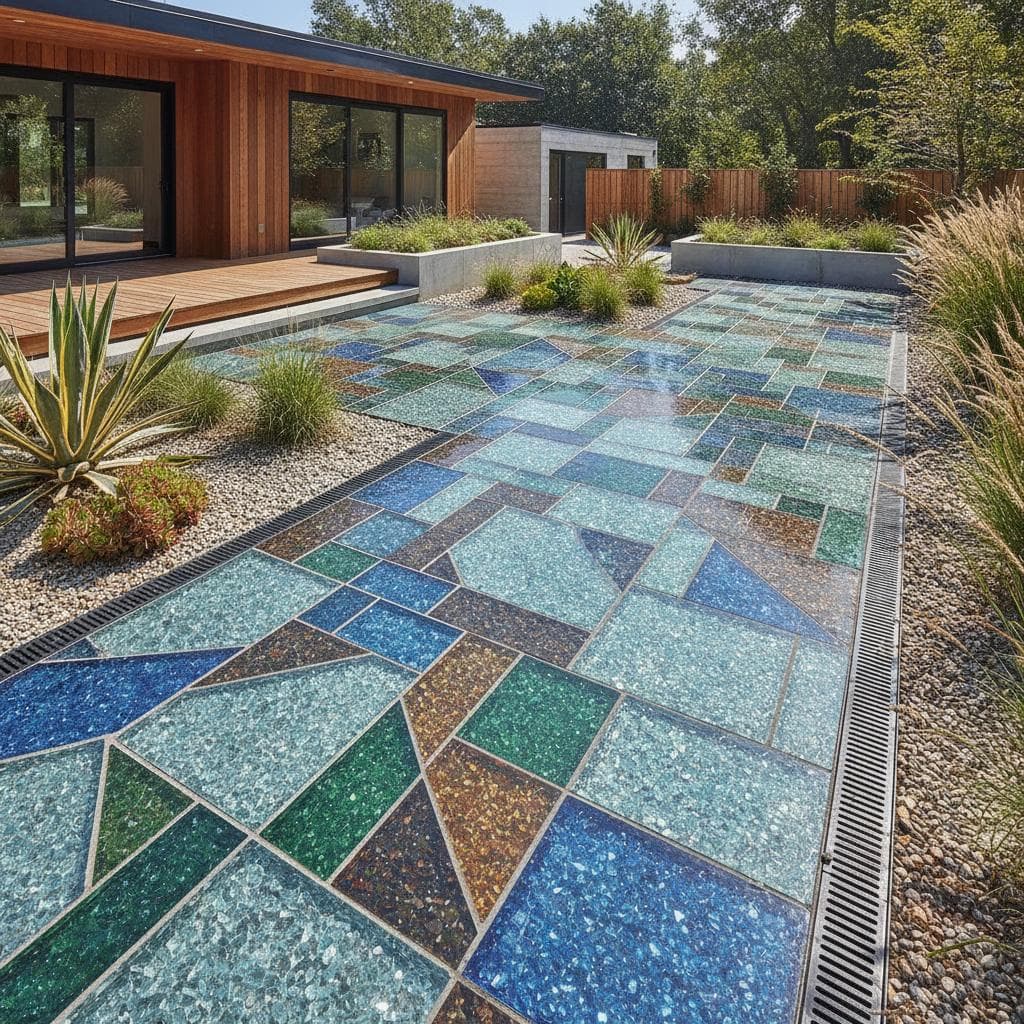
Recycled Glass Pavers Lead Eco Landscaping Trends
Quick Take
Recycled glass pavers continue to advance sustainable hardscaping practices. They incorporate waste glass that would otherwise occupy landfill space. The primary installation risks involve chipping and drainage problems that arise from inadequate preparation. Overall expenses depend on material sourcing, base preparation, and labor expertise.
Site Assessment Steps
Homeowners evaluate site suitability for recycled glass pavers through straightforward field observations.
- Confirm that the planned patio or walkway slopes away from buildings so water avoids foundation areas.
- Test soil firmness by walking the space after rainfall. Sinking or spongy conditions require added stabilization before paver placement.
- Identify reusable concrete, stone, or asphalt that can serve as sub-base material.
- Note sun exposure levels. Full sun areas display glass colors with greatest intensity while shaded zones reduce visual impact.
- Map roof and yard water flow paths. Crossings over the intended surface call for added drainage channels or gravel trenches.
These evaluations require minimal time yet avert costly corrections later.
Conditions That Increase Risk
Several site conditions elevate both expense and failure probability.
Poor drainage with standing water near the house foundation creates immediate concerns. Frost heave cracks in adjacent concrete signal ground movement issues. Tree roots that lift existing surfaces demand removal before new work begins. Unstable fill soils or buried debris near grade require excavation. Chronic moisture appears as efflorescence on nearby masonry. Prior patios without edge restraint often need complete rebuilding.
Each factor can double project costs when left unaddressed.
Cost Ranges and Corrections
Recycled glass pavers appear in molded units that combine crushed glass with resin or cement, or as aggregate within concrete blocks and slabs.
Base preparation typically requires 4 to 8 dollars per square foot for excavation, geotextile fabric, and compacted gravel. Material prices range from 10 to 20 dollars per square foot based on color, size, and binder. Professional labor adds 7 to 15 dollars per square foot. Drainage improvements cost 1 to 3 dollars per square foot when French drains or swales become necessary. Edge restraints run 4 to 6 dollars per linear foot.
A finished patio or path averages 25 to 40 dollars per square foot. Thin pavers placed over existing cracked slabs frequently fail within two seasons as cracks transfer upward. Project expansion during installation often inflates budgets. Fixed footprints established early prevent this outcome.
Material Decision Guidelines
Existing surfaces receive different treatment based on condition.
Sound concrete patios accept surface grinding followed by a thin bonded glass aggregate overlay. Moving or deeply spalled slabs require full replacement. Stable stone walks remain in place with selective glass paver substitution for visual contrast. Small chips in poured glass aggregate concrete receive epoxy and crushed glass repairs. Delamination or deep cracks necessitate replacement. Permeable systems need regular joint cleaning with fine gravel replacement only after settlement or frost damage.
Stable existing materials stay whenever possible.
Recommended Project Team
Effective sequencing controls expenses.
A landscape designer establishes grades and drainage early. A soils specialist addresses visible groundwater or slope problems. An installer familiar with glass systems handles the unique hardness and brittleness of the material. A lighting specialist coordinates wiring for translucent units before base compaction. A project manager synchronizes multiple trades on complex sites.
Joint site visits among candidates reduce later miscommunication. Professional oversight adds 10 to 20 percent to direct costs yet avoids larger rework expenses.
High Value Actions
Certain steps deliver stronger returns than others.
Drainage improvements precede decorative work. Permeable bases limit runoff. Local glass sourcing reduces transport energy. Glass pavers paired with native plants cut irrigation demand. Low voltage lighting highlights surfaces efficiently.
Custom shapes raise cutting waste. Large color mixes risk batch mismatches. Vehicle traffic areas exceed typical load ratings.
Stable stone or brick borders remain in place to provide contrast and contain costs.
Installation Sequence
Tasks follow a fixed order that protects the investment.
- Drainage and grading corrections redirect runoff and stabilize soil.
- Base construction excavates to solid subsoil then places geotextile and compacted gravel.
- Edge restraint installation locks the layout geometry.
- Paver placement maintains uniform joints.
- Joint filling and final compaction use fine gravel or polymeric sand.
- Lighting tests and surface inspection check for chips or voids.
Reversing any step invites premature failure.
Ongoing Care Practices
Simple routines preserve appearance and function.
Joints stay clear of debris to retain permeability. Joint aggregate receives annual replenishment. Metal tools and deicing salt are avoided to prevent surface damage. Mild detergent and soft brushes handle cleaning. Edge lifting or corner chips receive prompt single unit replacement.
Properly installed surfaces maintain structural integrity for two decades or longer. Integral glass pigmentation prevents color fading.
Sustainability Outcomes
Each square foot incorporates several pounds of recovered post consumer glass. This practice diverts landfill material and lowers demand for quarried stone. Permeable designs recharge groundwater instead of directing flow to storm systems. Lower heat absorption reduces surface temperatures compared with dark concrete.
Visual Integration Approaches
Layout determines whether the material appears modern or traditional. Older homes benefit from limited use as accents or paths that reference existing leaded glass or mosaics. Newer properties support larger patios or pool decks. Consistent joint widths across mixed materials maintain clean transitions. Low voltage fixtures rated for exterior use provide illumination beneath translucent units.
Final Site Verification
Three checks precede material orders. Drainage paths require confirmation. Base compaction depth needs verification. Subgrade stability after rainfall must be established. These observations determine whether the finished surface will perform over time.
Recycled glass pavers deliver durable performance and distinctive appearance when placed on stable, well drained bases.