
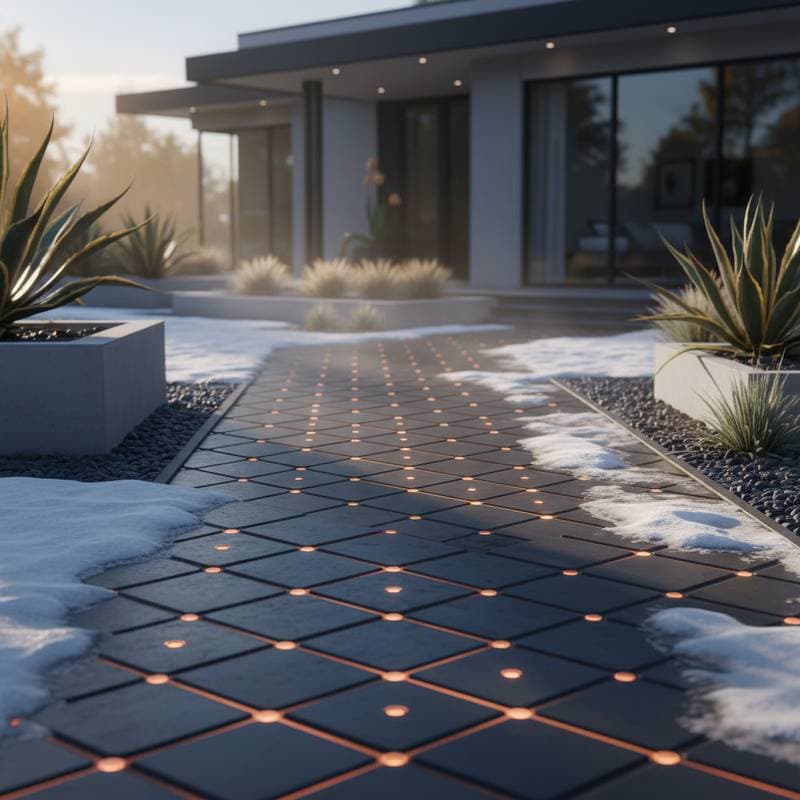
How Solar Pavers Combine Energy Generation and Ice Management
Solar pavers integrate photovoltaic cells into durable walkway surfaces. These units capture sunlight to produce electricity while embedded heating elements activate to clear ice and snow. The dual function supports both power creation and pedestrian safety without separate systems.
Homeowners and facility managers gain a surface that reduces reliance on grid electricity. At the same time, the heating feature lowers slip hazards during winter months. Proper selection and setup determine long term performance.
Core Components and Operation
Each paver contains solar cells protected by tempered glass or reinforced polymer layers. A conductive grid beneath the surface channels generated power to a central inverter or battery storage. Heating coils connect to temperature sensors that trigger automatically when conditions drop near freezing.
Control units allow manual overrides and scheduling. Excess electricity can feed into home systems or return to the grid through net metering arrangements. Monitoring apps display output levels and heating cycles for ongoing oversight.
Cost Considerations and Value Factors
Material prices range from forty to ninety dollars per square foot depending on cell efficiency and heating capacity. Professional installation adds twenty to forty dollars per square foot for site preparation, wiring, and integration with existing electrical panels. Incentives such as federal tax credits or local rebates can offset twenty six percent or more of the initial outlay.
Payback periods typically fall between eight and twelve years when electricity generation and reduced ice removal expenses are combined. Properties in regions with frequent winter precipitation see faster returns through lower liability risks and maintenance labor.
Planning and Installation Steps
- Assess sun exposure across the target area using shade analysis tools to confirm at least four hours of direct light daily.
- Verify load requirements for the chosen paver thickness to support foot traffic or light vehicles.
- Coordinate with licensed electricians to plan conduit routes and connection points before excavation begins.
- Install a stable base of compacted gravel and sand to ensure drainage and prevent shifting.
- Lay pavers in the designed pattern while routing cables through designated channels and sealing all joints.
- Connect the array to the inverter and program the control system for local climate data.
Site preparation often requires permits. Early consultation with local authorities prevents delays.
Maintenance Practices for Sustained Performance
Clean surfaces quarterly with water and a soft brush to remove debris that blocks sunlight. Inspect seals around edges each spring and fall for signs of wear or water intrusion. Test heating response before the first freeze by simulating low temperatures through the control interface.
Battery systems, when present, need capacity checks every two years. Firmware updates from the manufacturer maintain sensor accuracy and energy reporting features. Replacement of individual damaged pavers can occur without disturbing the full array when modular designs are selected.
Selecting the Right System for Specific Sites
Compare efficiency ratings above twenty percent for better output in limited space. Review warranty terms that cover both photovoltaic performance and heating element longevity, ideally fifteen years or more. Confirm compatibility with smart home platforms if remote monitoring is desired.
Consult installers who provide references from completed projects in similar climates. Request detailed energy yield estimates based on local weather data rather than generic averages.
Long Term Benefits for Property Owners
These surfaces deliver continuous electricity production alongside reliable winter safety. Reduced dependence on chemical deicers protects surrounding landscaping and drainage systems. Over time the combination of energy savings and hazard prevention supports both environmental goals and practical daily use.