
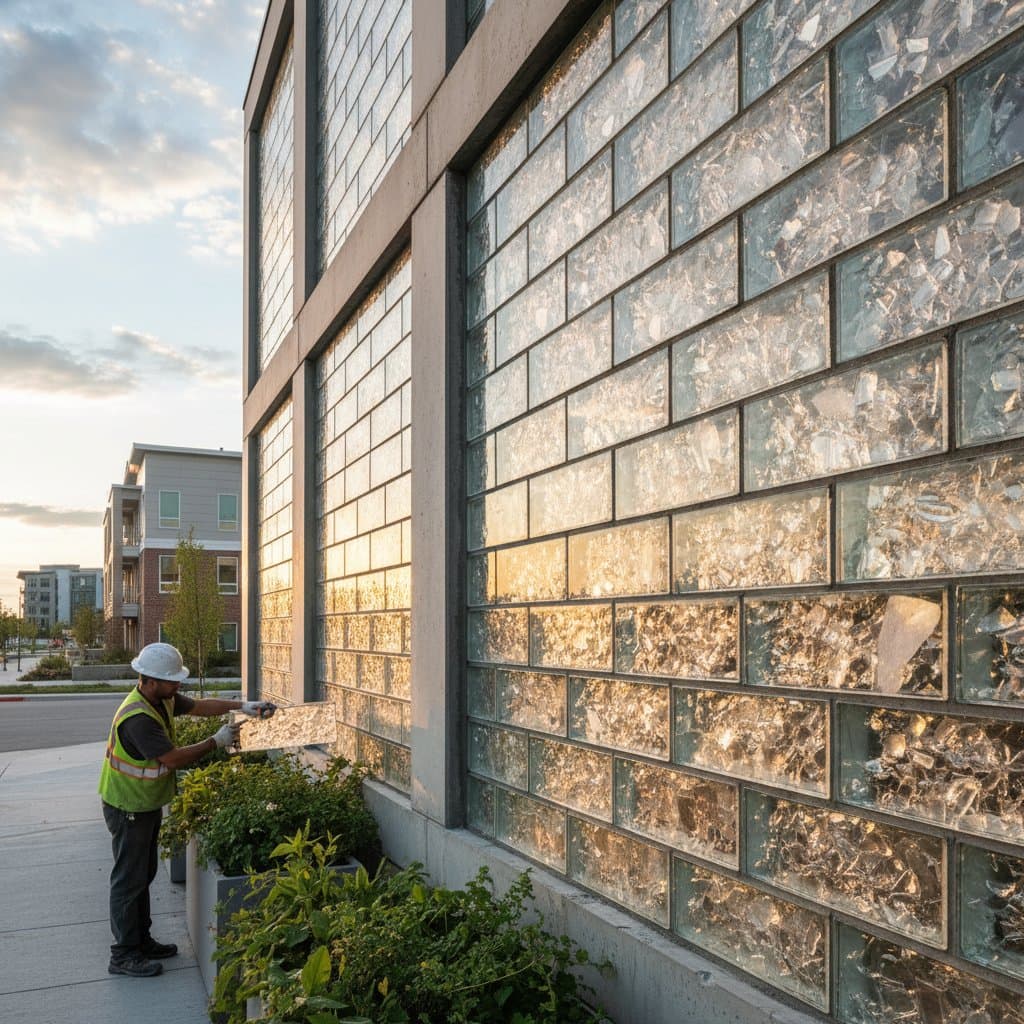
Introduction to Recycled Glass Bricks
Recycled glass bricks offer a compelling alternative to traditional masonry materials. These blocks, formed from discarded glass, provide the durability of concrete while advancing sustainability goals. Builders and homeowners appreciate their ability to diffuse light, creating brighter interiors without additional fixtures.
The appeal lies in their dual role as functional and aesthetic elements. They withstand structural demands yet contribute to waste reduction by repurposing materials that might otherwise fill landfills. As construction practices evolve toward greener standards, glass bricks emerge as a practical solution.
Production Process
Manufacturing recycled glass bricks begins with collecting post-consumer glass, such as bottles and jars. Workers sort and crush this glass into fine aggregate, removing contaminants through washing and screening. The cleaned material then mixes with binders and additives to form a moldable compound.
This mixture pours into brick-shaped molds and heats in kilns at controlled temperatures, typically between 1,000 and 1,200 degrees Fahrenheit. The process fuses the glass without melting it completely, preserving recycled properties. Cooling occurs gradually to avoid cracks, resulting in solid blocks ready for use.
Production emphasizes efficiency. Factories often operate with low-energy kilns, cutting carbon emissions compared to cement-based alternatives. Each batch reuses up to 95 percent recycled content, directly addressing glass waste accumulation in urban areas.
Key Benefits
Glass bricks deliver strength comparable to concrete, with compressive ratings often exceeding 1,000 pounds per square inch. This resilience suits them for load-bearing walls and facades. Their translucent quality allows light passage, reducing reliance on artificial lighting and lowering energy costs by up to 20 percent in well-designed spaces.
Environmentally, they shine by diverting glass from landfills. Traditional brick production consumes vast energy and resources; glass bricks require less, with a carbon footprint roughly half that of clay bricks. Additionally, their non-porous surface resists mold and mildew, improving indoor air quality.
Aesthetically, these bricks add modern elegance. Available in clear, tinted, or textured varieties, they enhance architectural features like privacy walls or shower enclosures. The combination of durability, efficiency, and design versatility positions them as a forward-thinking choice.
Materials Needed
Gather essential supplies before starting any project. Select high-quality glass bricks suited to your application, whether interior partitions or exterior panels.
- Mortar or adhesive: Polymer-modified thin-set mortar for bonding
- Reinforcement: Metal ties or channels for structural support in load-bearing walls
- Sealant: Clear silicone for joints and perimeter edges
- Tools: Trowel, level, masonry saw for cutting, and spacers for uniform joints
- Safety gear: Gloves, eye protection, and respirators when cutting or handling glass
These items ensure a secure and professional result. Source materials from reputable suppliers to maintain consistency.
Installation Guide
Proper installation maximizes the performance of glass bricks. Begin with planning to align with building codes and design intent.
Site Preparation
Ensure the foundation or base is level within 1/8 inch across the wall length. Use moisture barriers if installing near damp surfaces. For exterior applications, plan for expansion joints at 8 to 12 foot intervals to accommodate temperature fluctuations.
Clear the area of debris and verify structural integrity. Mark guidelines for brick placement using a chalk line. This preparation prevents issues during layout.
Laying the Bricks
Apply mortar or adhesive to the base in a consistent bed, about 3/8 inch thick. Position the first row of bricks, using spacers to maintain 1/4 to 1/2 inch joints. Check level frequently and adjust as needed.
For subsequent rows, apply mortar to brick edges and stack carefully, incorporating reinforcement ties every third course in structural walls. Cut bricks with a wet saw for edges or openings, wearing safety gear throughout. Work in sections to manage the process efficiently.
Complete the wall by filling joints with sealant after mortar sets, typically 24 hours. This step secures the structure and enhances weather resistance.
Quality Assurance and Inspection
Inspect the wall for alignment, joint uniformity, and surface cleanliness. Correct minor misalignments greater than 1/8 inch immediately to prevent visual distortion. Verify that all joints are sealed and reinforcement is embedded correctly.
For exterior installations, confirm expansion joints are properly sealed and flashing is in place to direct water away. Conduct a final walkthrough to spot defects.
Curing time depends on humidity and temperature, typically requiring 3 to 5 days before full load-bearing or finishing work can resume. Avoid applying excessive pressure or vibration during this period to allow proper hardening.
Maintenance Practices
Glass bricks require minimal long-term maintenance, but periodic inspection preserves their clarity and integrity.
Inspection Checklist
- Every 6 months: Clean surfaces with mild soap and water
- Annually: Check perimeter sealant for cracks or separation
- Every 2 years: Inspect framing and reinforcement for corrosion
- After severe weather: Examine for chips or displacement
Follow this schedule to extend service life.
Cleaning Guidelines
Use a non-abrasive sponge or microfiber cloth for routine care. Avoid ammonia-based cleaners that can dull the surface. For exterior installations, low-pressure water rinsing prevents buildup of dirt or salt deposits.
Address stains promptly with a vinegar solution if needed, followed by thorough rinsing. These methods keep the bricks looking pristine.
Longevity Expectations
High-quality recycled glass bricks can last 50 years or more with proper maintenance. Their resistance to UV light, moisture, and corrosion extends lifespan beyond typical concrete or clay units. Regular care ensures they retain both function and appearance over decades.
DIY or Professional Installation
Experienced DIY builders can handle small interior partitions or decorative panels using pre-mounted systems. Such projects save about 25 to 35 percent in labor costs. Follow manufacturer guidelines closely for best results.
Professional installation is recommended for structural walls, large facades, or complex designs requiring reinforcement and waterproofing. When hiring a contractor, verify licensing, insurance, and familiarity with glass masonry systems. Request references and inspect previous projects to confirm quality standards.
Practical Tips for Optimal Results
Handle glass bricks with padded gloves to prevent chips and fingerprints. Maintain consistent joints to enhance visual symmetry. Store bricks on padded pallets away from direct sunlight until installation.
Incorporate LED backlighting to highlight the translucence of colored bricks for striking architectural effects. Plan electrical and plumbing penetrations before laying bricks, as modifications afterward prove difficult.
These strategies elevate the project from standard to exceptional.
Advancing Sustainable Construction
Recycled glass bricks transcend mere materials; they embody a commitment to resource conservation and innovative design. By integrating them into feature walls, bathroom renovations, or passive-solar facades, projects achieve both environmental and aesthetic excellence. This approach fosters spaces that endure while honoring planetary limits.