
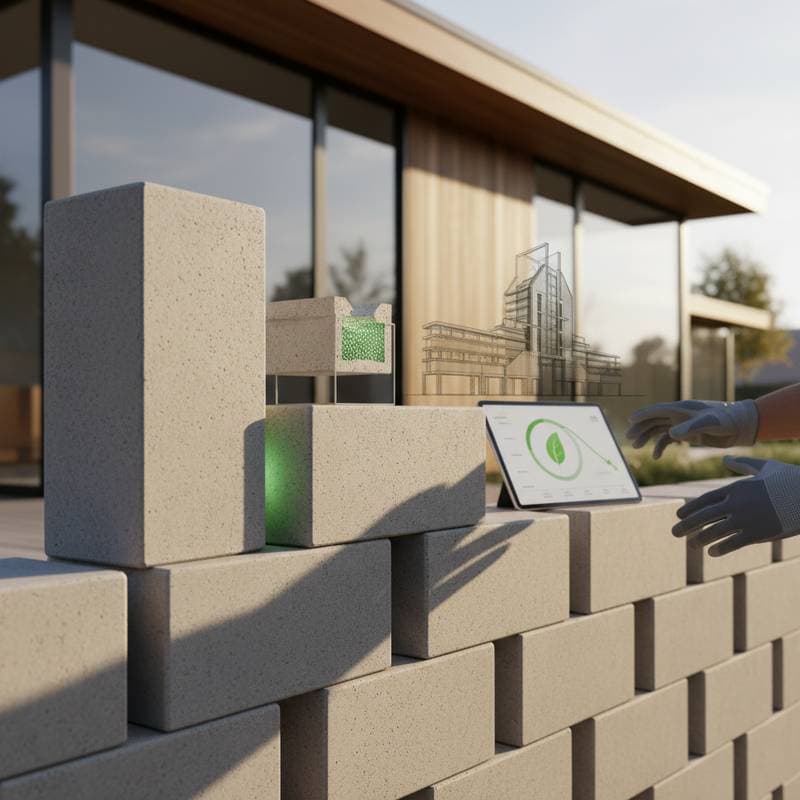
Zero-Cement Blocks Advance Sustainable Masonry Practices
Zero-cement blocks serve as an innovative masonry solution that avoids traditional Portland cement entirely. These units rely on geopolymer binders, formed through a chemical process involving industrial byproducts such as fly ash or slag combined with alkaline activators. This process yields a durable, stone-like substance that mimics concrete performance but generates significantly fewer emissions. Builders find these blocks familiar in appearance and handling, yet they signal a transformative approach to environmentally responsible construction.
Advantages and Challenges
Advantages
- Reduced carbon emissions. Geopolymer production emits substantially less carbon dioxide than conventional cement manufacturing.
- Superior compressive strength. These blocks often achieve or surpass the strength levels of standard concrete units.
- Enhanced durability. They exhibit strong resistance to high temperatures, freeze-thaw cycles, and chemical degradation.
- Improved thermal properties. Lower thermal conductivity and better fire resistance distinguish them from many cement alternatives.
- Resource efficiency. Industrial waste materials find new purpose as robust building elements.
Challenges
- Supply constraints. Production remains limited in certain areas due to raw material availability.
- Curing requirements. Specific formulations demand precise environmental controls during the setting phase.
- Initial expense. Upfront material and processing costs exceed those of traditional blocks.
- Regulatory gaps. Building codes and standardized testing protocols are still developing.
- Aesthetic limitations. Options for pigmentation and surface treatments continue to expand.
Cost Considerations
Prices for zero-cement blocks, based on material alone, typically fall between 3 and 6 dollars per square foot of wall area, varying by block dimensions and strength grade. When factoring in installation, expect costs from 10 to 18 dollars per square foot, depending on labor rates, site conditions, and bonding methods. Several elements drive higher expenses:
- Custom designs or specialized finishes
- Small-scale manufacturing runs
- Regional scarcity of suppliers
- Extra steps for curing and material handling
As production volumes increase and distribution networks grow, these costs should align more closely with premium concrete block options.
Longevity and Upkeep
Geopolymer masonry walls, when constructed properly, endure for 50 years or longer with routine attention. Annual inspections should focus on joint integrity and any signs of shifting or cracking. Maintenance involves gentle cleaning with mild detergent and water; avoid acidic solutions that might harm the surface. Resealing proves unnecessary in most cases, except for units with decorative coatings. Their dense composition and chemical inertness minimize issues like efflorescence and spalling, outperforming cement-based counterparts.
Key Specifications to Verify
Before purchasing zero-cement blocks, evaluate these critical attributes:
- Compressive strength: Minimum 2,000 psi for non-structural applications; 3,000 psi or greater for load-bearing uses.
- Water absorption rate: Under 10 percent to ensure suitability for exterior exposure.
- Freeze-thaw resistance: Seek certification from accredited laboratories.
- Dimensional accuracy: Uniform sizing promotes precise joint alignment and level courses.
- Thermal and fire performance: Confirm compliance for assemblies subject to building regulations.
Request detailed test reports from suppliers to validate these specifications.
Project Planning Essentials
Approach planning for zero-cement block walls similarly to conventional masonry projects. Assess footing dimensions, soil load-bearing capacity, and effective drainage routes. A firm, compacted foundation mitigates settling risks. For exterior installations, ensure surfaces slope to direct water away from the foundation. Structural walls require adherence to local engineering standards; verify zoning restrictions on setbacks and maximum heights prior to commencement.
Step-by-Step Installation Guide
- Mark the wall alignment and establish reference lines on the foundation or footing.
- Perform a dry run of the base course to verify positioning and quantity of blocks.
- Spread mortar or adhesive according to product guidelines; thin-set options suit many geopolymer types.
- Maintain level and vertical alignment throughout each successive course.
- Tool joints for water tightness or prepare for later finishing.
- Incorporate reinforcement, such as vertical bars in filled cores, where specified.
- Adhere to curing protocols, including humidity and temperature management, for optimal hardening.
Protective gear, including gloves and safety glasses, is essential when working with alkaline components or during cutting operations. Implement dust suppression techniques for sawing and abrading activities.
Design Patterns and Variations
Standard dimensions, such as 8x8x16 inches, dominate availability, alongside interlocking and reduced-weight variants. Consider these configurations:
- Running bond pattern for load-bearing straight walls
- Stack bond layout to achieve sleek, contemporary aesthetics
- Textured or split-face blocks for architectural accents
- Dry-stack interlocking units to simplify assembly
Match selections to functional demands, visual objectives, and installation feasibility.
DIY Feasibility Versus Professional Expertise
Experienced individuals can tackle modest, non-load-bearing endeavors like garden borders or planters with zero-cement blocks. Essential tools include a mason's level and trowel, coupled with careful attention to alignment. Engage certified masons for:
- Load-supporting or integrated structural elements
- Projects requiring grouting or reinforcement
- Sites prone to moisture or temperature extremes
- Extensive volumes or intricate layouts
Professionals manage formulation nuances, curing oversight, and regulatory compliance effectively.
Addressing Potential Issues
Failures commonly stem from inadequate curing, unstable foundations, or insufficient drainage. Joint cracks signal differential settlement; repair through targeted repointing with matching materials. Prolonged surface moisture may cause flaking, remedied by enhancing runoff or installing protective overhangs. Soft or crumbly textures warrant a review of curing procedures and consultation with the producer.
Performance Across Regions and Climates
These blocks adapt reliably to diverse environments, from arid heat to severe winters. Their impermeability guards against freeze-thaw deterioration. Coastal settings benefit from inherent resistance to saline attack. In dry regions, monitor initial curing to prevent premature moisture loss. Select products certified for your locale's weather patterns.
Comparable Sustainable Options
Where zero-cement blocks prove inaccessible, viable alternatives encompass:
- Fly ash-enhanced concrete blocks, which incorporate partial cement replacement.
- Stabilized compressed earth blocks, ideal for arid zones with added binders.
- Concrete with recycled aggregates, conserving virgin resources.
- Autoclaved aerated concrete (AAC) blocks, offering insulation benefits despite vulnerability to moisture.
Implementing Zero-Cement Solutions
Zero-cement blocks propel masonry toward sustainability by minimizing emissions, repurposing waste, and ensuring reliable durability. For upcoming wall constructions or outdoor enhancements, inquire with regional suppliers about geopolymer availability. Examine performance documentation, secure regulatory approval, and assess comprehensive project economics to integrate these materials successfully.