
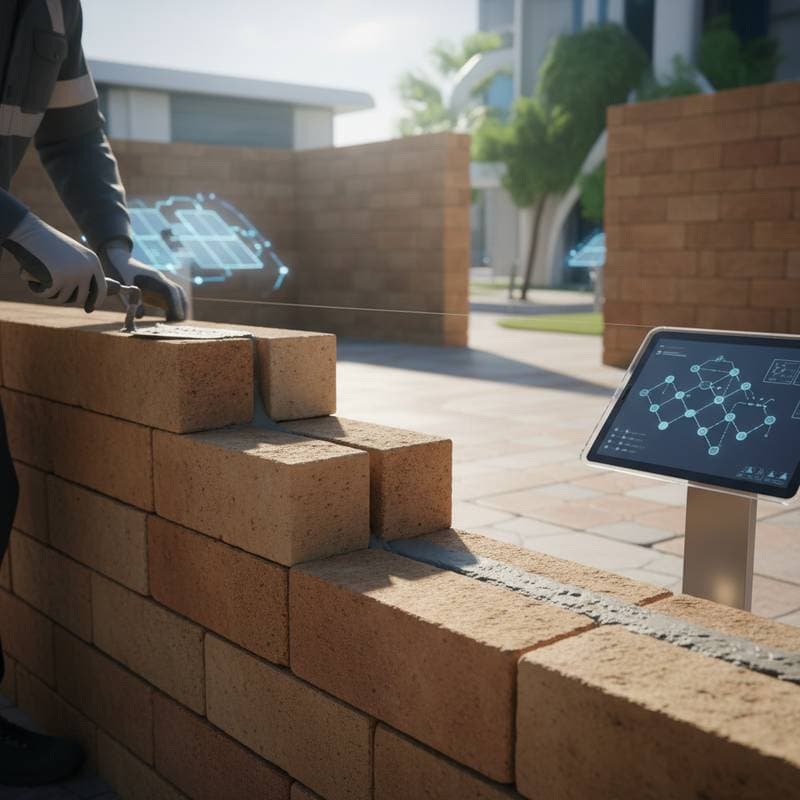
Why Zero-Cement Bricks Lead Sustainable Masonry in 2025
Zero-cement bricks represent a significant advancement in masonry units, produced without Portland cement. These bricks rely on geopolymer binders derived from industrial byproducts such as fly ash or slag. The resulting chemical reaction creates a robust, stable matrix that rivals traditional concrete in performance while eliminating the substantial carbon emissions associated with cement production. For builders and homeowners committed to sustainable practices, zero-cement bricks transform the construction of walls, pavements, and other structures.
Advantages and Challenges
Advantages
- Reduced Carbon Emissions. Geopolymer binders minimize environmental impact by repurposing waste materials rather than relying on energy-intensive limestone clinker production.
- Superior Strength. These bricks achieve compressive strengths that equal or surpass those of conventional cement-based bricks, supporting demanding structural applications.
- Enhanced Durability. They exhibit strong resistance to freeze-thaw cycles, salt exposure, and chemical degradation, ensuring longevity in harsh conditions.
- Improved Thermal and Acoustic Properties. The dense structure provides effective insulation against heat and sound, contributing to energy-efficient buildings.
- Rapid Curing Process. Certain formulations attain full strength in mere hours, which accelerates project timelines and reduces labor costs.
Challenges
- Supply Constraints. Availability of geopolymer mixes varies by region, potentially limiting options in some areas.
- Color Inconsistencies. Variations in mineral composition can lead to uneven tones, complicating efforts to achieve uniform aesthetic finishes.
- Curing Requirements. Optimal performance in select blends demands controlled conditions, such as heat application or humidity management.
- Specialized Installation Knowledge. Workers must possess familiarity with geopolymer properties to prevent issues like cracking or inadequate joint bonding.
Cost Considerations
The price of zero-cement bricks generally falls between 1.50 and 3.00 dollars per unit, influenced by factors such as dimensions, surface finish, and sourcing. When including installation, expect costs of 10 to 18 dollars per square foot. Economies of scale in larger projects, proximity to raw material suppliers, and the chosen curing technique all affect final expenses. Sourcing fly ash or slag locally can lower costs, whereas reliance on imported or custom formulations tends to increase them.
Expected Lifespan and Upkeep
Properly constructed walls using zero-cement bricks endure for 50 years or longer. Conduct annual inspections to identify any cracks or deterioration in joints. For cleaning, apply a solution of mild detergent and water; avoid acidic cleaners that may compromise the surface finish. The inherent water resistance of the geopolymer matrix typically eliminates the need for sealants. Address mortar joint repairs promptly using compatible low-cement or geopolymer formulations.
Key Specifications to Verify
Prior to purchase, evaluate the following attributes:
- Compressive Strength: Target at least 3,000 psi for standard walls, with higher ratings for load-bearing elements.
- Water Absorption Rate: Ensure it remains under 8 percent to withstand exterior weathering.
- Freeze-Thaw Durability: Confirm compliance with ASTM standards or equivalent local codes suited to your regional climate.
- Dimensional Accuracy: Select bricks with precise sizing to facilitate secure joints and even alignments.
- Binder Composition: Confirm that the geopolymer source and curing protocol align with the project's environmental demands.
Site Preparation Essentials
Preparation for zero-cement bricks mirrors that of traditional masonry projects. Verify soil stability, establish a level foundation, and direct drainage away from the structure to prevent moisture accumulation. For paved areas, incorporate a gentle slope to facilitate water runoff. In regions prone to frost, excavate foundations below the frost line to avoid upheaval. Always contact utility companies prior to digging to locate underground lines.
Step-by-Step Installation Guide
- Outline the Layout. Establish corner markers, guide lines, and reference points to define the project's boundaries.
- Build the Foundation. Compact layers of crushed stone to a depth of 4 to 6 inches for pathways, or deeper for structural walls.
- Position the Initial Course. Employ a string line or level to align the first row precisely.
- Apply Adhesive Mortar. Select geopolymer or low-cement mortar formulated for compatibility with the bricks.
- Build Upward. Alternate brick orientations as needed, maintaining uniform joint widths of approximately 3/8 inch.
- Finish the Joints. Compress and smooth them to create a moisture barrier.
- Facilitate Curing. Follow manufacturer guidelines by keeping the assembly moist or protected during the initial setting period.
Design Patterns and Variations
Available in modular, utility, and bespoke dimensions, zero-cement bricks support diverse layouts. Opt for running bond patterns in walls to enhance structural integrity and flexibility. Stack bond arrangements offer a sleek appearance for non-structural veneers, though they require additional reinforcement. Herringbone designs prove effective for pavements and driveways, minimizing movement and wear.
DIY Projects Versus Professional Installation
Individuals with basic skills can manage modest tasks like garden borders or short walkways, provided they ensure a stable base and meticulous alignment. Professional masons are essential for load-bearing walls, extensive retaining features, or installations subject to building codes. The unique curing dynamics of geopolymer materials demand expertise to avoid adhesion failures; seek contractors experienced in these systems for substantial undertakings.
Addressing Common Issues
Cracking: This often stems from inconsistent curing or inadequate base preparation. Remedy by repointing affected joints and regulating moisture levels throughout the process.
Color Discolorations: Inconsistent batch mixing frequently causes streaks. Remove them carefully using a pH-neutral cleaning agent.
Efflorescence: Soluble salts produce white deposits on the surface. Brush away the residue once dry and improve site drainage to prevent recurrence.
Dislodged Bricks: Weak bonding typically leads to loosening. Extract and reinstall units with newly mixed mortar.
Adapting to Regional Conditions
Coastal environments benefit from the bricks' superior resistance to salt corrosion compared to standard concrete. In areas with freeze-thaw cycles, prioritize low-absorption variants to maintain integrity. For arid, high-temperature regions, implement shaded curing or extended hydration periods to avert surface fissures.
Viable Alternatives
When zero-cement bricks prove unavailable, consider high fly-ash concrete blocks or lime-stabilized units as lower-emission substitutes. Traditional clay bricks offer reliability but incur greater emissions from kiln firing. Compressed earth blocks suit arid settings effectively, though they require protective coatings in humid climates.
Protecting Your Masonry Investment
Maintain functional gutters, downspouts, and site grading to divert water from brickwork. After intense rainfall, check for signs of shifting or subsidence. Intervene early by replenishing joints or replacing damaged mortar to avert progressive deterioration. Perform gentle surface washes annually or biannually to preserve appearance without abrading the material.
Expert Recommendations for Optimal Results
- Procure 5 to 10 percent additional bricks to account for cutting losses, breakage, and spares.
- Stack materials on pallets in a covered area to shield them from moisture prior to installation.
- Prepare mortar in small quantities to ensure uniformity in color and performance.
- Compact base materials in incremental layers rather than single heavy passes for maximum stability.
- Document the specific binder formulation and supplier details for future matching needs.
Embracing Sustainable Construction Practices
Zero-cement bricks address the urgent need for durable buildings that minimize ecological harm from cement manufacturing. They deliver unmatched strength, resilience, and versatility alongside drastic emission reductions. Homeowners and builders alike can adopt these materials to construct responsibly, achieving high-quality results that endure for generations.