
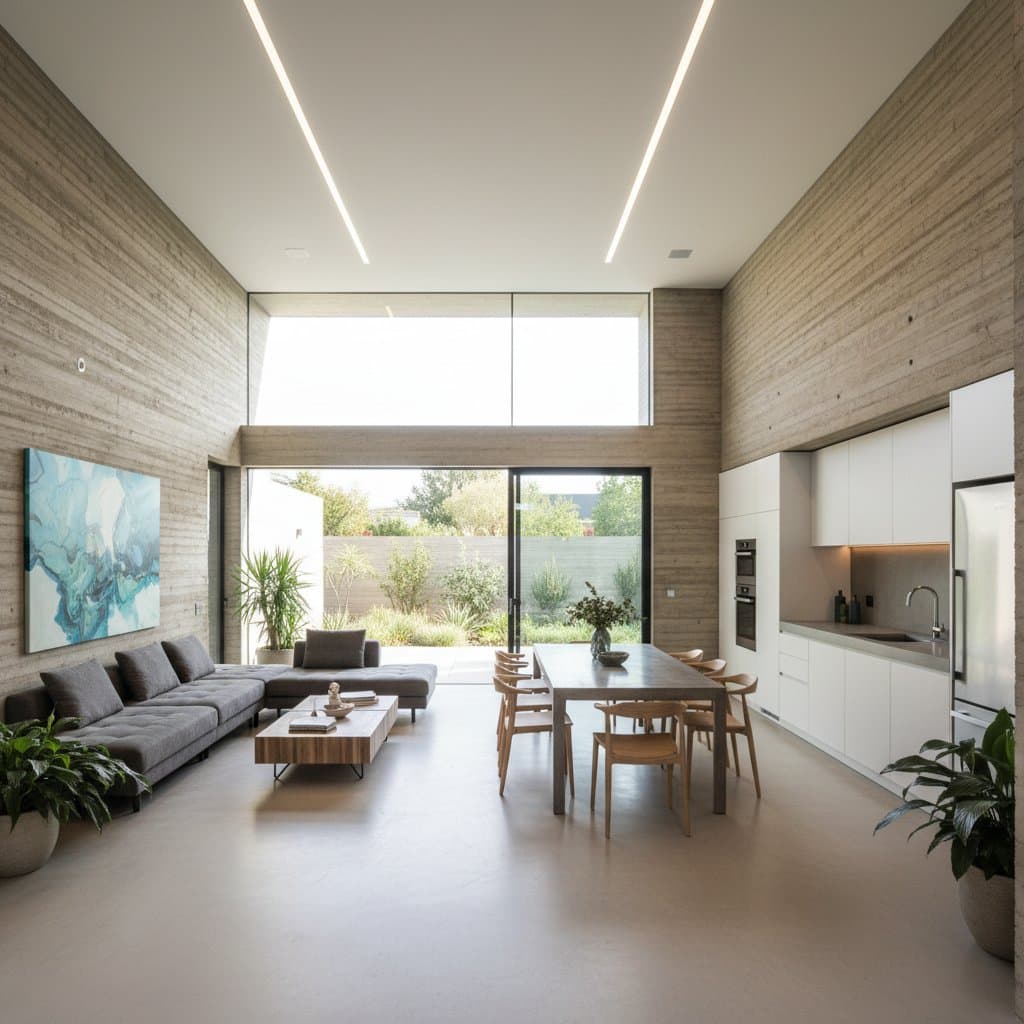
Understanding 3D-Printed Homes
Building a house layer by layer with a robotic arm may seem like science fiction, but 3D-printed homes now transition from prototypes to practical production. The process involves a large automated printer that extrudes a cement-based mixture, which hardens into sturdy structural walls. This approach delivers speed, consistency, and affordability, with complete homes often costing around $99,000 and challenging conventional ideas about housing expenses.
These homes address urgent demands for accessible shelter in diverse regions. The method controls material use to minimize waste and labor, while providing walls with high thermal mass for energy efficiency and long-term durability. For areas grappling with housing shortages or post-disaster rebuilding, 3D printing offers a pathway to erect safe, permanent structures more rapidly than traditional methods.
To evaluate its potential fully, consider the printing process, key materials, and ongoing limitations.
How 3D-Printed Construction Works
A 3D concrete printer operates on rails or a gantry system, guided by a digital blueprint. Its nozzle deposits successive layers of a specialized concrete blend that retains shape as it cures. The machine constructs exterior and interior walls, incorporating spaces for doors, windows, and utility runs.
Automation forms the foundation of this technique. The printer executes exact movements without human error, ensuring even layers and precise angles that reduce the need for corrections and accelerate timelines. The digital model serves as the precise guide, minimizing discrepancies compared to manual framing.
The resulting walls form a solid, continuous structure, often with integrated voids for insulation. This monolithic design enhances resistance to fire, pests, and moisture, while performing strongly under wind and seismic stresses.
The Impact of 3D Printing on Housing
Conventional building depends on extensive labor crews, intricate supply networks, and schedules vulnerable to weather delays, all of which inflate costs. In contrast, a 3D-printed home requires only a compact team to oversee the printer, slashing personnel expenses. Material waste drops significantly, as the system dispenses exactly what the design specifies.
On-site printing eliminates much of the transportation and handling of bulky supplies, aligning with environmental objectives and enabling construction in isolated or supply-challenged locations. For regions short on affordable options, the blend of reduced costs and quicker completion times holds substantial promise.
Design possibilities also broaden considerably. Intricate curves, unique shapes, and tailored layouts emerge straight from digital files, bypassing added labor costs. Builders can thus customize structures to suit regional climates, cultural preferences, or landscape features.
Deciding Between DIY and Professional Construction
Although hobbyist-scale printing projects occur, erecting a complete home demands professional expertise. Setting up the printer, calibrating it, and managing the concrete mixture call for engineering precision. Homeowners might handle finishing touches, landscaping, or trim work, but certified operators must manage the core structural printing.
Approach a printed home project with the same rigor as any standard build. Collaborate with licensed contractors, verify adherence to local codes, and schedule inspections throughout. In areas without established standards for printed concrete, confirm regulatory approval early to avoid setbacks.
Planning Your 3D-Printed Home Project
Evaluating the Site
Site characteristics determine the feasibility of 3D printing. The printer needs flat terrain and a firm base for its support system. Key assessments include:
- Soil composition: Unstable or swelling soils demand compaction or reinforced foundations.
- Drainage patterns: Avoid pooled water or inadequate slopes that could disrupt setup or curing.
- Terrain gradient: Moderate inclines allow for leveling, though severe ones raise preparation expenses.
- Entry points: Ensure room for the printer, material delivery, and operational clearance.
Key Measurements
Quantify the construction zone and check for adequate buffer space around the intended layout, ideally at least five feet. Map utility pathways to prevent interference with the printer's range. Document any elevation variations to inform grading or fill strategies.
Environmental Considerations
Ambient conditions like temperature, moisture levels, and breezes influence the concrete's curing. The mixture must stay pliable for layering yet solidify promptly for stability. In arid or warm settings, time operations for milder periods and apply protective covers to avert cracks.
Anticipated Challenges
Permit processes may extend timelines in unfamiliar territories, with officials possibly requiring structural analyses or material tests. Secure reliable power and steady material supply to sustain operations. Provisions like reserve generators and bulk storage mitigate interruptions that could affect structural soundness.
Selecting Materials
A durable cement-based mixture anchors the printed home. Three primary categories suit varying priorities in expense, function, and sourcing.
Standard Concrete Mixture
Formulated with Portland cement, aggregates, and flow-enhancing additives.
- Advantages: Widely sourced, code-compliant, and robust over time.
- Drawbacks: Substantial weight and moderate insulation, often requiring supplemental barriers.
- Expense: Economical compared to advanced formulas.
- Expertise needed: Routine professional management suffices.
- Upkeep: Low, with periodic sealing advised.
- Ideal applications: Mild climates near concrete facilities.
Lightweight Insulating Mixture
Incorporates cement with aerating agents or porous fillers.
- Advantages: Superior heat retention and reduced mass.
- Drawbacks: Decreased load-bearing capacity, restricting taller builds.
- Expense: Mid-range to elevated.
- Expertise needed: Exact formulation oversight essential.
- Upkeep: Comparable to basics, plus protective finishes.
- Ideal applications: Areas with extreme seasonal shifts.
Geopolymer or Low-Carbon Mixture
Substitutes traditional cement with byproducts like fly ash or slag.
- Advantages: Eco-conscious, exceptionally resilient, and lower emissions.
- Drawbacks: Constrained availability and inconsistent setting.
- Expense: Higher premium.
- Expertise needed: Specialized monitoring.
- Upkeep: Excellent longevity with little intervention.
- Ideal applications: Green building initiatives.
Essential Tools and Supplies
Manual Implements
- Tape measure and laser leveler: Confirm printer positioning and base trueness.
- Smoothing tools: Refine minor areas post-printing.
- Protective equipment: Helmets, hand coverings, breathing masks, and eyewear.
Powered Devices
- Slab cutter: Shape apertures or modify cured elements.
- Agitator drill: Blend repair batches.
- Air compressor or applicator: Distribute sealers or paints.
Leased Machinery
- Printing unit: Sourced exclusively from expert vendors.
- Material handler: Transport supply loads.
- Power unit: Sustain energy for prolonged sessions.
Recommendation: Engage rental firms with certification for printing gear to ensure proper tuning and care.
Supply Inventory
- Cement blend, based on wall dimensions with a 10 percent surplus.
- Strengthening fibers or grids as specified.
- Setting modifiers.
- Protective coatings and finishes.
- Covering, barriers, and interior elements.
Detailed Printing Sequence
- Establish the base: Cast a flat pad with secure ties for wall attachment. Verify squareness and evenness.
- Assemble the printer: Align tracks or frame to span the site fully. Match settings to the model.
- Prepare and validate the blend: Test viscosity and flow per guidelines to avoid sagging or weak bonds.
- Print outer walls: Adhere to the sequence, overseeing extrusion rate and thickness. Sustain steady output to eliminate seams.
- Accommodate gaps: At entry or view points, add provisional braces to hold form.
- Erect inner divisions: Time with service installers to embed pipes or wires pre-completion.
- Complete wall heights: Permit interim hardening for multi-stage designs. Inspect straightness per tier.
- Add overhead and systems: After wall solidification, fit framing, wiring, and plumbing.
- Finalize surfaces: Even or pattern exteriors, coat for protection, and outfit interiors.
Monitor curing and positioning rigorously at every phase. Halt operations for any shifts and adjust foundations; mid-process fixes risk overall stability.
Strategies for Superior Results and Streamlined Operations
Select mixtures tested for local conditions to optimize curing and strength. Integrate reinforcement early in designs for enhanced seismic performance. Collaborate with experienced printers to refine digital models, cutting print durations by up to 20 percent. Document each layer's progress with photos for inspection records. Post-print, apply breathable sealants to boost weather resistance without trapping moisture.
Realizing Lasting Value in Printed Homes
3D-printed homes at $99,000 redefine accessibility without sacrificing quality. Faster erection times and material efficiency lower barriers to entry, particularly in underserved markets. As standards evolve, this technology promises broader adoption, fostering resilient communities equipped for future needs through 2026 and beyond.