
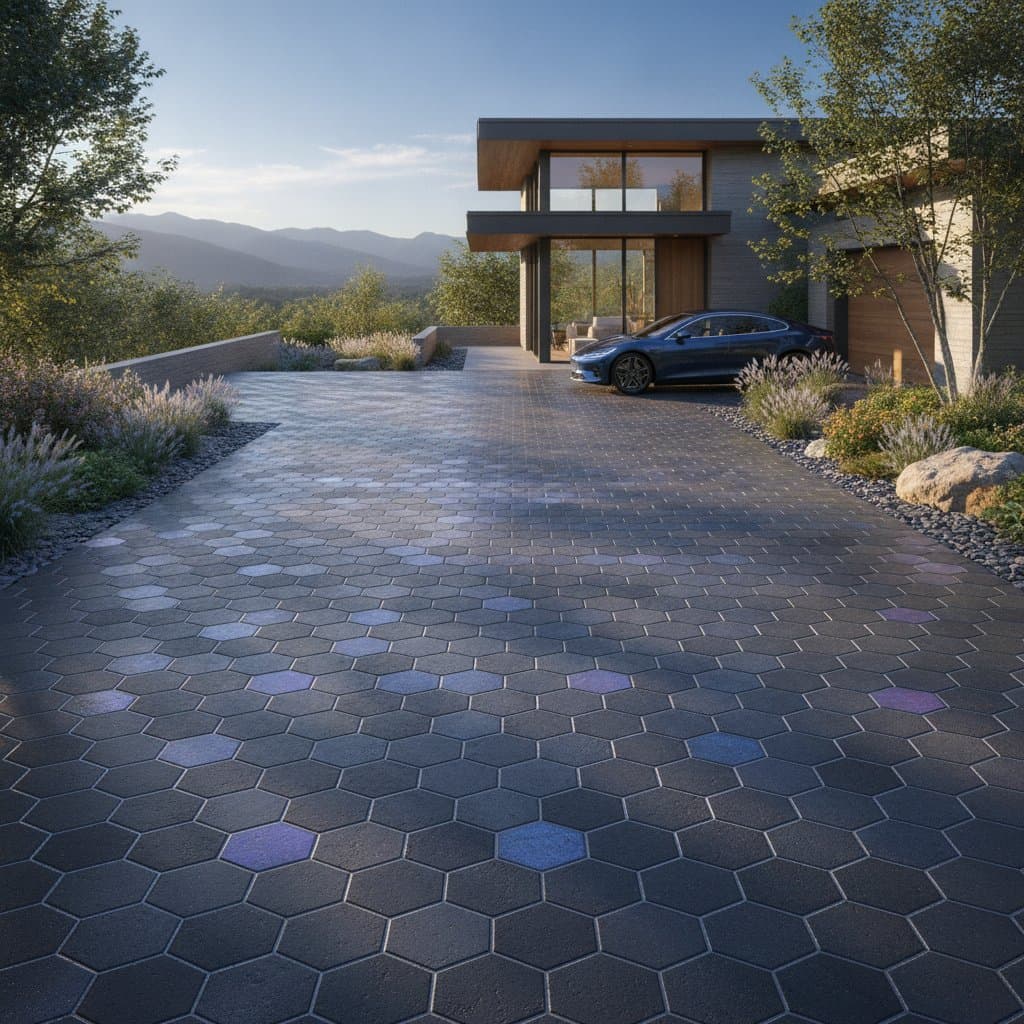
Solar Pavers: Generating Energy Through Your Driveway
Solar pavers combine durable concrete or glass with embedded photovoltaic cells. These units convert sunlight into electricity while supporting foot traffic and vehicles. Homeowners install them in driveways, walkways, patios, and courtyards to produce power without rooftop panels.
Advantages and Limitations
Advantages
- Produce renewable electricity from surfaces already dedicated to access.
- Keep rooflines clear of visible equipment.
- Supply household circuits or export surplus through standard inverters.
- Blend with conventional paver textures and colors.
- Support optional features such as integrated lighting or device charging.
Limitations
- Require greater initial investment than standard pavers or roof mounted arrays.
- Lose output when shaded, covered by snow, or coated with debris.
- Demand specialized repair procedures for electrical connections.
- Remain less common, which limits local installer expertise.
- Need extra reinforcement under frequent heavy vehicle loads.
Cost Breakdown
Material prices range from $20 to $50 per square foot. Total installed cost typically falls between $35 and $75 per square foot. Factors that increase expense include long conduit runs, intricate layouts, reinforced bases for vehicles, and battery integration. Costs decrease when the project coincides with a full driveway replacement or connects to an existing inverter.
Service Life and Upkeep
Electrical output continues for 20 to 25 years. The structural surface often lasts longer. Inspect joints and surfaces each season for damage. Clean with mild soap and a soft brush. Avoid abrasive pads or strong solvents. Apply manufacturer approved antislip treatments only when necessary. Damaged units require professional disconnection at junction boxes.
Required Specifications
Review these ratings before purchase. Photovoltaic efficiency indicates power conversion percentage. Compressive strength must reach at least 6000 psi for driveway use. Slip resistance should suit wet conditions. Ingress protection ratings confirm waterproofing. Electrical listings must satisfy local codes. Separate warranties usually cover structure and solar performance.
Site Assessment
The installation area needs four to six hours of direct sun daily. Evaluate drainage to prevent standing water. Prepare a compacted crushed stone base four to six inches thick for pedestrian areas or eight to twelve inches for vehicles. Maintain a minimum slope of one inch per eight feet for runoff. Contact utility locating services before excavation. Confirm local code acceptance of driveway solar modules.
Installation Sequence
- Mark the layout and plan conduit routes to the inverter.
- Excavate to accommodate base, bedding, and paver depth.
- Compact the base in multiple passes with a plate compactor.
- Place underground conduit rated for direct burial.
- Screed a one inch bedding layer of sand or fine gravel.
- Set pavers from a straight reference line and connect wiring per instructions.
- Secure edge restraints to maintain alignment.
- Fill joints with polymeric sand formulated for electrical isolation.
- Verify voltage output before final cleaning.
Apply sealers only after the surface dries completely.
Layout Options
Running bond patterns distribute loads evenly and suit driveways. Stack bond creates a grid appearance for courtyards. Herringbone offers decorative strength. Mix solar and standard pavers to control cost while preserving output. Darker tones provide uniform appearance. Matte finishes improve traction on slopes.
Professional versus Owner Installation
Owners can manage small patios under 100 square feet with prior hardscape experience. Required tools include a plate compactor, wet saw, level, and multimeter. Professional installation is recommended for vehicle surfaces, grid connections, poor drainage, or curved designs. Contractors manage permits and warranty registration.
Troubleshooting
Low output often results from surface debris. Clean the glass and retest voltage. Uneven settling indicates inadequate base compaction. Lift affected units, add material, and recompact. Moisture entry requires seal inspection and unit replacement. Refill eroded joints with fresh polymeric sand.
Climate Considerations
Freeze thaw regions require sealed edges and flexible joints. Avoid salt deicers near electrical contacts. Hot climates reduce peak efficiency yet improve winter performance. Coastal sites benefit from stainless hardware. Dusty areas need more frequent cleaning.
Other Approaches
Rooftop panels deliver higher efficiency with simpler wiring. Solar carports provide shade and maintenance access. Hybrid designs combine solar pavers with conventional materials to balance cost and output. Solar lighting pavers store energy only for built in illumination.
Project Execution
Solar pavers convert underused pavement into an electricity source. Success depends on sunlight exposure, proper base preparation, and code compliance. Realistic output expectations and routine maintenance support long term savings and lower emissions.