
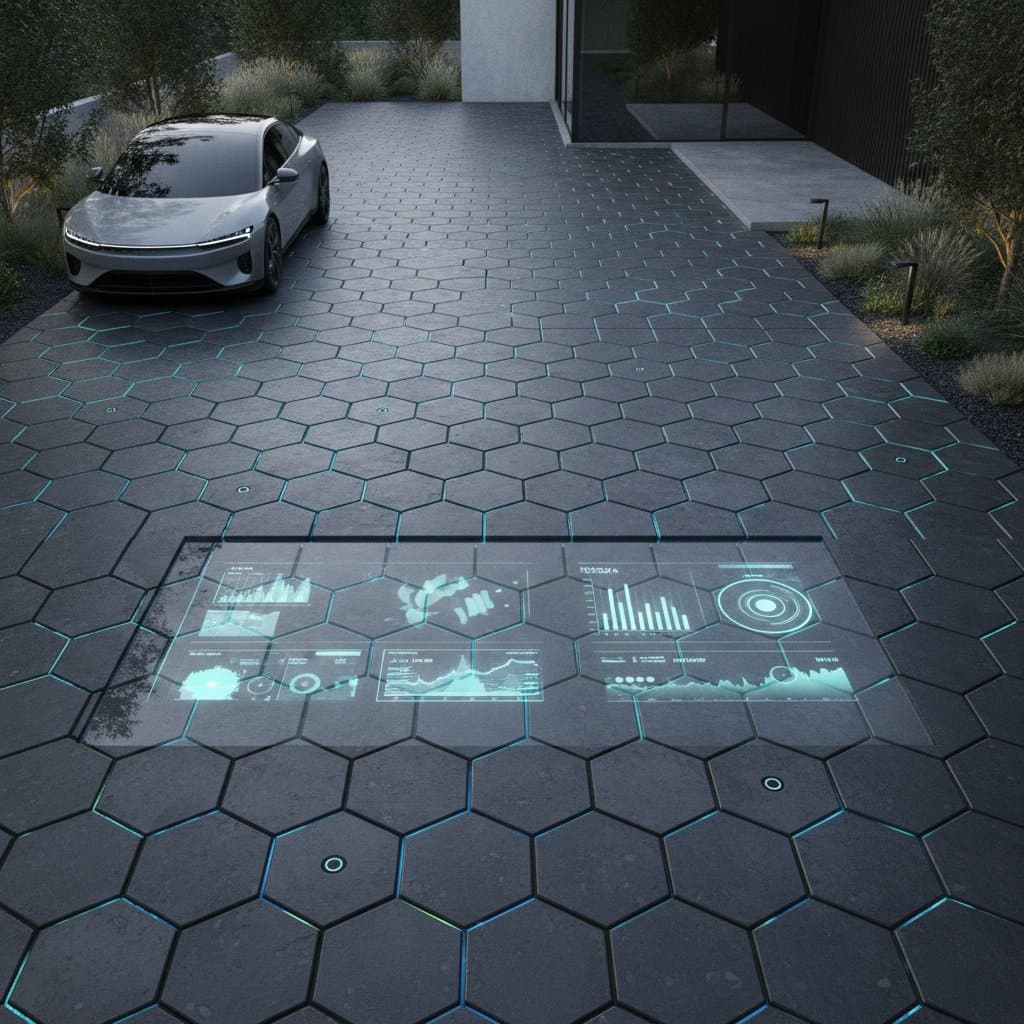
Smart Pavers Integrate Sensors to Monitor Driveway Performance
Smart pavers combine traditional masonry with embedded sensor technology. They resemble ordinary concrete or stone units yet contain small electronic sensors that measure temperature, moisture, load, and vibration. These readings transmit to a monitoring system that reveals how the paved surface performs over time.
This integration turns static surfaces into responsive systems. Smart pavers suit driveways, plazas, walkways, and public infrastructure where durability, safety, and drainage matter. They also support sustainability tracking by documenting material responses to heat, water, and pressure.
Skill Level and Project Type
Installing smart pavers requires an intermediate skill level. The work combines standard paving techniques with careful handling of electronic components. Comfort with leveling, base preparation, and basic electrical connections supports success. Most residential projects remain within reach for experienced do-it-yourselfers, while large-scale or networked systems benefit from professional installation to ensure reliable data collection and code compliance.
Planning the Project
Careful planning addresses both structural and electronic needs before work begins.
Site Assessment
Evaluate soil type, drainage patterns, slope, and terrain. Clay soils retain moisture and shift more readily than sandy soils. Aim for a slope of one inch per four feet to direct water away from structures. Contact 811 to locate underground utilities before excavation.
Measurements and Environmental Factors
Calculate total square footage and add ten percent for cuts and waste. Account for temperature swings, rainfall, and freeze-thaw cycles when selecting rated pavers. Waterproof housings or flexible connectors help sensors tolerate movement.
Material Options
Concrete Smart Pavers
Standard concrete units with embedded sensors offer affordability and consistent shape. They suit residential patios and walkways yet require proper base support to resist cracking under heavy loads.
Natural Stone Smart Pavers
Stone slabs or cobbles with discreet sensor modules underneath provide high durability and attractive texture. Their premium cost and weight make them appropriate for decorative landscapes or commercial plazas.
Permeable Smart Pavers
Units designed for water infiltration include sensors that monitor flow and saturation. They deliver eco-friendly drainage when the base receives careful preparation and joints receive annual vacuuming.
Tools and Materials
Gather a tape measure, masonry hammer, level, straightedge, rubber mallet, plate compactor, wet saw, and conduit bender. Secure smart pavers with a ten percent buffer, gravel, bedding sand, edge restraints, conduit, connectors, and a data hub.
Installation Sequence
- Excavate to seven or nine inches for walkways and remove roots.
- Compact the subgrade with a plate compactor.
- Spread and compact gravel in layers while maintaining drainage slope.
- Install protective conduit for sensor wires.
- Spread and screed one inch of bedding sand.
- Lay pavers from one corner while protecting sensor housings.
- Connect sensors according to manufacturer directions and verify transmission.
- Sweep joint sand or polymeric filler into gaps and compact again.
- Power the system and confirm expected readings.
- Secure edge restraints.
Finishing and Care
Clean the surface with mild detergent, apply sealant if recommended, and label data cables. Inspect annually for loose units or exposed wiring. Replace damaged sensors promptly and keep drains clear.
Monitoring Data for Ongoing Improvements
Regular review of sensor output identifies settling, moisture issues, or load stress early. Adjustments based on these readings extend surface life and maintain performance across seasons.