
Understanding Geopolymer Blocks
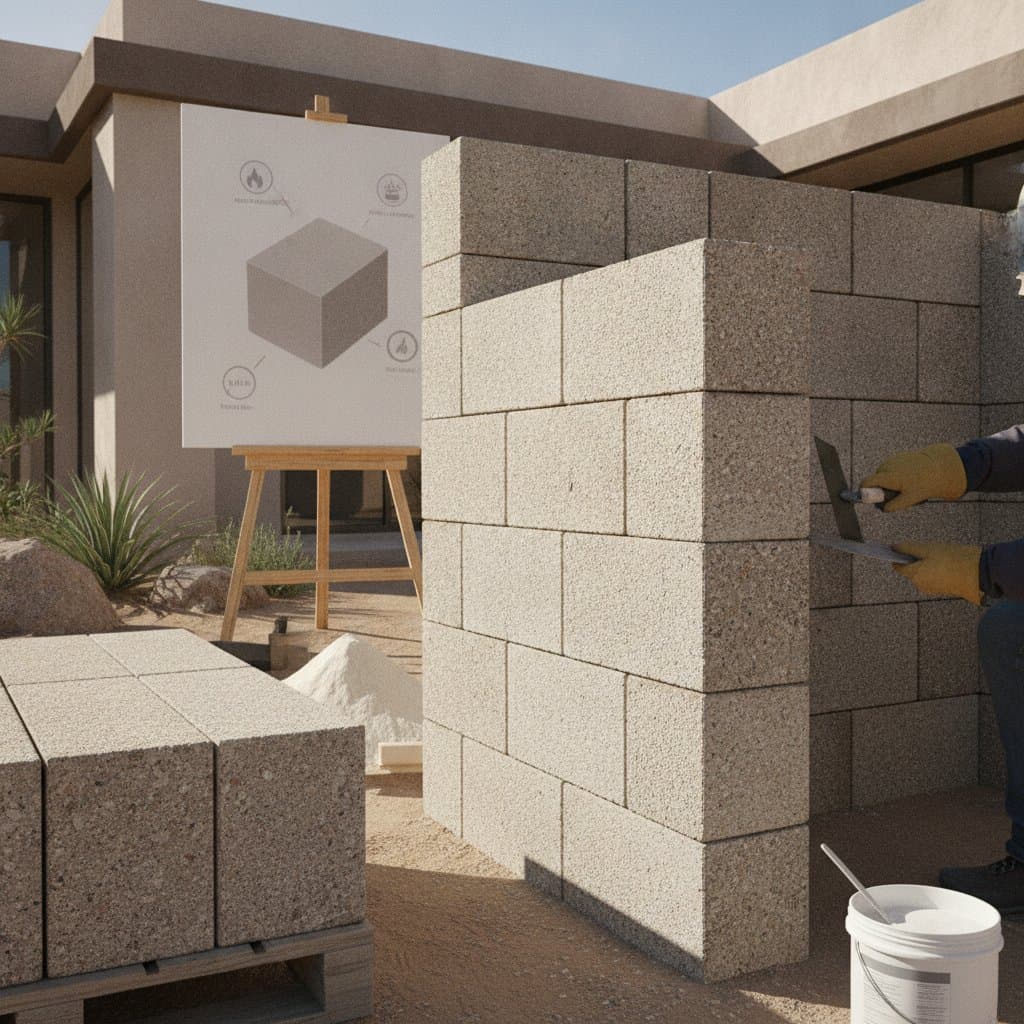
Building with geopolymer blocks creates durable, fire resistant, and eco friendly masonry structures. These blocks combine aluminosilicate materials such as fly ash or metakaolin with an alkaline activator. The process forms a strong chemical bond that rivals or exceeds the strength of traditional clay brick.
Traditional fired bricks require high temperature kilns that consume large amounts of energy and produce significant carbon emissions. Geopolymer blocks cure at ambient temperatures and eliminate the need for firing. This difference makes them one of the most sustainable alternatives in modern building materials.
The chemical reaction between the aluminosilicate source and the alkaline solution creates a three dimensional network of bonds. This network forms a dense, stone like material. The structure delivers strength, low porosity, and resistance to cracking over time.
Skill Level and Project Requirements
Working with geopolymer blocks suits intermediate DIY builders who know basic masonry techniques. The blocks weigh more than standard clay bricks, so physical strength and careful handling matter. A helper is recommended for lifting, alignment, and mixing. Large scale walls or load bearing structures require design or approval by a structural engineer.
Planning the Project
Proper assessment and preparation keep the finished structure stable and visually precise. Evaluate soil type, drainage, and slope first. Geopolymer blocks resist moisture, yet the foundation must remain dry and stable. Avoid low lying areas that collect water. Compact the soil and add a gravel base when the ground is soft or clay heavy.
Measure wall length, height, and thickness to calculate the number of blocks needed. Add about ten percent extra for cuts and waste. Check for square corners and level foundation lines with a builder square and string line. Geopolymer blocks handle heat and moisture well, which suits humid or coastal zones. In freeze thaw regions, proper drainage and sealing reduce surface scaling.
Expect heavier lifting and slower laying speed compared with clay brick. The bonding mix may vary in set time depending on temperature, so plan shorter working batches.
Material Options
Fly Ash Based Blocks
Fly ash based blocks use a byproduct of coal combustion. They offer affordability and strength while diverting waste from landfills. Color can vary and supply depends on local sources. These blocks work well for exterior walls and garden structures at moderate skill levels.
Metakaolin Based Blocks
Metakaolin based blocks come from calcined kaolin clay and produce a fine, consistent texture. They deliver high compressive strength and uniform appearance. The refined raw material raises cost, yet maintenance stays virtually nonexistent. Use them for structural or exposed architectural walls.
Slag Based Blocks
Slag based blocks utilize industrial slag as the aluminosilicate source. They provide excellent durability and chemical resistance. The material is heavier and slower to cut. These blocks suit industrial or retaining applications at intermediate skill levels.
Tools and Materials
Hand tools include a trowel for spreading mortar, a mason line to keep courses straight, a hammer and chisel for trimming, and a level for alignment. Power tools comprise a masonry saw for clean cuts, a drill mixer for even blending, and an angle grinder for shaping edges. Rental equipment such as a concrete mixer helps with large projects, while a block lifter or clamp aids safe handling.
The materials list covers geopolymer blocks with ten percent extra, geopolymer mortar or compatible bonding mix, foundation gravel or concrete base material, breathable sealer for exterior exposure, and rebar or reinforcement mesh when required by design.
Construction Steps
- Prepare the base by excavating to a stable layer, adding gravel, and compacting. Pour a level concrete footing if needed and verify alignment before it sets.
- Snap layout lines with chalk and check corners for square.
- Mix the bonding mortar to manufacturer ratios until smooth but not runny.
- Lay the first course by spreading mortar evenly, setting the first block at a corner, and checking level and plumb.
- Continue the course while staggering joints by half a block and maintaining consistent mortar thickness of about three eighths inch.
- Check alignment with a string line every two courses and correct drift early.
- Cut blocks to fit with a masonry saw for clean edges.
- Build to height while pausing every few courses to confirm vertical alignment.
- Cure the wall by keeping it shaded and slightly damp for several days.
- Apply a breathable sealer on exterior walls to repel water without trapping vapor.
Wear eye protection, gloves, and a dust mask when cutting or mixing alkaline materials. Avoid direct skin contact with wet mix.
Performance Over Time
Geopolymer blocks maintain compressive strength and resist fire, moisture, and chemical attack for decades. Their ambient cure process lowers energy demand and emissions from the start. Proper installation and occasional surface cleaning preserve appearance and function across residential and light commercial projects.