
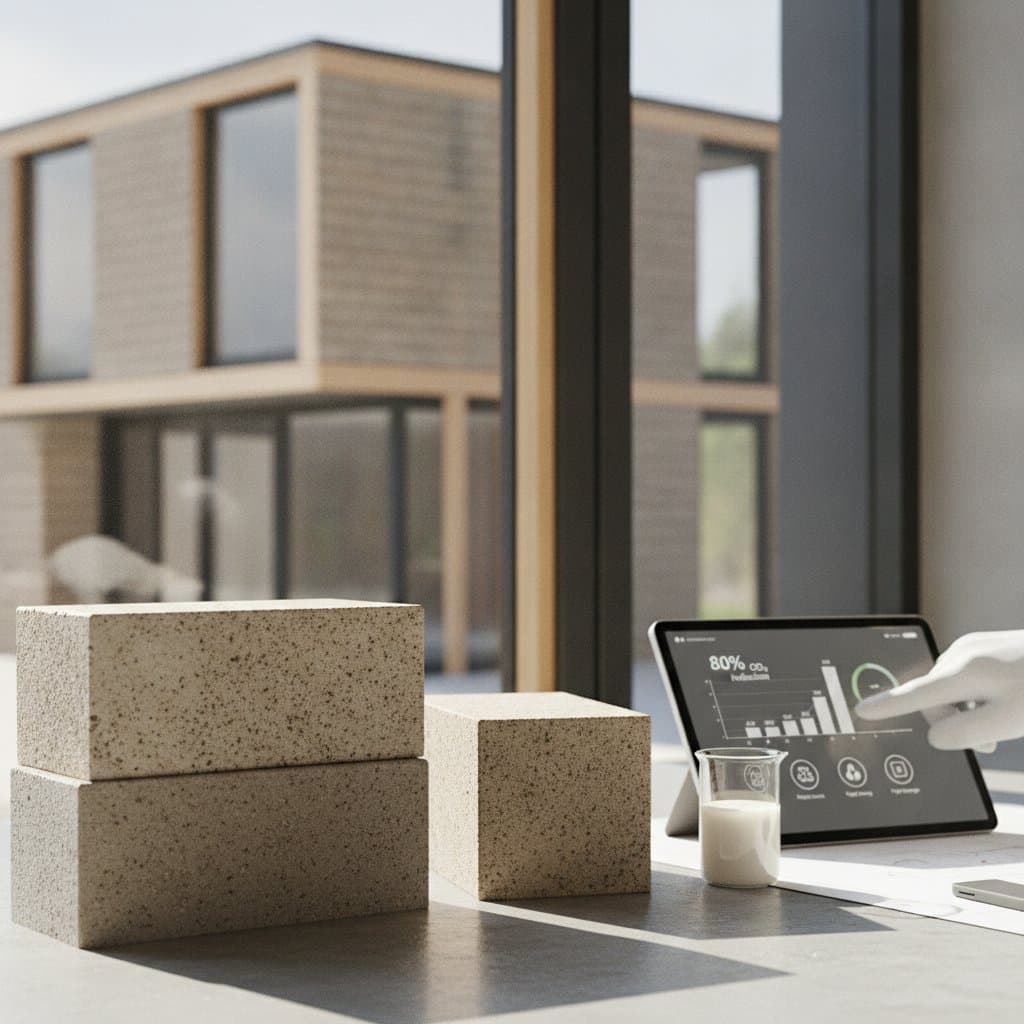
Zero-Cement Geopolymer Bricks Deliver Strength with Lower Emissions
Zero-cement geopolymer bricks provide a practical alternative to conventional concrete masonry units. These products rely on industrial by-products such as fly ash and slag that react with alkaline activators to form a durable binder. The resulting material matches or exceeds the compressive strength of standard concrete while cutting carbon emissions by up to 80 percent.
Production occurs at ambient or moderately elevated temperatures. Curing completes in hours rather than days. Builders gain both environmental and schedule advantages without sacrificing structural performance.
Core Competencies for Successful Production
Three practical skills support consistent results. Precise measurement and mixing of dry ingredients with liquid activators prevents weak batches. Familiarity with masonry layout and leveling produces plumb, uniform walls. A dedicated curing space that maintains stable temperature and humidity allows the chemical reaction to reach full design strength.
Start with small test batches to calibrate local materials. Record activator concentration, water content, and curing conditions for each trial. Adjust proportions until target strength and workability appear reliably.
Situations That Require Licensed Contractors
Structural walls, multi-story construction, and high-volume manufacturing call for professional oversight. Licensed masonry teams verify compliance with local engineering standards and place reinforcement correctly. They also maintain batch consistency across thousands of units.
Select contractors by confirming current licensing and insurance coverage. Request project references that specifically involve geopolymer or other non-Portland systems. Confirm that the crew understands the distinct handling and curing requirements of alkali-activated materials.
Step-by-Step Production Sequence
Begin by sourcing consistent supplies of fly ash or slag from nearby power plants or steel mills. Blend the precursor with a measured alkaline solution that typically contains sodium or potassium silicate and hydroxide. Cast the mixture into molds within the open time window, usually 30 to 90 minutes. Demold once initial set occurs, then move units into the controlled curing environment for 24 to 48 hours.
Monitor ambient conditions daily. Temperature swings or low humidity can slow strength gain or cause surface cracking. Document every batch with date, mix proportions, and test results to build a performance record.
Quality Control Practices
Compressive strength testing at 7 and 28 days confirms that bricks meet project specifications. Visual inspection catches surface defects before installation. Absorption and dimensional tolerance checks ensure compatibility with standard masonry details.
Keep records of activator batch numbers and precursor sources. Traceability supports troubleshooting if field performance deviates from laboratory results.
Suitable Applications and Limitations
Geopolymer bricks perform well in non-structural partitions, garden walls, and low-rise load-bearing construction where codes permit. Their rapid strength development suits projects with tight schedules. Exposure to aggressive chemicals or repeated freeze-thaw cycles requires additional testing and possible surface protection.
Designers should coordinate early with structural engineers to confirm allowable stresses and reinforcement details. Local code officials may request additional data on long-term durability before approving widespread use.
Scaling Up Sustainable Masonry Work
Begin with modest projects that allow refinement of mix designs and curing routines. Track material costs and labor hours to evaluate economic feasibility. As regional supply chains develop and standards evolve, geopolymer masonry becomes increasingly competitive with conventional options. Homeowners and builders who master the process gain durable structures while lowering the embodied carbon of each project.