
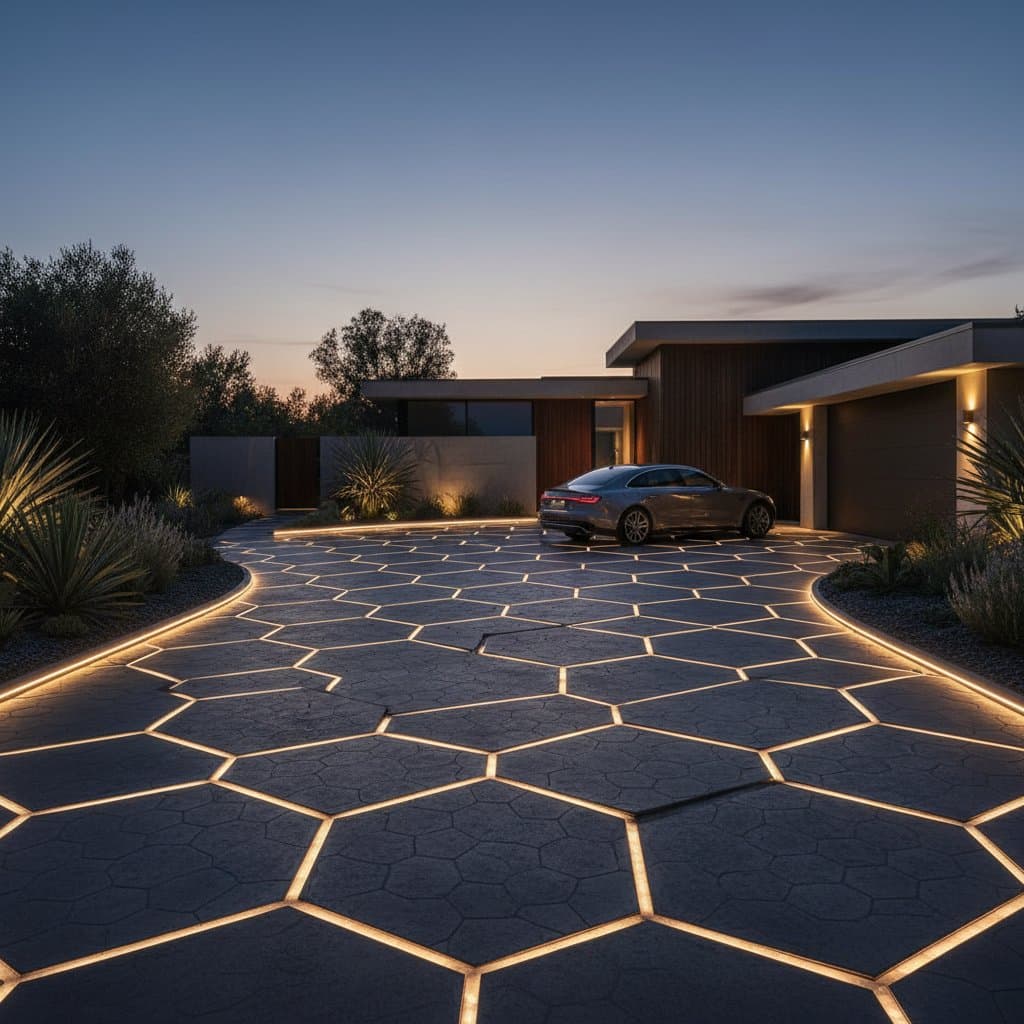
Solar Pavers: Illuminate Driveways with Sustainable Innovation
Solar pavers represent a forward-thinking enhancement for any property. These elements integrate renewable energy generation with robust hardscaping, converting standard driveways, patios, and pathways into self-illuminating, energy-efficient areas. This guide details the functionality of solar pavers, associated costs, planning and installation processes, and maintenance strategies to ensure reliable, long-term operation. Readers gain insights into assessing site suitability, selecting appropriate materials, executing safe installations, and determining whether to proceed independently or engage professionals.
Key Takeaways
- Cost Range: Solar pavers generally range from $25 to $45 per square foot installed, comprising approximately 55 percent materials, 35 percent labor, and 10 percent equipment.
- Installation Duration: Projects for a typical two-car driveway require 3 to 5 days, encompassing excavation, placement, wiring, and final adjustments.
- Power Generation: Individual pavers generate 0.5 to 1.2 watts, influenced by solar cell efficiency and daily sunlight exposure.
- Durability Standards: High-quality models withstand up to 8,000 pounds per square inch and endure freeze-thaw conditions when positioned over a properly compacted base.
- Project Considerations: Factors such as budget constraints, sunlight availability, soil drainage, and proximity to electrical sources dictate overall feasibility.
Planning a Solar Paver Project
Thorough planning guarantees efficient performance and adherence to regulatory standards. Prior to acquiring materials, conduct evaluations of site characteristics, applicable local codes, and energy demands.
Permits and Building Codes
Installations on driveways frequently necessitate municipal permits, particularly if replacing prior surfaces or integrating low-voltage electrical components. Consult the local building authority to verify requirements for setbacks, load-bearing capacities, and drainage protocols. All electrical integrations must conform to the National Electrical Code (NEC) provisions for exterior applications.
Site Evaluation
- Sunlight Analysis: Pinpoint locations that receive a minimum of 6 hours of direct sunlight each day. Steer clear of areas overshadowed by foliage or buildings.
- Soil Assessment: Examine compaction levels and drainage capabilities. Soils rich in clay often demand a 6-inch gravel sub-base to promote stability.
- Drainage Planning: Design the surface to slope at 1/8 inch per foot directed away from structures, thereby minimizing water accumulation.
- Utility Verification: Arrange for professional marking of subsurface utilities prior to any digging to prevent disruption of cables or pipelines.
Budget Estimation
A 400-square-foot driveway typically incurs expenses between $10,000 and $18,000, varying with paver specifications and regional labor costs. Material outlays cover solar pavers, foundational aggregates, sand bedding, and perimeter restraints. Labor accounts for site preparation, leveling operations, and assembly. Equipment costs involve tools for compaction, cutting, and smoothing.
Material Choices
Select solar pavers aligned with desired visual aesthetics and functional demands.
- Tempered Glass Options: Deliver optimal illumination and a contemporary look.
- Concrete Pavers with Integrated Modules: Provide familiar textures and superior load-bearing strength.
- Resin or Polymer Variants: Feature reduced weight, ideal for foot traffic zones.
Opt for products featuring IP67 waterproof ratings and anti-slip textures to enhance safety whenever feasible.
Executing Solar Paver Installation
The process merges conventional paving methods with deliberate electrical considerations. Adhere strictly to manufacturer guidelines for wiring and positioning.
Step 1: Design Layout and Trial Placement
Position pavers in the intended pattern prior to permanent fixation. Verify straight lines, uniform spacing, and secure interlocking. Ensure solar panels orient upward without obstructions.
Step 2: Paver Placement
- Lower each paver onto the prepared bedding layer carefully, avoiding scraping motions.
- Preserve 1/8-inch joints between adjacent units to accommodate sand infill.
- Tap pavers level using a rubber mallet for even seating.
- Refrain from applying compaction directly to solar faces; employ protective coverings if machinery proves necessary.
Step 3: Electrical Integration
Many solar pavers operate independently, yet certain configurations support low-voltage interconnections or unified charging setups.
- Independent Units: Eliminate wiring needs, streamlining the assembly.
- Interconnected Arrays: Join via sub-surface waterproof connectors. Direct cabling through safeguarded conduits positioned at pathway borders.
- Control Units: Locate proximate to accessible power outlets or distribution panels for oversight and servicing.
Comply fully with manufacturer directives and code specifications to maintain electrical safety.
Step 4: Joint Sealing and Surface Preparation
Introduce polymeric sand or fine joint material into crevices via sweeping. Apply a light water mist to initiate binding. Upon curing, inspect joints for level alignment and solidity. Purge the surface using a gentle detergent solution to eliminate residues from construction activities.
Addressing Installation Challenges
Well-executed systems occasionally face operational hurdles. Prompt identification of prevalent issues facilitates effective resolutions.
Inconsistent or Faint Illumination
- Potential Origin: Deteriorating batteries or intermittent shading.
- Remediation: Wipe solar surfaces clean with a soft cloth and mild soap solution. Substitute batteries if illumination persists below 4 hours. Prune obstructing vegetation to restore full sun access.
Moisture Penetration
- Potential Origin: Compromised seals or misaligned positioning.
- Remediation: Swap out impacted pavers and reinforce joint seals. Confirm adherence to waterproofing criteria.
Paver Displacement
- Potential Origin: Insufficient sub-base compaction or weakened edging.
- Remediation: Extract displaced segments, recompress the foundation, and reposition pavers with reinforced boundaries.
Wiring Failures
- Potential Origin: Unsecured connections or oxidized contacts.
- Remediation: Isolate power supply, scrutinize cabling, cleanse terminals, and reconnect with dielectric grease application for corrosion resistance.
Deciding Between DIY and Professional Installation
Evaluate personal expertise and scheduling availability to choose the installation approach.
Suitability for DIY Efforts
Independent installation suits individuals experienced in conventional paver work, possessing foundational electrical knowledge, and equipped with compaction implements. Such efforts yield 25 to 40 percent cost reductions relative to expert services. Considerations include extended timelines and accountability for outcome quality.
Indicators for Professional Engagement
Engage certified specialists when:
- Project scale surpasses 400 square feet.
- Regulations mandate electrical evaluations.
- Terrain exhibits drainage deficiencies or intricate topography.
- Advanced features like dimming or scheduling integrations are desired.
Professionals guarantee foundational soundness, sealed electrical joints, and regulatory compliance. Solicit evidence of credentials, insurance coverage, and performance assurances prior to commitment.
Sustaining Long-Term Efficiency
Appropriately cared-for solar pavers deliver consistent output for 20 to 25 years, contingent on environmental factors and build quality. Their extended service life recoups upfront investments by obviating grid-dependent lighting expenses and minimizing upkeep demands.
Energy Savings and Economic Returns
One square foot of solar paving generates sufficient power for 1 to 2 LED lights per evening. Accumulative benefits prove significant for expansive residential or business applications. Enhanced resilience, security provisions, and ecological alignment elevate property appraisals.
Ecological Advantages
These installations diminish dependence on utility power, thereby curtailing greenhouse gas outputs. Low-voltage functionality mitigates glare and inefficiency. Numerous models incorporate recycled components, advancing green building methodologies.
Essential Maintenance Practices
Routine care preserves functionality and extends lifespan. Implement these steps quarterly or following severe weather events.
- Surface Cleaning: Gently brush away debris and rinse with water to maintain solar efficiency. Avoid abrasive cleaners that could scratch panels.
- Joint Inspection: Check for sand erosion or weed growth; replenish as needed to prevent shifting.
- Battery and Wiring Checks: Test illumination cycles annually; replace components showing wear.
- Seasonal Adjustments: Clear snow or leaves promptly to avoid shading or damage.
Consistent attention ensures optimal performance, safety, and aesthetic appeal over decades.