
Quick Overview
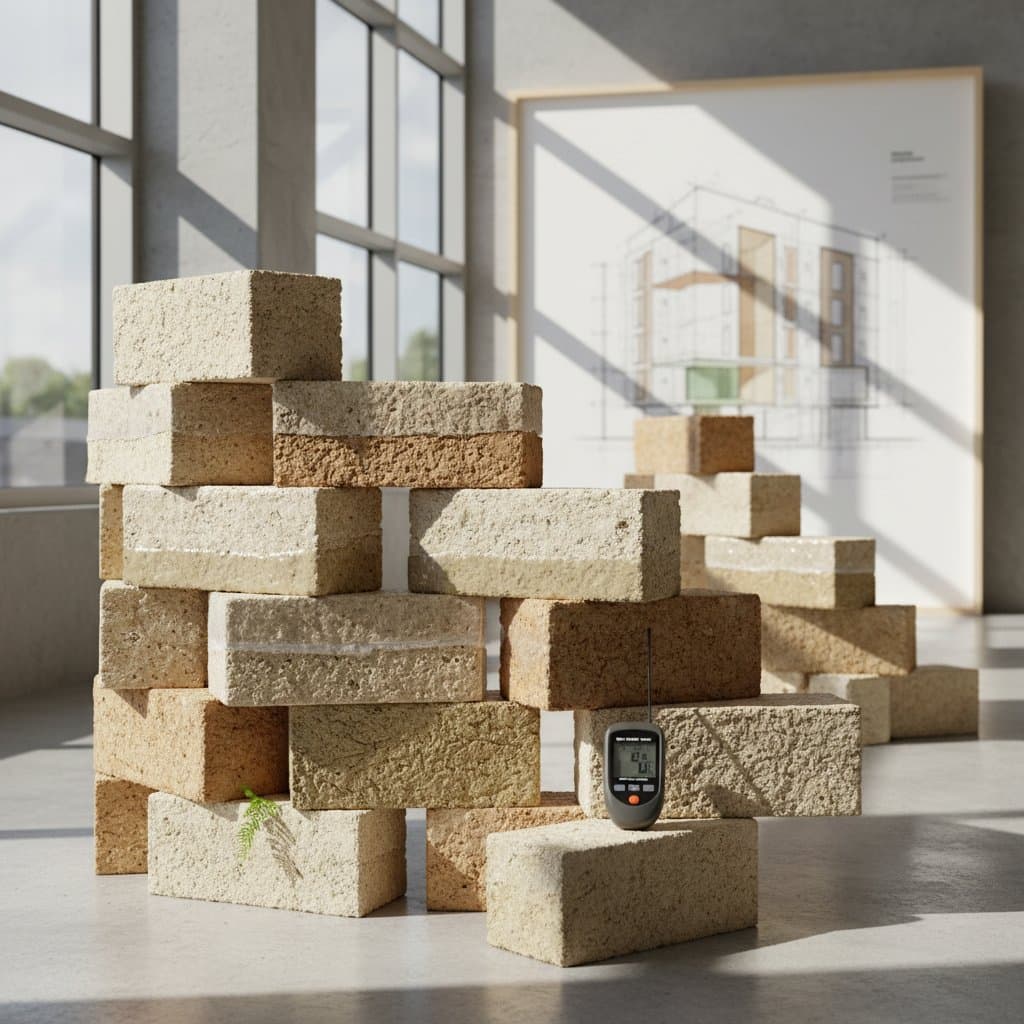
Mycelium bricks consist of fungal roots cultivated in molds and dried into durable blocks. They serve as a low-energy, bio-based substitute for clay or concrete in construction. Primary concerns include moisture absorption, variable density, and developing supply chains. Costs arise from controlled cultivation, drying processes, and necessary protective coatings.
Key Checks Before Purchase
Evaluate mycelium bricks for your specific climate and building type prior to investment. Hands-on inspections reveal early indicators of performance.
- Select a completed mycelium panel and tap it lightly. A dull thud indicates excess moisture or inadequate curing, while a crisp sound confirms thorough drying.
- Weigh a sample brick and compare it to the specified density. Notable discrepancies point to uneven growth or drying issues.
- Inspect the surface finish. A powdery or flaking texture suggests incomplete dehydration or lingering microbial traces.
- Examine corners and edges closely. Crumbling or soft areas imply insufficient compaction during the curing phase.
- Assess moisture absorption by lightly misting one face. Rapid darkening signals inadequate surface protection.
- Review packaging and storage conditions. Any detectable odor or mold indicates improper sealing or spore reactivation.
Warning Signs to Avoid
- Lingering earthy smell post-curing.
- Visible fuzz or discoloration on surfaces.
- Irregular color variations or marbling exceeding the natural fungal and substrate hues.
- Evidence of swelling or separation upon humidity exposure.
- Density falling below manufacturer specifications.
- Absence of independent testing for compressive strength or fire resistance.
Solutions and Estimated Costs
Moisture control poses the primary hurdle, as mycelium remains organic and requires sealing. Remedies vary by application.
- For interior walls, apply limewash or mineral coatings to close pores. Expect costs of one to two dollars per square foot.
- For exterior cladding, pair with ventilated rain screens or breathable coatings. Installation typically runs ten to fifteen dollars per square foot.
- For load-bearing experiments, limit to research settings or hybrid setups with timber or steel frames. Structural testing may exceed several thousand dollars per batch.
Address cracks or softening through sanding and recoating. However, if the core matrix degrades, replacement proves more economical. Avoid epoxy seals, which trap moisture and hasten deterioration.
Integrating mycelium with traditional masonry risks scope expansion due to differing movement and moisture dynamics. Develop joint and flashing details in advance with designers and builders.
Repair or Replacement Guidelines
Walls and Panels
Repair via surface coatings or isolated block swaps if damage affects less than ten percent of the area. Replace full panels when internal rot or delamination occurs.
Coatings and Sealants
Reapply breathable mineral coatings every few years based on wear. Switch systems only if tests reveal vapor entrapment or chemical conflicts.
Structural Integration
Preserve intact framing. Replace support elements solely if weight or moisture demands it. Employ hybrid designs where mycelium insulates or fills between conventional frames.
Essential Team and Process
Mycelium projects demand early collaboration for success.
- Engage architects from the outset to outline load paths, moisture strategies, and joint details.
- Consult material suppliers during design to verify lead times, curing protocols, and coating choices.
- Involve general contractors early for mockup pricing, handling logistics, and installation planning.
- Bring in building scientists or envelope consultants for moisture modeling, especially with timber or masonry hybrids.
- Utilize testing labs to validate strength, fire resistance, and vapor permeability.
Concurrent reviews align design with material realities. Professional oversight adds ten to twenty percent to costs but averts delays and revisions.
Prioritized Applications
As an emerging material, mycelium excels in low-risk scenarios.
- Interior acoustic panels benefit from minimal exposure, strong sound absorption, and straightforward replacement.
- Non-load-bearing partition walls allow easy testing with limited weather threats.
- Covered decorative facades showcase sustainability while avoiding direct rain and sun.
- Hybrid wall cores pair mycelium insulation with timber or recycled brick exteriors for enhanced durability.
Postpone high-risk uses like wet-climate exterior load-bearing walls or subsurface installations until performance data matures.
Budgeting and Installation Sequence
Sequence tasks to minimize waste and shield the organic material.
- Establish site control with proper drainage and grading to divert water from foundations.
- Complete framing and roofing prior to introducing mycelium elements.
- Install vapor barriers and overhangs to protect against moisture.
- Proceed with mycelium placement once the structure remains dry and enclosed.
- Add finishes, including coatings and sealants, in controlled humidity.
- Maintain mechanical systems to hold humidity at forty to sixty percent, preventing reactivation.
Dependencies ensure stability; premature exposure invites swelling, staining, or microbial issues that invalidate warranties.
Material Properties
Fungal mycelia bind agricultural waste such as straw or sawdust into a sponge-like structure. Drying halts growth, yielding rigid, lightweight bricks.
Typical compressive strength spans one hundred to three hundred psi, akin to low-density cork or foam, fitting non-structural partitions or infill.
Thermal conductivity measures 0.03 to 0.05 W/m·K, rivaling expanded polystyrene for insulation, though moisture protection remains essential.
The material absorbs water easily, risking strength loss without treatments. Coatings and ventilation mitigate this.
Fire performance includes charring to limit spread briefly, but code-compliant finishes are required.
Durability varies: interiors may last decades if dry, while exteriors demand monitoring in experimental contexts.
Cost Breakdown
Pricing depends on production and sourcing.
- Raw bricks or panels: six to twelve dollars per square foot.
- Installed wall systems: fifteen to twenty-five dollars per square foot.
- Coatings and details: five to ten dollars per square foot.
Initial expenses surpass drywall or basic insulation but undercut premium composites. Long-term gains include reduced embodied energy and compostable disposal.
Bulkier than dense masonry, transport elevates costs; local manufacturing alleviates this.
Risks and Returns
Payback aligns with application.
- Interior walls yield quick offsets via insulation savings and reduced weight.
- Experimental facades offer intangible branding benefits for public or educational builds.
- Structural or foundational roles carry excessive risks from moisture and strength constraints.
Key threats involve humidity-induced degradation and batch inconsistencies. Require certifications for density, moisture, and strength.
Preservation in Existing Structures
In retrofits, control moisture when pairing with legacy masonry.
- Maintain ventilated cavities between old brick and new panels.
- Avoid impermeable vapor barriers that trap the material.
- Prevent contact with untreated wood or soil.
- Opt for mechanical fasteners over breathability-blocking adhesives.
For sound plaster or lath, overlay mycelium as an interior finish to retain historic features and cut debris.
On-Site Testing Protocol
Construct a test section and observe through a complete wet-dry cycle.
- Log weight and moisture levels pre- and post-exposure.
- Monitor for color changes or surface growth.
- Probe edges with a tool to gauge firmness.
- Detect musty odors following rain or humidity spikes.
Stability permits expansion; adverse reactions necessitate coating or ventilation adjustments.
Insights from Experts
A Pacific Northwest building scientist observes, “Mycelium holds promise, but handle it like wood fiber insulation, not brick. Keep it dry and allow it to breathe.”
A Midwest restoration contractor notes, “Optimal outcomes arise from ventilated cladding protection. Relying on paint alone falls short.”
A Northeast architect adds, “Clients embrace the concept, yet we mandate mockups to assess local humidity and light effects.”
These views align with empirical findings: mycelium flourishes in managed settings with minimal moisture and ample airflow.
Sustained Maintenance Practices
Routine upkeep proves straightforward with proactive design.
- Ensure gutters and flashing function to block water entry.
- Preserve ventilation behind panels.
- Refresh mineral coatings when surfaces dull or chalk.
- Conduct seasonal checks for odors or shifts.
- Swap affected blocks promptly to halt decay.
Diligent management supports decades of stability; moisture oversight lapses invite swift failure.
Implementing Mycelium Successfully
Begin with modest indoor trials for mycelium bricks. Acquire sample panels, evaluate under site conditions, and consult bio-material-savvy contractors. Assess responses to local humidity and temperatures.
Upon validation, expand gradually, embedding moisture controls, coatings, and ventilation in plans.
This disciplined method unlocks mycelium's potential to lower energy use and waste, provided water, air, and time receive due attention. As paused living materials, they integrate durably into sustainable builds through testing, sequencing, and realistic budgeting.