
Why Geopolymer Foundations Resist Water Damage Better
Quick Take
Geopolymer foundations resist moisture, cracking, and chemical breakdown better than traditional concrete. The main risk in any foundation is long term degradation from water and salts. Geopolymers cut that risk by forming a denser, more stable bond at the molecular level. The cost difference at installation remains modest, yet the payback arrives through fewer repairs and longer service life.
Inspection Steps
A homeowner can spot early signs of foundation stress through basic observation. Stand back and check sightlines along the foundation walls. Any bowing or tilt signals uneven load or soil movement. Look for hairline cracks that widen toward the top or bottom. Run a marble across basement floors to detect slope. Efflorescence, a white powder on walls, hints at moisture pushing through. Tap the surface with a hammer. A dull sound suggests delamination or voids. Check corners near downspouts and roof valleys for concentrated water paths. Musty odors indicate moisture entry.
Warning Signs
- Horizontal cracks wider than one eighth of an inch
- Flaking or scaling near grade level
- Persistent damp spots after dry weather
- Rust colored streaks from rebar corrosion
- Crumbling mortar in block foundations
- Standing water within five feet of the wall
- High radon readings with no clear air path
- Settlement cracks that reappear after patching
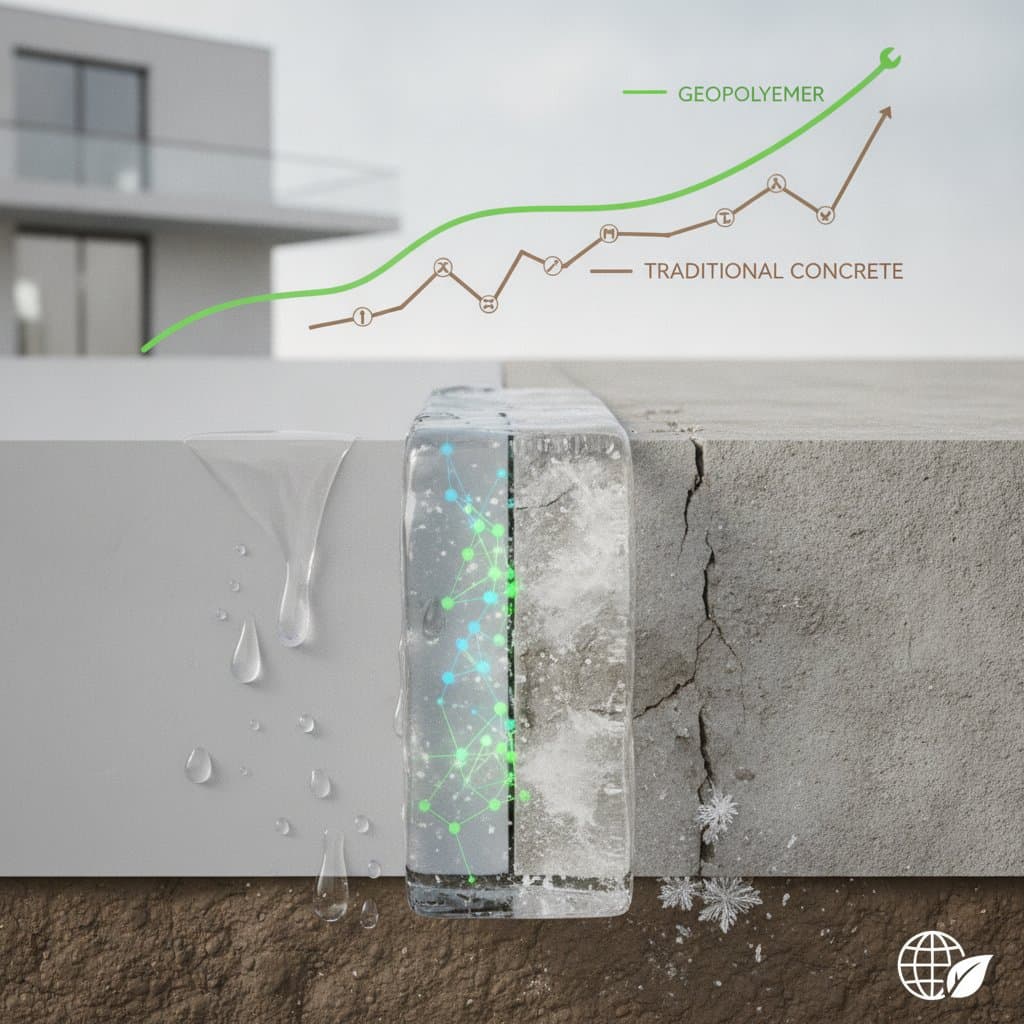
Each sign points to a deeper problem. Traditional concrete often weakens through cycles of wetting and drying. When the material stays porous, salts migrate inward and rebar expands during corrosion. Internal pressure then breaks the bond. Geopolymer material avoids most of that damage because it contains less free lime and a tighter matrix.
Repair Options and Costs
Redirect water first whenever deterioration appears. Regrade soil so it slopes at least six inches away from the house over the first ten feet. Add or extend downspouts to discharge well clear of footings. Minor dry cracks respond well to epoxy injection at roughly five to ten dollars per linear foot. Active cracks or ongoing moisture benefit from polyurethane injection. Geopolymer crack injection bonds chemically to the base material and can strengthen the surrounding area.
Severe wall bowing or settlement often requires underpinning or soil stabilization. Geopolymer injection fills voids beneath slabs or footings without excavation at ten to twenty dollars per square foot. Full foundation replacement exceeds fifty thousand dollars in most cases. Plan contingencies of at least fifteen percent.
Material Comparison
Repair of concrete foundations makes sense only for surface level issues. Once rebar corrosion or deep cracking begins, replacement becomes the practical choice. Geopolymer foundations allow repair in nearly every case because the material bonds strongly to itself. Injection or patching maintains strength and resists future intrusion. Always repair and upgrade drainage before addressing structural elements. For settlement or voids, geopolymer lifting proves more durable than mudjacking. Replace waterproofing membranes only when peeling, brittle, or detached.
Project Team
Begin with a structural engineer familiar with both concrete and geopolymer systems. An inspector experienced with older homes should document existing cracks, efflorescence, and drainage patterns. Include an architect early if additions or grade changes form part of the project. A general contractor supplies pricing checks and sequencing. Hire a specialist certified in alkali activated systems for geopolymer work.
Priority Actions
Address high yield upgrades first. Keep water away from the foundation through proper grading, gutters, and site drainage. Stabilize the structure by filling voids or cracks with geopolymer materials. Improve insulation and air sealing around rim joists and sill plates. Defer cosmetic parging or thin overlays that hide deeper issues. Avoid finishing basements until water behavior is understood over a full season.
Work Sequence
Follow a logical order:
- Control water through grading, drains, and gutters.
- Assess settlement and load transfer.
- Repair core material with geopolymer injection or patching.
- Apply vapor barriers or breathable coatings.
- Finish surfaces after confirming dryness and stability.
Moisture management must precede aesthetic repair. Reversing that sequence leads to repeated expense.
Performance Advantages
Traditional concrete relies on calcium silicate hydrate and contains free lime that reacts with water and carbon dioxide. Micro cracks form and gradually expand. Salt and freeze cycles accelerate damage. Geopolymer cement uses aluminosilicate structures activated by alkalis. The resulting bond stays denser and less soluble. Moisture penetrates less readily and no free lime leaches out. The outcome is longer service life with fewer maintenance cycles. The material resists chemical attack from sulfates and chlorides common in soil and de icing salts. It also tolerates high heat more effectively.
Sustainability and Economics
Geopolymer mixtures incorporate industrial byproducts such as fly ash or slag instead of Portland cement. Embodied carbon drops by half or more. Less energy and water go into production. Although material cost per cubic yard can run slightly higher, reduced steel reinforcement and fewer repairs offset the difference. Lifecycle cost advantages often exceed twenty percent. Handling resembles conventional concrete once crews learn mix timing. The working window lengthens and the cure stays uniform. Finished surfaces show less shrinkage, which reduces joints and patches.
Ongoing Care
Inspect geopolymer foundations annually. Monitor drainage changes after landscaping or nearby construction. Keep gutters and downspouts clear. Maintain basement humidity below fifty percent with a dehumidifier when needed. Select breathable sealers rather than impermeable coatings that trap moisture.