
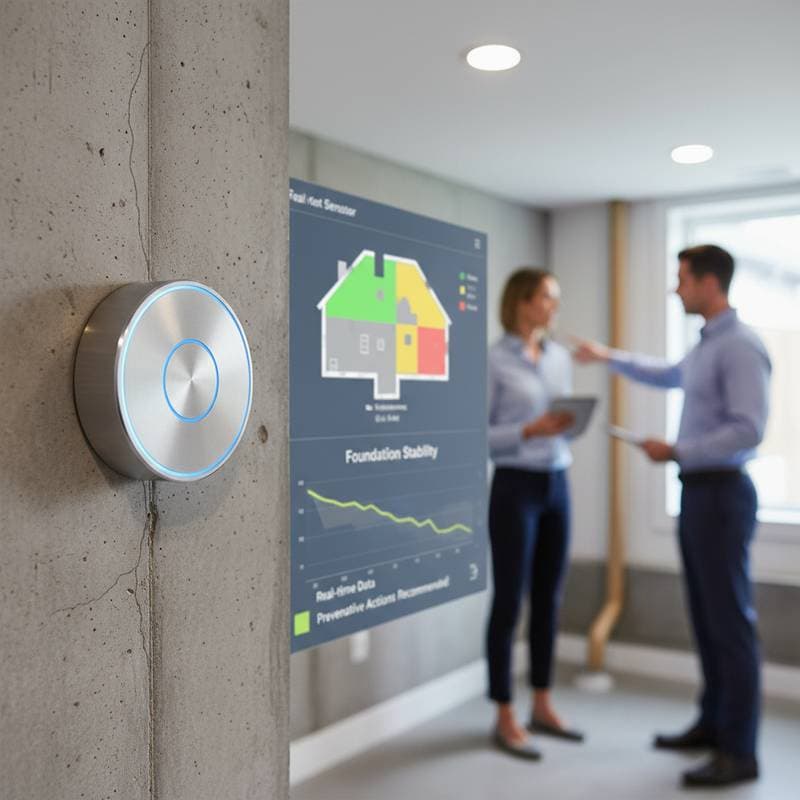
Understanding Smart IoT Sensors for Foundation Monitoring
Foundation instability ranks among the most expensive challenges for established homes. Soil shifts or excess moisture can cause walls to lean, slabs to fracture, and structural frames to warp. Smart Internet of Things (IoT) sensors provide an effective means to identify minor movements promptly, thereby reducing the need for extensive structural interventions and minimizing long-term expenses.
These devices attach to key foundation points and transmit real-time data via wireless networks to a central dashboard. Homeowners receive notifications about tilt, vibration, or moisture levels that exceed normal thresholds. By integrating this technology with visual inspections, property owners gain a comprehensive view of potential issues.
Initial Visual and Manual Assessments
Before deploying advanced tools, conduct thorough on-site evaluations. Circumnavigate the home's exterior and document any fissures in siding adjacent to corners or above windows. Place a tennis ball on interior floors to reveal uneven surfaces where it rolls unexpectedly. Examine doors that bind particularly after rainfall episodes.
Observe patterns in fresh paint cracks that recur along identical paths. Such indicators reveal ongoing stress concentrations. Extend the inspection outdoors to evaluate site grading and gutter systems. Ensure soil inclines away from the structure at a minimum slope; pathways allowing water accumulation near the base heighten subsidence hazards.
In below-grade areas like basements or crawlspaces, detect musty odors, efflorescence on surfaces, or progressively enlarging hairline fractures. These observations highlight active displacement or hydrostatic forces. Smart sensors subsequently validate these preliminary findings with precise measurements.
Critical Indicators of Foundation Issues
Recognize specific markers that suggest underlying problems:
- Stair-step patterns in brickwork that broaden toward the top.
- Seasonal misalignment in doors or window frames.
- Separations between molding and exterior cladding at junctions.
- Slanted fissures originating above window openings.
- Irregularities in basement floors marked by recent repair seams.
- Consistently saturated earth adjacent to support elements.
- Recurrent patching needs in drywall at identical locations.
- Deviations in plumbing or drainage alignments post-settlement.
Isolated signs might stem from minor fluctuations, but clusters signal escalating threats from subsidence or soil thrust. Prompt attention to these cues preserves structural integrity.
Intervention Options and Estimated Expenses
Sensor alerts guide timely responses. For slight, cyclical displacements, enhance site drainage and compact surrounding soil. Redirecting earth and lengthening downspouts typically incurs costs of several hundred dollars. Installing French drains or contouring shallow depressions might range from one thousand to three thousand dollars, influenced by terrain and accessibility.
Persistent downward trends detected by sensors often necessitate foundational support measures. Installing helical or resistance piers for targeted zones costs between five thousand and fifteen thousand dollars; perimeter-wide applications exceed this figure. Foam or grout injection under slabs provides interim elevation at reduced expense, though persistent hydration issues undermine durability.
Conversely, sensors revealing stabilization after drainage adjustments justify deferring invasive work. This approach prevents expenditure on superfluous supports or bracing systems.
Strategies for Reinforcement Over Replacement
Foundations function as integral components, not easily substituted. Prioritize stabilization techniques when the framework remains sound and displacement velocities stay minimal. Begin with hydrological controls: adjust slopes, prolong gutter outlets, and position exterior drainage lines as required. Sensors confirm the efficacy of these modifications in arresting progression.
If fissures expand or inclinations surpass tolerance levels, implement strengthening protocols. Options include pier additions, tie rods for walls, or fiber-reinforced bindings. Full-scale substitution involves segmental reconstruction, an uncommon and labor-intensive process. Opt for preservation through data-backed stabilization; excise and renew portions solely upon evidence of severe degradation or imminent failure.
Assembling the Right Professionals
Engage a building inspector familiar with aged properties and local geotechnical conditions. Request analysis of both observable traits and technological outputs. Should data affirm displacement, consult a civil engineer to establish boundaries and recommend procedures. Involve an architect if adjustments impact elevations, access routes, or aesthetic integrations.
A construction manager ensures cost accuracy and orchestrates timelines. Specialized firms handle sensor deployment, or engineers incorporate them into broader plans. Individual units range from one hundred to three hundred dollars each, factoring in model and connectivity features. Expert oversight of the entire initiative adds ten to twenty percent to the budget but mitigates errors and redundancies.
Conduct concurrent evaluations to streamline progress. Joint reviews by the engineer, builder, and assessor prevent fragmented communications that trigger scope alterations.
Prioritizing Effective Interventions
Target modifications with the greatest impact initially:
- Direct gutter outflows at least ten feet from foundational edges.
- Verify slopes achieve at least one inch per foot over the initial several feet.
- Integrate boundary drainage prior to any bolstering efforts.
- Apply sealants to fissures only post-movement cessation.
- Enhance interior moisture extraction via upgraded pumps or ventilation.
Defer superficial treatments until core dynamics settle. Resist surface coverings or floor renewals absent multi-month stability confirmation. Patience yields tangible returns through sustained finishes and eliminated duplications.
Planning Budgets and Phased Implementation
Approach remediation in deliberate stages:
- Resolve hydrological concerns foremost.
- Observe sensor metrics for signs of equilibrium.
- Advance to foundational enhancements if shifts persist.
- Address cosmetic and surfacing elements upon verification of steadiness.
Disregarding sequence invites futile pursuits. For instance, realigning interiors prior to runoff corrections frequently results in renewed fractures and squandered resources. Technological monitoring delineates progression points; uniform data across months signals readiness for subsequent phases.
Ongoing Monitoring for Long-Term Stability
Smart sensors complement rather than supplant professional assessments; they augment vigilance. Employ them as unobtrusive trackers of imperceptible changes. Pair digital insights with periodic personal reviews. Traverse the site's boundary following substantial precipitation. Record emerging fissures or operational hindrances in portals.
Cross-reference these notes against device records. Sudden variances warrant reexamination of runoff systems or professional input. As one Midwestern structural specialist observed, 'Sensors eliminate speculation. We discern trends prior to evident harm.' This perspective safeguards finances and framework alike.
Simplify the regimen: observe diligently, corroborate findings, and respond decisively when empirical and empirical evidence converge.