
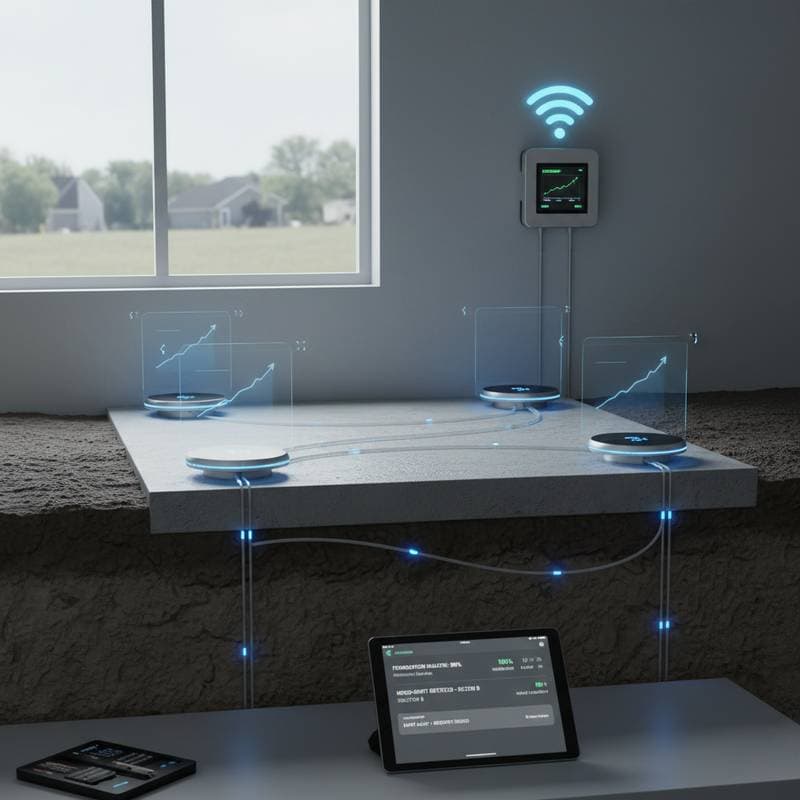
Understanding Foundation Movement and Early Detection
Foundation shifts occur gradually due to variations in soil moisture, drainage problems, or structural loads. These changes can displace a home from its level position well before visible signs such as cracks or uneven doors become apparent. Modern Internet of Things (IoT) sensors now enable real-time tracking of these subtle movements, allowing for timely interventions that avert extensive damage and high repair expenses.
Homeowners benefit from this technology by gaining visibility into otherwise hidden processes. Early detection transforms potential crises into manageable maintenance tasks. With proper implementation, these systems integrate seamlessly into routine property care.
Functions of IoT Foundation Sensors
IoT foundation sensors consist of compact electronic units designed to measure tilt, vibration, displacement, or moisture levels adjacent to the foundation. They incorporate accelerometers, pressure transducers, and humidity detectors to capture minute variations. Data transmits wirelessly to a central hub or cloud platform, where users access visualizations of patterns and automated notifications when thresholds exceed normal ranges.
These sensors function as vigilant monitors for structural integrity. They identify issues that manual inspections often miss until significant harm has occurred. By providing ongoing data streams, they support informed decisions on maintenance or repairs.
Advantages and Limitations
Advantages
- Identify initial indicators of settling prior to any observable structural harm
- Deliver continuous oversight without the need for periodic manual evaluations
- Verify if existing cracks represent ongoing activity or historical stability
- Generate records suitable for review by insurers or contractors
- Integrate with comprehensive smart home or property management networks
Limitations
- Require reliable internet connectivity and a consistent power supply
- Certain models involve ongoing subscription charges for cloud-based data access
- Placement near concrete or metallic elements may weaken signal transmission
- Sensors provide warnings only and do not address root causes
- Precision may diminish if units become displaced or require recalibration
Cost Breakdown
Entry-level sensors for tilt or vibration monitoring begin at $50 to $100 per unit for basic do-it-yourself options. Devices focused on moisture and soil conditions range from $100 to $250 individually. Complete kits with hubs and multi-sensor configurations, including data storage capabilities, typically cost $400 to $1,000 for an entire installation.
Professional installation services charge $1,000 to $2,500, scaled to the property's dimensions and reporting requirements. Expenses increase with additional sensors, subsurface probes, or expert calibration. Factors such as inadequate Wi-Fi reach, exterior power demands, or challenging access in basements contribute to elevated pricing.
Durability and Upkeep
IoT sensors generally endure 5 to 10 years, influenced by battery quality and environmental exposure. Users must replace batteries every 2 to 3 years or promptly if notifications cease. Seasonal inspections ensure mounts remain secure and units stay level, while cleaning prevents accumulations of dirt or moisture from interfering with measurements.
For systems relying on cloud storage, regular data backups preserve historical trends. Such records distinguish between temporary environmental fluctuations and persistent structural concerns. Consistent maintenance extends system reliability and accuracy.
Essential Specifications to Evaluate
Prospective buyers should verify the following attributes:
- Precision levels: Minimum 0.1 degree accuracy for tilt measurements and 0.01 inch for displacement tracking
- Environmental tolerance: Suitability for regional temperature swings and humidity variations
- Connectivity protocol: Compatibility with Wi-Fi, LoRa, or Zigbee based on existing infrastructure
- Energy options: Availability of replaceable batteries or low-voltage wired setups
- Sampling frequency: Options for 15-minute or hourly intervals to enhance trend analysis
These details ensure the system aligns with specific property needs and performs optimally over time.
Preparation Steps
Begin by diagramming the foundation's layout, prioritizing corners, load-bearing sections, and vulnerable spots like window frames or slab seams. Assess local drainage patterns and soil composition, as expansive clays or flood-prone areas demand denser sensor placement.
Evaluate power availability and network coverage in advance. Signal extenders or dedicated hubs may prove necessary in low-connectivity zones such as crawl spaces. Always consult utility maps to avoid underground lines during any excavation for ground-based sensors.
Step-by-Step Installation Guide
Precise installation ensures reliable performance. Follow these steps:
- Secure each sensor to a firm foundation wall or footing surface.
- Align the device using a bubble level for accuracy.
- Connect it to the hub or application per manufacturer guidelines.
- Establish initial baseline data after a 24-hour stabilization period.
- Document sensor positions on a property schematic for future reference.
- Monitor readings weekly in the initial month, then shift to monthly reviews.
For moisture or pressure sensors, position them slightly below ground level near runoff areas or downspouts. Uniform depth facilitates valid comparative data across installations.
Configuration Options
Tailor setups to address specific risks:
- Perimeter focus: Deploy four tilt sensors at corner points to monitor elevation changes.
- Linear coverage: Install units at 10- to 15-foot intervals along walls or slabs.
- Environmental tracking: Place moisture detectors by inclines, gutters, or barriers.
- Integrated approach: Combine tilt and environmental sensors for comprehensive insights.
Select configurations according to soil stability, accessibility, and financial constraints. In regions with freeze-thaw cycles, additional vibration sensors mitigate risks from ground heave.
Do-It-Yourself Versus Professional Services
Individuals proficient with tools like levels, drills, and mobile applications can manage straightforward installations, particularly in accessible single-level homes.
Engage professionals for:
- Multi-level basements or intricate designs
- Subsurface probing or electrical wiring
- Certified data for legal or engineering purposes
- Suspected ongoing shifts or moisture penetration
Experts utilize tools such as laser levels for precise baselines and ensure calibration meets industry standards.
Troubleshooting Common Issues
Erroneous notifications: Inspect for insecure fastenings or connectivity disruptions; secure components and reposition hubs as required.
Missing data transmissions: Swap depleted batteries and confirm network signal integrity.
Variable measurements: Recalibrate on a stable day and update reference points.
Absent warnings: Adjust sensitivity settings to capture finer movements without excessive alerts.
Regular checks prevent minor glitches from escalating.
Regional Considerations and Alternatives
In arid climates, prioritize moisture sensors to detect drying-induced shrinkage. Wet or coastal areas benefit from enhanced drainage monitoring to counter erosion. Cold regions require units resistant to subzero temperatures to avoid false readings from frost expansion.
Alternatives include traditional surveying tools for periodic checks or geotechnical consultations for high-risk sites. However, IoT systems offer superior frequency and convenience over manual methods.
Advancing Property Protection
IoT foundation sensors convert imperceptible shifts into actionable intelligence, empowering proactive stewardship. While they complement rather than supplant robust building practices, their alerts facilitate interventions that preserve value and safety. Initiate with targeted placements in high-risk zones, observe outcomes over time, and scale up for broader vigilance.