
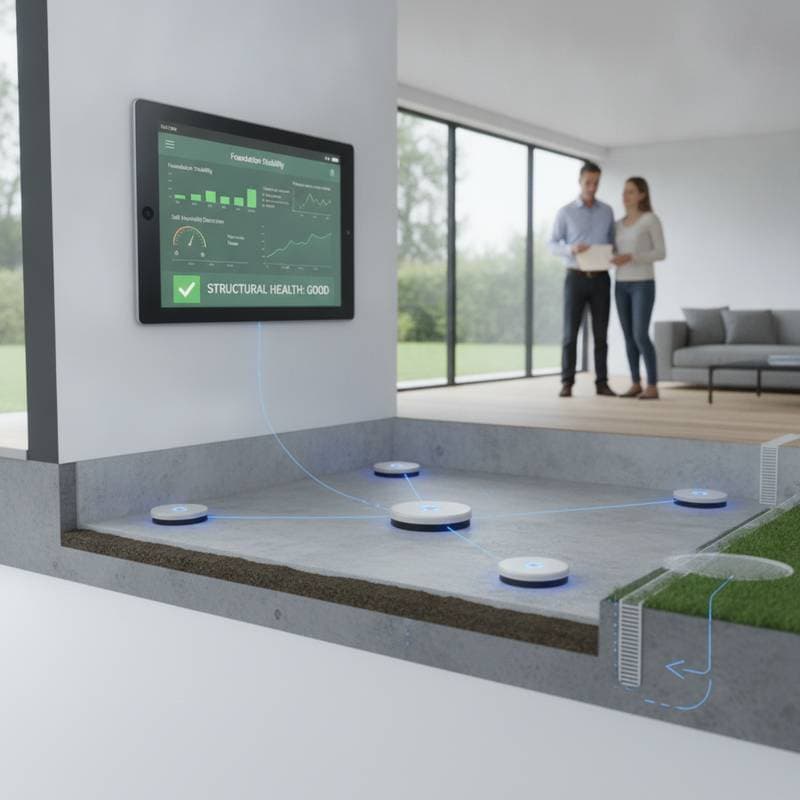
IoT Sensors Catch Foundation Problems Before Cracks Form
Quick Take
Foundation settling occurs slowly and without notice until cracks emerge. IoT sensors identify shifts in movement and moisture early. This approach lowers risk, prevents major repairs, and maintains predictable expenses.
What To Check
A homeowner can still learn a lot without any device. Walk the perimeter and interior with open eyes and a steady step.
- Check sightlines along baseboards and window heads for drift or taper.
- Drop a marble on the floor in several rooms. Roll or pause tells you if there is slope.
- Look at corners of doors and windows for hairline cracks or gaps that repeat through rooms.
- Check for sticky doors or windows that catch in one season and loosen in another.
- Inspect basement walls for stains, efflorescence, or damp odors.
- Note any pooling at the footing line after rain.
- Watch roof valleys and gutters for overflow that might push water toward the foundation.
These basic checks show where to focus sensors later. Technology works best when guided by field observations, not as a substitute for them.
Red Flags
Some conditions point to deeper settlement or hydrostatic pressure. If any of these appear, risk and cost rise fast.
- Cracks wider than a pencil, especially stair step cracks in masonry.
- Doors that rub at both top and bottom.
- Reappearing drywall cracks after patching.
- Soft or crumbly mortar joints near grade.
- Standing water at foundation corners.
- Long term musty odor in the basement even with ventilation.
- Sump pump cycling more than normal.
- Uneven gaps between walls and trim.
These signs suggest movement, water intrusion, or both. Without correction, they can escalate into structural failure or interior finish loss.
Likely Fixes and Rough Costs
IoT sensors can be part of prevention, not cure. Typical fixes depend on what sensors and field checks reveal.
- Moisture management: Adjust downspouts, grading, and drainage lines first. Cost ranges from a few hundred dollars for extensions to several thousand for full regrading.
- Crack injection or patching: Epoxy or polyurethane injection may run from several hundred to a few thousand per crack, depending on access.
- Structural underpinning: If settlement is active, helical piers or push piers can stabilize footing zones. Expect several thousand per pier.
- Sensor installation and monitoring: Basic moisture and tilt sensors cost a few hundred dollars per zone. Cloud linked structural sensors with professional monitoring can total several thousand for a full foundation grid.
Cheap patches alone hide symptoms. If the cause is water, pressure, or differential soil movement, surface repairs will fail again. Scope creep risk is high when excavation begins. Predefine limits with the contractor before digging. Ask for unit pricing per pier or per linear foot so cost stays measurable.
Repair vs Replace
Every system around the foundation can be judged by condition and function.
- Drainage and grading: Always repair and redirect rather than replace entire systems unless collapse is confirmed. Water control drives everything.
- Foundation walls: Seal and reinforce only where movement is measurable. Full replacement comes only after engineering confirmation of failure.
- Sensors: Replace individual faulty units. Keep wiring and data hubs intact where possible.
- Basement finishes: Avoid full replacement until moisture readings hold steady for several months. Finishing too early traps dampness and can ruin new materials.
Preserve what is stable. Replace only what cannot be trusted to perform safely.
Team and Process
Technology adds value only when tied to field expertise. Sequence matters.
- Start with a home inspector who understands older foundations. They identify visible defects and recommend sensor locations.
- Bring in a structural engineer to interpret movement data and design correction if needed.
- An architect can integrate drainage or subgrade improvements into site plans.
- A general contractor should price the work early to keep expectations grounded.
- For IoT systems, a sensor integrator or monitoring firm connects devices, sets thresholds, and translates data into alerts.
Work these roles in parallel rather than waiting for one to finish before hiring another. Shared information saves time and reduces design changes midstream. Professional management often adds ten to twenty percent to cost but prevents overruns on complex jobs. That premium is lower than the expense of unplanned excavation or repeated interior repair.
Scope Priorities
In old homes, moisture and movement control yield the highest return.
- Improve grading and drainage before any structural reinforcement.
- Seal and insulate rim joists once moisture levels stabilize.
- Repair masonry joints that allow direct water entry.
- Add monitoring sensors after visible problems are under control, not before.
- Defer cosmetic finishes until the structure holds steady for at least one full cycle of wet and dry seasons.
Avoid low value work like partial basement refinishing in damp zones. The best investment is stability, not appearance.
Budget and Sequencing
A clear order keeps cost predictable and results durable.
- Redirect surface water and confirm downspout flow.
- Check subgrade drainage and sump performance.
- Install sensors to track tilt, vibration, and moisture.
- Evaluate data over several months to confirm patterns.
- Plan structural repairs only if readings exceed tolerance.
- Once stable, update electrical and plumbing as needed.
- Finish with insulation, air sealing, and interior surfaces.
This sequence limits rework. It also provides measurable checkpoints that confirm each step success before moving on.
How IoT Sensors Work in Practice
Modern foundation sensors use small accelerometers, moisture probes, and temperature nodes. They record micro movements as small as a few millimeters and track humidity changes around walls or footings. Data moves to a central hub, then to an online dashboard. Alerts trigger when readings pass preset thresholds.
The homeowner or manager can review trends without crawling through the basement. Patterns matter more than single spikes. A slow drift in tilt or moisture over several weeks signals trouble. That pattern gives time to adjust drainage or schedule inspection before cracks appear.
Some systems integrate with sump pumps or irrigation controllers. If sensors detect rising soil moisture, connected valves can pause watering or start pumps automatically. The goal is not automation for its own sake but prevention of surprise.
Ongoing Sensor Care
Once installed, sensors need simple upkeep. Replace batteries on schedule, check wireless connections, and review dashboards monthly. Keep gutters clean and grading visible so collected data reflects real conditions, not neglect.