
Introduction to 3D-Printed Foundations
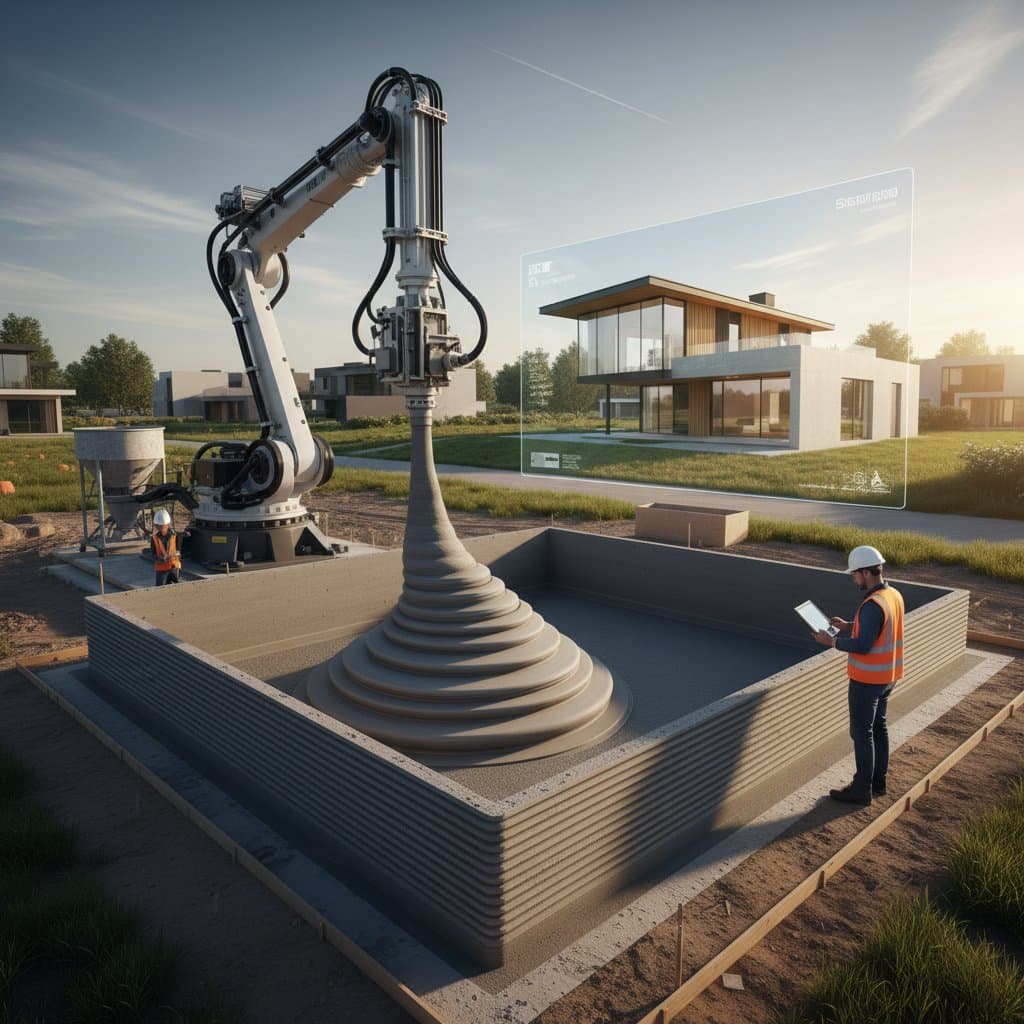
Construction professionals and homeowners seek faster, more efficient methods to lay foundations without sacrificing quality. 3D-printed foundations address these needs by using large-scale robotic printers to extrude concrete layer by layer, forming a solid base directly from digital designs. This approach eliminates traditional formwork, reduces material waste, and accelerates the timeline from weeks to days, making it ideal for residential, commercial, and accessory structures.
The technology relies on gantry-style printers or robotic arms that move over the site, depositing a printable mortar mix composed of cement, aggregates, and additives for strength and flow. These systems produce foundations that meet building codes, withstand environmental stresses, and integrate seamlessly with upper framing. As adoption grows, 3D printing promises to address housing shortages and streamline project timelines.
Essential Requirements for 3D Printing
Successful 3D printing of foundations demands careful preparation of equipment, materials, and site conditions. Key components ensure smooth operation and structural reliability.
- Power source and backup: A reliable continuous power supply prevents interruptions during printing. Generators or uninterruptible power systems serve as backups to maintain flow in remote or variable grid areas.
- Digital file: Convert a Building Information Model (BIM) or CAD design into G-code, the language that guides the printer's movements. This file dictates layer paths, heights, and reinforcement points for precise execution.
- Printable mortar mix: Formulate a specialized blend with controlled viscosity for extrusion and rapid setting. Additives like accelerators and polymers enhance durability and reduce shrinkage.
- Site preparation: Level and compact the ground to within 1 inch of tolerance. Install temporary rails or tracks for the printer gantry to ensure stability.
- Environmental controls: Monitor temperature and humidity to optimize curing. Enclosures or heaters protect against adverse weather during the print.
These elements form the foundation—literally—for efficient projects.
Cost Structure Breakdown
Budgeting for 3D-printed foundations involves evaluating materials, operations, and labor against traditional methods. For a standard 1,000-square-foot residential base, expect costs of $12,000 to $20,000, significantly less than the $15,000 to $25,000 for poured concrete alternatives.
Material expenses account for approximately 40 percent, covering the custom mortar and reinforcements. Equipment operation, including printer rental and energy use, comprises 35 percent. Labor represents the remaining 25 percent, focused on setup, monitoring, and finishing rather than extensive manual pouring.
Savings arise from eliminated formwork, quicker completion that reduces site overhead, and minimized waste—often under 5 percent compared to 15 to 20 percent in conventional pours. Over time, these efficiencies lower insurance and permitting fees tied to faster timelines. For larger projects, per-square-foot costs drop further due to economies of scale.
Step-by-Step Execution Process
The printing process follows a structured sequence to build layers progressively, ensuring integrity at every stage. Teams typically complete a full foundation in 24 to 72 hours, depending on size and complexity.
1. Calibrate and Test the Printer
Before full operation, run a test print of 2 to 3 feet to verify extrusion consistency and layer bonding. Fine-tune the nozzle height for uniform thickness, usually 0.5 to 1 inch per layer. This step confirms alignment and mix flow, avoiding costly rework.
2. Begin Perimeter Printing
The printer traces the digital outline, extruding mortar to form walls and footings. Layers adhere through chemical bonding and mechanical interlocking, building upward steadily. Control environmental factors like temperature between 50 and 90 degrees Fahrenheit and humidity at 40 to 60 percent to avoid drying issues.
3. Integrate Reinforcement
Every 8 to 10 layers, or about 4 to 5 feet high, add steel mesh, rebar, or fiber additives. Automated systems feed these in seamlessly, while manual insertion suits custom needs. This reinforcement boosts tensile strength, preventing cracks from settling or seismic activity.
4. Embed Utilities
At specified intervals, halt extrusion to install conduits for electrical, plumbing, or drainage. Pre-planned pauses in the G-code allow precise placement without post-print modifications. This integration saves time and preserves structural continuity.
5. Complete Top Layer and Surface Finish
The final layers receive a smooth extrusion for optimal load distribution to walls and framing. Advanced printers apply automated troweling for flatness, while basic setups use hand tools. Aim for a surface variation under 1/8 inch to meet code standards.
6. Curing and Inspection
Shield the structure from sun, wind, or rain during initial curing, which requires moisture retention for 5 to 7 days to reach 80 percent strength. Conduct thorough checks for dimensions, voids, and plumb alignment using levels and scanners. Only proceed to framing after certification.
Troubleshooting Common Challenges
Even with preparation, issues can arise. Prompt identification and resolution maintain project momentum.
Uneven Layer Adhesion
Cause: Variations in extrusion speed or nozzle positioning lead to gaps.
Solution: Pause the process, adjust clearance to 1/16 inch, and resume from the last solid layer. Test a small section to confirm adhesion before continuing.
Cracking During Curing
Cause: Quick evaporation or inadequate reinforcement causes stress fractures.
Solution: Apply wet blankets or automated misters to sustain humidity above 80 percent. Boost fiber ratios in the mix for future layers to enhance flexibility.
Dimensional Drift
Cause: Gantry shifts from uneven ground or vibrations.
Solution: Re-level the system using built-in sensors and compact the base further. Recalibrate the digital model if offsets exceed 1/4 inch.
Power or Feed Interruptions
Cause: Outages or material clogs disrupt flow, creating weak joints.
Solution: Switch to backup power immediately and clear feeds. Protocols include rapid nozzle cleaning to resume without seams.
DIY Feasibility Versus Professional Execution
Homeowners weigh self-managed printing against expert involvement based on project scale and expertise.
When DIY Is Viable
For structures under 400 square feet, such as sheds or studios, portable printers enable DIY efforts. Individuals with engineering basics can handle calibration and oversight after online or in-person training. Savings reach 25 to 35 percent over contractor fees, though renting equipment and sourcing mixes may reduce net gains. Always consult local codes for permits.
When to Hire Professionals
Opt for experts on load-bearing or expansive builds like homes and garages, where engineering stamps ensure safety. Complex geometries require sophisticated controls beyond basic systems. Professionals navigate regulations, securing approvals and inspections efficiently.
Select contractors with certified training, full insurance coverage, and performance warranties. Request portfolios of completed prints to verify experience with similar soils and designs.
Pro Tips for Success
Maximize outcomes with these practical strategies drawn from industry practices.
- Validate your design digitally: Run simulations in BIM software to spot issues like overhangs or weak supports before printing begins.
- Maintain steady environmental conditions: Target 60 to 80 degrees Fahrenheit and 40 to 60 percent humidity; use shelters if needed.
- Use quality control sensors: Employ laser or ultrasonic tools to monitor layer accuracy in real time, adjusting on the fly.
- Plan for logistics: Secure uninterrupted mortar delivery; stock 20 percent extra to cover delays.
- Document every step: Log settings, ratios, and inspections for compliance records and troubleshooting references.
Advancing Your Projects with 3D-Printed Foundations
Incorporating 3D printing elevates construction efficiency and innovation. This method not only speeds foundations but also sets the stage for sustainable, resilient builds. As technology evolves, early adopters gain competitive edges in time, cost, and quality—positioning projects for long-term success.