
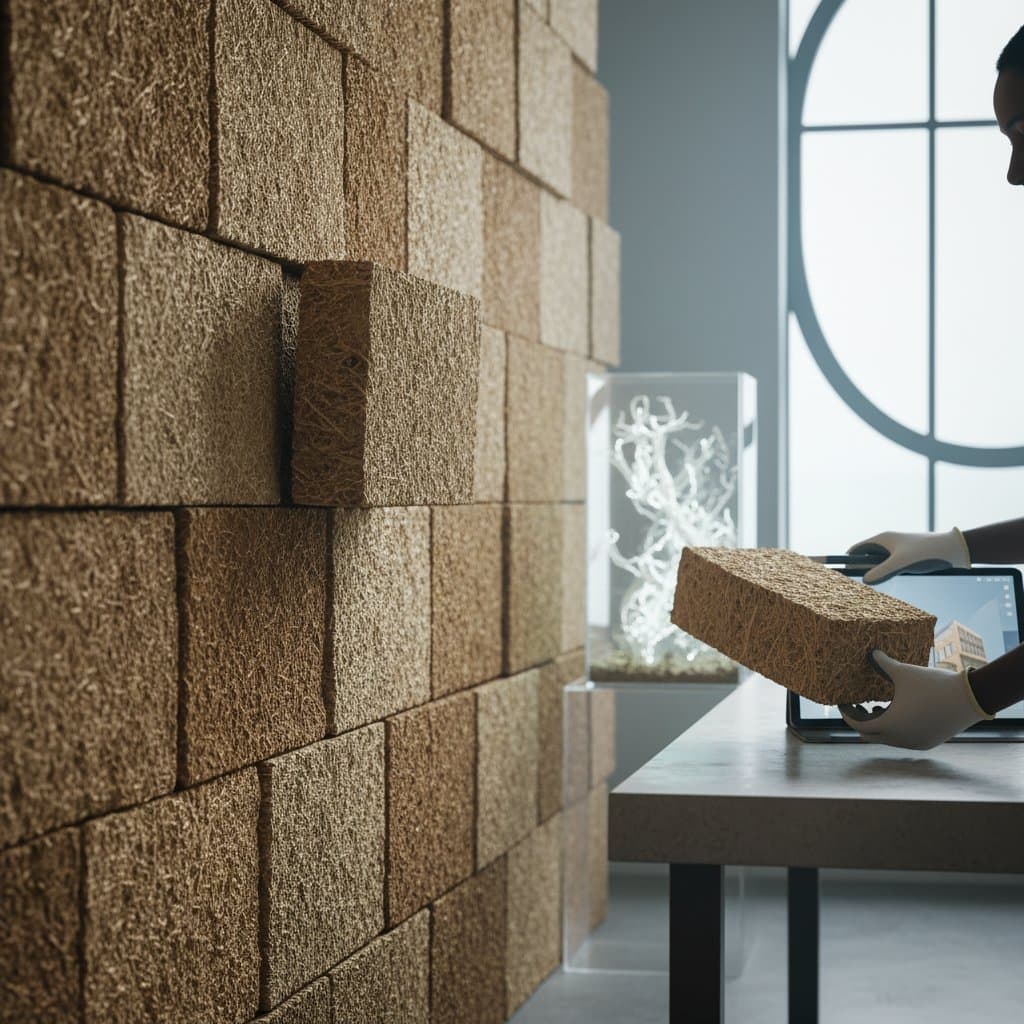
Overview of Mycelium Bricks
Mycelium bricks represent an innovative approach to sustainable masonry. These materials harness the growth of fungal mycelium on agricultural waste substrates, eliminating the need for energy-intensive kiln firing. This process significantly reduces carbon emissions and overall energy demands in production.
The primary expenses involve controlled cultivation, drying processes, and efforts to scale manufacturing. Benefits include reduced weight for easier handling, access to renewable raw materials, and minimal embodied energy compared to traditional bricks. As production methods advance, mycelium bricks offer a viable path toward greener construction standards.
Evaluating Physical and Performance Characteristics
Assess mycelium bricks or panels for a construction project by examining key physical and performance attributes. Conduct straightforward on-site inspections to gauge their suitability and potential limitations.
- Visual and tactile inspection: Examine the surface for firmness and continuity, ensuring no soft areas exist. A spongy texture indicates inadequate curing or residual moisture.
- Color consistency: Look for uniform off-white or tan hues, which signal complete fungal colonization. Dark spots or green discoloration may indicate contamination or irregular growth.
- Scent assessment: Detect a fresh, earthy aroma as the standard. Sour or musty smells suggest incomplete drying or bacterial presence.
- Weight and density evaluation: Handle a sample to confirm it feels lightweight yet solid, without crumbling. Excessive heaviness often results from retained moisture.
- Water absorption test: Apply drops of water to the surface. Rapid absorption necessitates a sealant or composite layer for outdoor applications.
- Compression test: Gently tap with a hammer handle. A sharp, resonant sound denotes robust internal structure, while a muffled response points to weaknesses or voids.
Such evaluations provide insights into product reliability prior to bulk procurement.
Identifying Potential Issues
Monitor for indicators of problems that could increase expenses or hinder project progress.
- Uneven curing leading to soft edges that disintegrate under minimal pressure.
- Apparent mold development or ongoing dampness during storage.
- Cracks at joints arising from shrinkage or variable moisture in the mixture.
- Absence of documentation on fire resistance or compressive strength.
- Suppliers unable to deliver uniform dimensions or batch quality certifications.
- Incompatibility with conventional mortars or adhesives.
These concerns often result in extended labor, corrective work, or premature failure.
Implementation Solutions and Estimated Expenses
Mycelium bricks form through the cultivation of fungal spores on substrates like straw, sawdust, or hemp hurds within molds. Growth occurs under regulated humidity and temperature conditions, followed by curing. Significant costs stem from incubation in growth chambers and subsequent treatment.
- Raw material expenses: Small-scale production yields costs of approximately six to ten dollars per brick. Large-scale operations reduce this to two to four dollars per unit.
- Drying and curing processes: Employ solar or low-heat methods, which add ten to fifteen percent to overall expenses. Excessive heat damages structural proteins and compromises integrity.
- Waterproofing applications: Apply a thin, bio-based sealant at about one dollar per square foot. Alternatives include limewash or silicate treatments.
- Fire-retardant measures: Use non-toxic borate or mineral coatings, costing an additional 0.50 to one dollar per brick.
- Labor considerations: The reduced weight simplifies handling, though specialized adhesives for cutting and joining may increase labor by five to ten percent.
Superficial remedies, such as paint alone for sealing or neglecting moisture barriers, prove ineffective. The material absorbs water and deteriorates internally without proper treatment. Opt for surface protections or ventilated rainscreen systems to ensure longevity.
Projects risk expansion beyond intended uses if teams apply mycelium bricks in load-bearing roles without validation. Limit initial applications to infill, partitions, or cladding until performance data confirms broader suitability.
Strategies for Repair and Replacement
Mycelium masonry resembles wood composites more than conventional clay products in behavior. Decisions on repair or replacement hinge on moisture exposure and structural integrity.
- Minor surface imperfections: Sand and recoat dents or scratches. Replace units only if damage penetrates to the internal fibers or fungal network.
- Prolonged water contact: Remove bricks from walls saturated for over two days. In-place drying seldom recovers full strength.
- Coating degradation: Renew protective layers every few years or when water fails to bead on the surface.
- Material interfaces: Minimize direct adjacency with metals or raw wood. Incorporate gaskets or separation joints to block moisture transfer.
Pursue repairs for damage affecting less than ten percent of the area. Exceeding this threshold favors replacement for safety and cost efficiency.
Assembling the Project Team
Successful integration of bio-based masonry demands early involvement from qualified experts.
- Material specialist or supplier advisor: Advises on curing and sealing tailored to regional climates.
- Architect experienced in natural materials: Designs envelopes that minimize water ingress and distribute loads effectively.
- General contractor: Ensures installation aligns with building codes and skilled labor availability.
- Structural engineer: Validates any load-bearing applications and establishes safety factors.
- Moisture or building performance expert: Reviews ventilation and vapor management details.
Conduct parallel evaluations to mitigate delays. Initial professional fees may rise by ten to twenty percent, yet these investments typically avert costs two to three times higher from errors or claims.
Prioritizing Project Elements
Sequence tasks in mycelium brick projects based on risk levels and benefits.
- Prioritize water management: Design for dryness through overhangs, flashing, and drainage to outlast any coatings.
- Secure structural support: Employ framing that resists shifts capable of fracturing bio-materials.
- Incorporate barriers: Select permeable membranes for drying capacity while sealing against air movement.
- Select appropriate finishes: Favor breathable options like lime plasters or mineral washes over moisture-trapping acrylics.
- Detail critical areas: Protect edges, joints, and penetrations with mechanical features such as drip edges or flashings.
Defer complex aesthetic elements until core systems demonstrate reliability. Emphasize functionality over innovation in early stages.
Allocating Resources and Timeline
Establish a defined budget and construction sequence to safeguard design integrity and finances.
- Foundation and drainage setup: Begin externally by sloping soil from walls, adding perimeter drains, and confirming gutter functionality.
- Envelope assembly: Prepare framing and sheathing for uniform support and gentle compression.
- Brick placement: Dry-fit units to verify alignments, then secure with adhesives or ties per guidelines.
- Post-installation curing: Permit complete drying before sealing to avoid trapped moisture and reduced lifespan.
- Final treatments: Coat surfaces following thermal and moisture stability assessments.
Space trade activities to allow drying and adaptation. A brief delay in one phase prevents extensive future corrections.
Ensuring Longevity Through Care
Sustain mycelium masonry with routine practices focused on moisture exclusion, surface upkeep, and environmental monitoring.
- Conduct biannual inspections of outer walls for discoloration or organic buildup.
- Clean with gentle soap and water, avoiding abrasive chemicals.
- Refresh coatings according to exposure levels and wear.
- Trim nearby plants to promote circulation and light access.
- Track indoor humidity and enhance ventilation as required.
A Vermont builder noted, “Fungi gave us the structure, now we owe it dry shoes.” This principle underscores the need for dryness and breathability to maximize durability.
Advancing to Practical Application
Approach mycelium bricks cautiously by initiating with modest trials. Incorporate them into shed walls, garden screens, or room dividers. Observe moisture levels, temperatures, and visual changes across a complete cycle. Document findings for suppliers and authorities to refine future efforts.
Mycelium options will not supplant traditional masonry immediately. They provide a reduced-carbon solution for non-load-bearing roles where weight savings and sustainability prevail. Expanding production and research will lower expenses and build assurance for wider adoption.