
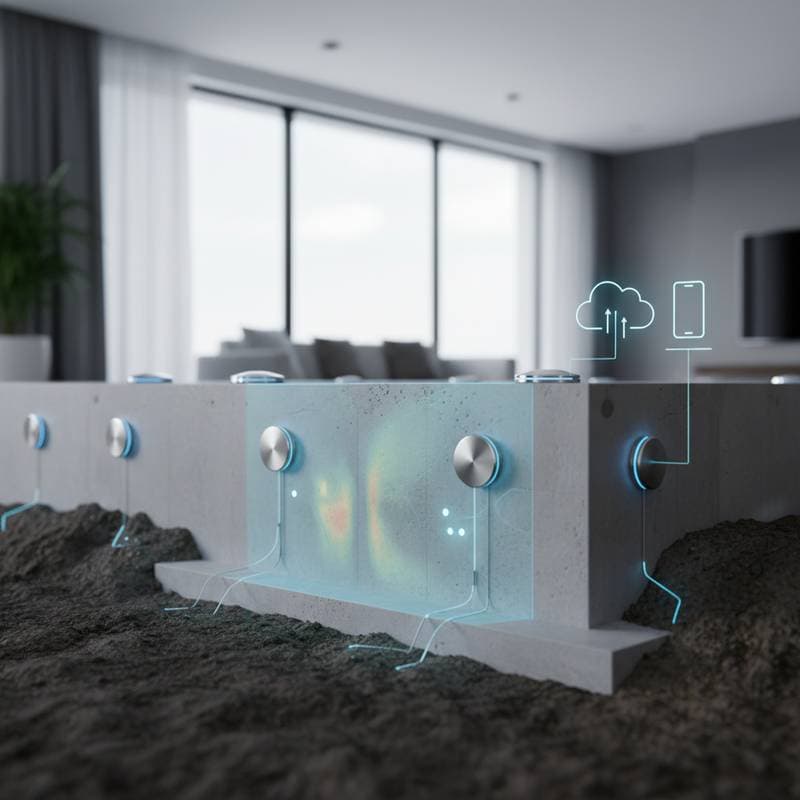
Smart Sensors Catch Foundation Settling Early
Foundation settling occurs gradually, often without obvious indicators until cracks form or floors become uneven. Smart sensors provide homeowners with an effective method to identify potential problems before they escalate into major structural issues. These compact devices monitor movement and moisture levels around the foundation perimeter and deliver notifications when measurements deviate from established norms. Access to this timely information enables proactive measures that can significantly reduce repair expenses.
What Smart Foundation Sensors Are
Smart foundation sensors consist of compact electronic components designed to quantify tilt, vibration, strain, and soil moisture adjacent to a building's base. They integrate wirelessly with a central hub or smartphone application that collects, processes, and displays the gathered information. Certain models employ accelerometers for precise motion detection, whereas advanced variants incorporate tiltmeters, strain gauges, and embedded probes to offer comprehensive environmental insights.
The primary objective remains straightforward: to identify initial indicators of differential settling or soil instability, allowing for timely interventions that prevent the progression of cracks or the onset of binding doors and windows. Homeowners benefit from real-time visibility into otherwise imperceptible changes, transforming reactive maintenance into a preventive strategy.
Pros and Cons
Pros
- Provides round-the-clock surveillance, regardless of the homeowner's location.
- Delivers advance notifications that avert expensive structural interventions.
- Enables convenient data retrieval via mobile devices or desktop interfaces.
- Integrates seamlessly with existing smart home ecosystems for unified alert management.
- Facilitates evaluation of the efficacy of foundation reinforcements or drainage enhancements.
Cons
- Involves upfront expenses that exceed those of conventional periodic inspections.
- Depends on stable Wi-Fi or cellular connectivity for reliable operation.
- May experience measurement drift, necessitating periodic recalibration.
- Requires battery replacements or recharges at intervals of several years.
- Prone to erroneous notifications if not securely affixed or protected from external vibrations.
Costs
Entry-level tilt or motion sensors suitable for modest residences begin at approximately 50 to 100 dollars per unit. A comprehensive setup, encompassing several sensors, a central hub, and associated application services, generally ranges from 300 to 800 dollars. Engaging professionals for installation incurs an additional 200 to 600 dollars, influenced by site accessibility and configuration demands.
Premium configurations that feature soil moisture and temperature sensors, along with cloud-enabled predictive algorithms, may total 1,000 to 2,000 dollars once installed. Expenses escalate with the quantity of monitoring locations, challenges in accessing basements or crawl spaces, and ongoing subscriptions for data storage or analytical reports. Several providers impose modest yearly fees to maintain cloud-based archiving and customized reporting features.
Lifespan and Maintenance
Reputable sensors typically endure for 8 to 10 years under normal conditions. Perform annual calibration checks to ensure precision, and swap out batteries or power units promptly when indicators signal depletion. Maintain cleanliness by removing accumulated dirt or debris, and verify the integrity of protective enclosures, particularly for exterior placements where waterproofing proves essential.
Soil-embedded moisture probes might demand earlier replacement if subjected to prolonged saturation. Conduct monthly reviews of data patterns to detect subtle, ongoing variations that fall below alert thresholds yet warrant attention. This routine vigilance helps sustain system reliability and extends overall service life.
Specs to Check
Evaluate prospective systems against these key specifications:
- Measurement type: Options include tilt, vibration, strain, or multifaceted combinations.
- Accuracy: Look for tolerances measured in fractions of a degree or millimeter.
- Operating temperature range: Ensure compatibility with regional weather fluctuations, from extreme cold to intense heat.
- Ingress protection rating (IP): Select ratings that guard against water ingress and particulate contamination.
- Power source: Consider disposable batteries, rechargeable options, or hardwired connections.
- Communication protocol: Verify support for Wi-Fi, Zigbee, LoRa, or cellular networks.
- App or dashboard support: Confirm features for historical data viewing, personalized alert settings, and report exports.
Prioritizing these elements ensures the selected system aligns with specific property needs and environmental challenges.
Planning and Prep
Prior to sensor deployment, conduct a thorough site assessment to identify existing fissures, slab irregularities, or suboptimal drainage patterns. Document the positioning of gutter downspouts and areas prone to water accumulation adjacent to the foundation walls.
Select attachment points on firm, debris-free surfaces, steering clear of zones influenced by machinery vibrations or frequent foot traffic. Account for power supply routes or future battery access without compromising sensor positioning. In locales characterized by swelling clays or freeze-thaw dynamics, incorporate moisture sensors at vulnerable sites. Always consult utility maps to avoid underground lines when inserting probes or stakes.
Installation Overview
Follow these structured steps for effective deployment:
- Survey and record baseline conditions. Capture photographic evidence of interior walls, flooring, and exterior grading to establish reference points.
- Mount sensors. Secure units to foundation walls, beam extremities, or slab edges using masonry-compatible screws or adhesive mounts.
- Connect to hub or app. Adhere to the manufacturer's guidelines for device pairing and network integration.
- Calibrate readings. Establish initial measurements during periods of structural stability to set accurate baselines.
- Test alerts. Induce minor tilts or vibrations to validate that notifications transmit correctly.
- Secure cabling or conduit. Shield any wiring from potential damage by pests or environmental exposure.
- Review data after the first week. Analyze initial outputs to verify consistent performance and fine-tune sensitivity levels as required.
This methodical approach minimizes errors and optimizes system functionality from the outset.
Patterns and Options
Typical configurations encompass:
- Perimeter array: Sensors distributed evenly along the foundation to monitor uneven subsidence.
- Corner monitoring: Targeted placement at stress concentration areas where fractures commonly initiate.
- Integrated moisture network: Blends structural and subsurface sensors to assess drainage effectiveness.
- Hybrid systems: Links to automated controls for sump pumps or dehumidifiers, enabling responsive adjustments.
Tailor the arrangement to the property's foundation design. Slab-on-grade structures often require sensors at corners and mid-spans. Basement foundations suit wall inclination and floor elevation trackers. Elevated crawl spaces perform best with sensors on support beams or piers.
DIY vs Pro
Individuals proficient with basic tools like levels, drills, and digital applications can manage the installation of compact wireless units independently. Such self-directed efforts suit compact properties with robust Wi-Fi coverage and unobstructed foundation access, typically requiring two to four hours for completion and tuning.
Opt for professional assistance in scenarios involving:
- Pre-existing cracks or evident displacement.
- Irregular flooring or documented prior structural modifications.
- Confined spaces demanding crawl space navigation.
- Comprehensive tracking of moisture, temperature, and motion variables.
- Desire for specialized calibration and ongoing data analysis.
Experts can furthermore interface the setup with expansive home automation networks or engineer-approved monitoring interfaces, enhancing diagnostic capabilities.
Common Failures and Fixes
False alarms: Frequently stem from insecure attachments or ambient vibrations from vehicles or equipment. Reinspect mountings and reinforce connections as needed.
No data updates: Typically arises from signal disruptions; reposition the hub or install signal extenders to restore connectivity.
Drifting readings: Address through recalibration per vendor protocols to realign accuracy.
Water damage: Renew gaskets or elevate sensors to mitigate exposure above ground level.
Battery drain: Upgrade to durable lithium variants or pursue wired alternatives where feasible.
Prompt troubleshooting preserves system integrity and minimizes disruptions.
Regional and Climate Notes
In regions prone to freezing temperatures, seasonal soil heave from thaw cycles may generate benign fluctuations; adjust alert parameters upward to filter such occurrences. Coastal or high-humidity environments demand corrosion-resistant models with sealed housings and marine-grade hardware to withstand salt exposure.
Arid zones featuring reactive clays necessitate vigilant moisture oversight, as volumetric changes can simulate foundational shifts. Seismic-prone areas benefit from algorithms that differentiate routine tremors from load-bearing anomalies, ensuring relevant alerts.
Alternatives
For those favoring hands-on methods, mechanical crack monitors and optical leveling tools offer viable, low-cost alternatives, though they demand consistent manual oversight and meticulous logging. Professional-grade wired monitoring networks, installed by specialists, provide superior resolution and archival data suitable for insurance claims or engineering consultations, albeit at a premium price point.
Turning Data into Protection
Initiate with a targeted strategy: define measurement priorities and update frequencies, then select a system renowned for intuitive interfaces and dependable precision. Smart foundation sensors replace uncertainty with actionable intelligence, empowering homeowners to intervene decisively and safeguard their investment against progressive deterioration.