
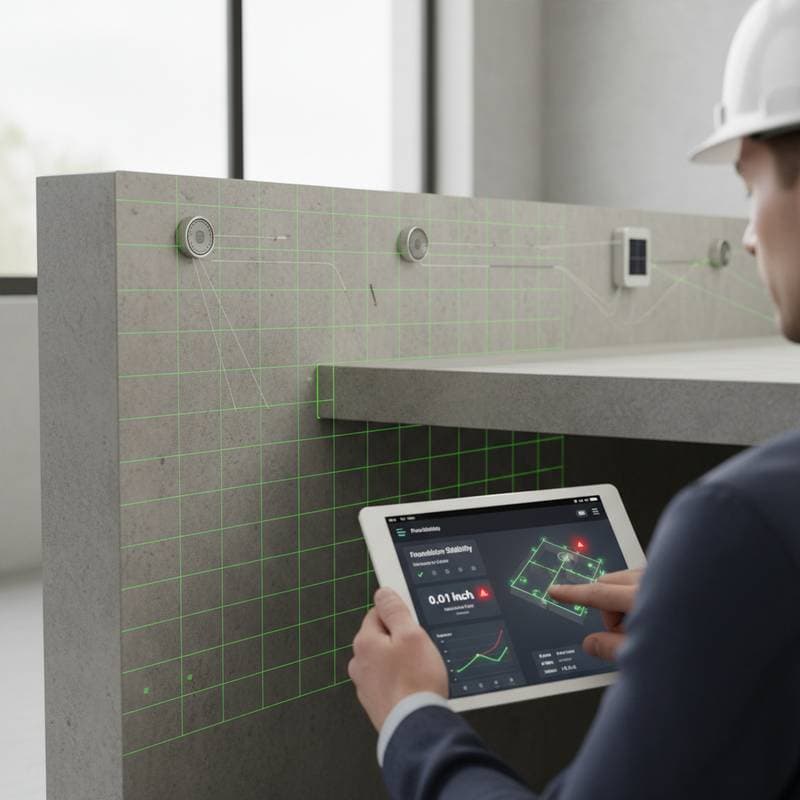
- Key Decision Factors: Consider foundation type, soil composition, building age, and local climate conditions when selecting an IoT monitoring system.
Assessing Your Property for IoT Foundation Monitoring
Effective IoT foundation monitoring begins with a thorough understanding of your property's unique characteristics. These systems excel at detecting subtle movements, such as 0.01 inches, which signal potential issues before they become visible. By evaluating specific factors, property owners can choose the right setup for reliable performance.
Foundation type plays a central role; slab-on-grade foundations respond differently to soil shifts compared to pier-and-beam designs. Soil composition influences stability, as expansive clays swell with rain while granular sands may erode over time. Building age matters too, since older structures often exhibit gradual settling that newer ones do not. Local climate adds another layer, with regions prone to heavy rainfall or freeze-thaw cycles demanding more robust monitoring.
Planning Your Smart Foundation Monitoring System
Before installing an IoT monitoring system, evaluate your property's conditions and technical readiness. This preparation phase guarantees accuracy, reliability, and adherence to local regulations. A well-planned approach minimizes disruptions and maximizes the system's effectiveness.
Conducting a Site Assessment
Begin the process by determining soil type and drainage patterns around your foundation. Clay-heavy soils expand and contract with moisture changes, potentially causing uneven pressure on the structure. Sandy soils, on the other hand, are susceptible to erosion from water runoff. Engage a geotechnical engineer for a professional evaluation to pinpoint optimal sensor locations, such as along perimeter walls or under load-bearing points.
Drainage assessment is equally important; poor grading can lead to water pooling, accelerating soil movement. Test for permeability by observing how quickly water absorbs into the ground after rain. These insights guide sensor placement to capture the most relevant data points.
Navigating Permitting and Code Requirements
IoT sensors generally do not trigger permit requirements on their own, but installation activities like trenching for wiring or mounting on structural elements may do so. Consult local building authorities to confirm regulations for structural monitoring devices. Integration with load-bearing components often necessitates professional certification to meet safety standards.
Document all plans in advance, including system specifications and installation methods. This step prevents delays and ensures the setup complies with zoning laws, particularly in areas with seismic or flood risks.
Selecting Equipment and Connectivity Options
A robust IoT foundation monitoring system comprises several interconnected components designed for precision and durability. Displacement sensors track vertical or horizontal shifts at key points, capable of registering movements as small as 0.01 inches. Moisture probes embedded in the soil measure water content variations that precede structural changes.
Temperature and humidity modules record environmental factors to contextualize movement data, revealing correlations like seasonal expansion. A central wireless gateway aggregates information and transmits it to the cloud via secure Wi-Fi or cellular networks. Accompanying monitoring software provides dashboards for real-time views, customizable alerts, and archival storage of historical trends.
Prioritize systems with backup power sources, such as solar panels or long-life batteries, to maintain operation during outages. Address potential signal challenges from thick concrete by positioning gateways in open areas or using signal boosters. Test connectivity during setup to confirm uninterrupted data flow.
Guaranteeing Accurate Performance and Data Reliability
The value of IoT sensors lies in their ability to deliver trustworthy insights, which requires diligent maintenance and verification processes. Regular upkeep prevents inaccuracies from compromising the system's utility. Establish protocols from the outset to sustain high performance over time.
Implementing a Calibration Schedule
Schedule recalibration of sensors at minimum twice per year, or immediately following significant events such as floods, earthquakes, or major excavations nearby. Professionals use specialized tools to adjust devices against known benchmarks, ensuring readings align with initial baselines. This practice corrects for environmental wear and maintains sensitivity to minute changes like 0.01-inch shifts.
Track calibration history in the system's software to identify patterns of drift. If discrepancies arise, investigate underlying causes, such as sensor fouling from soil particulates, before proceeding with adjustments.
Verifying Data Integrity
Validate automated readings by comparing them to manual inspections using tools like laser levels for vertical alignment or inclinometers for tilt detection. Perform these cross-checks quarterly to build confidence in the IoT outputs. Discrepancies may indicate the need for sensor repositioning or software updates.
Incorporate redundancy by installing backup sensors at high-risk zones. This layered approach filters out anomalies and provides a comprehensive picture of foundation behavior.
Configuring Alerts and Thresholds
Define alert parameters carefully to balance responsiveness with practicality. Trigger notifications for vertical displacements exceeding 0.05 inches or soil moisture swings greater than 10 percent in a 24-hour period. These thresholds focus attention on meaningful changes while ignoring benign variations from daily temperature fluctuations.
Customize alerts based on your property's profile; for instance, adjust for clay soils that naturally vary more. Test the system by simulating conditions to refine notification delivery via email, app, or SMS.
Sustaining Your System for Long-Term Reliability
With proper care, an IoT foundation monitoring investment endures beyond ten years, offering ongoing safeguards against structural threats. Proactive maintenance averts minor glitches from developing into major failures. Treat the system as an integral part of property stewardship.
Following a Routine Inspection Checklist
Conduct comprehensive inspections every six months to uphold system integrity. Examine sensor housings for secure attachment and absence of corrosion, especially in humid environments. Test data transmission from each device to the gateway, ensuring no packet loss occurs.
Replace or recharge batteries in all components, monitoring power levels through the software interface. Scan logs for unusual spikes or gaps in readings, which could signal connectivity issues. Finally, clear soil around probes to prevent obstruction and check for water accumulation that might affect accuracy.
Analyzing Long-Term Data Trends
As data accumulates over months and years, patterns emerge that inform proactive decisions. Uniform downward movement across sensors often reflects normal settling in new constructions, typically harmless if gradual. Differential settlement, evident in varying readings between nearby sensors, warrants immediate professional assessment to prevent cracks or tilting.
Use software visualization tools to plot trends against seasonal factors, such as rainfall totals or temperature averages. This analysis highlights correlations, like increased movement during wet periods, guiding preventive actions such as soil stabilization.
Engaging Professional Expertise
Homeowners handle routine tasks effectively, but annual reviews by structural engineers or certified contractors provide deeper insights. Experts interpret nuanced data patterns, suggest interventions like underpinning or grading adjustments, and verify compliance with building codes. Their involvement ensures the system evolves with your property's needs.
Schedule these consultations around key milestones, such as after extreme weather or at five-year intervals. Professionals can also upgrade components to incorporate advancements in sensor technology.
Practical Strategies for Optimal Results
- Deploy redundant sensors at vulnerable foundation corners to cross-verify measurements and enhance accuracy.
- Address persistent high moisture levels by installing French drains or regrading to improve water diversion.
- Maintain a detailed log of calibration sessions, maintenance activities, and notable environmental incidents for reference.
- Pair foundation monitoring with assessments of roofs and walls to develop a holistic view of structural health.
- Conduct quarterly trend reviews to anticipate issues, focusing on aggregate data rather than isolated readings.
Securing Enduring Foundation Stability
IoT foundation sensors revolutionize property protection by delivering precise, ongoing intelligence on structural dynamics. Through meticulous planning, vigilant maintenance, and expert collaboration, owners shift from reactive repairs to preventive strategies. This approach fosters peace of mind, curtails unexpected expenses, and preserves the foundational integrity of homes and buildings for generations.