
Quick Overview
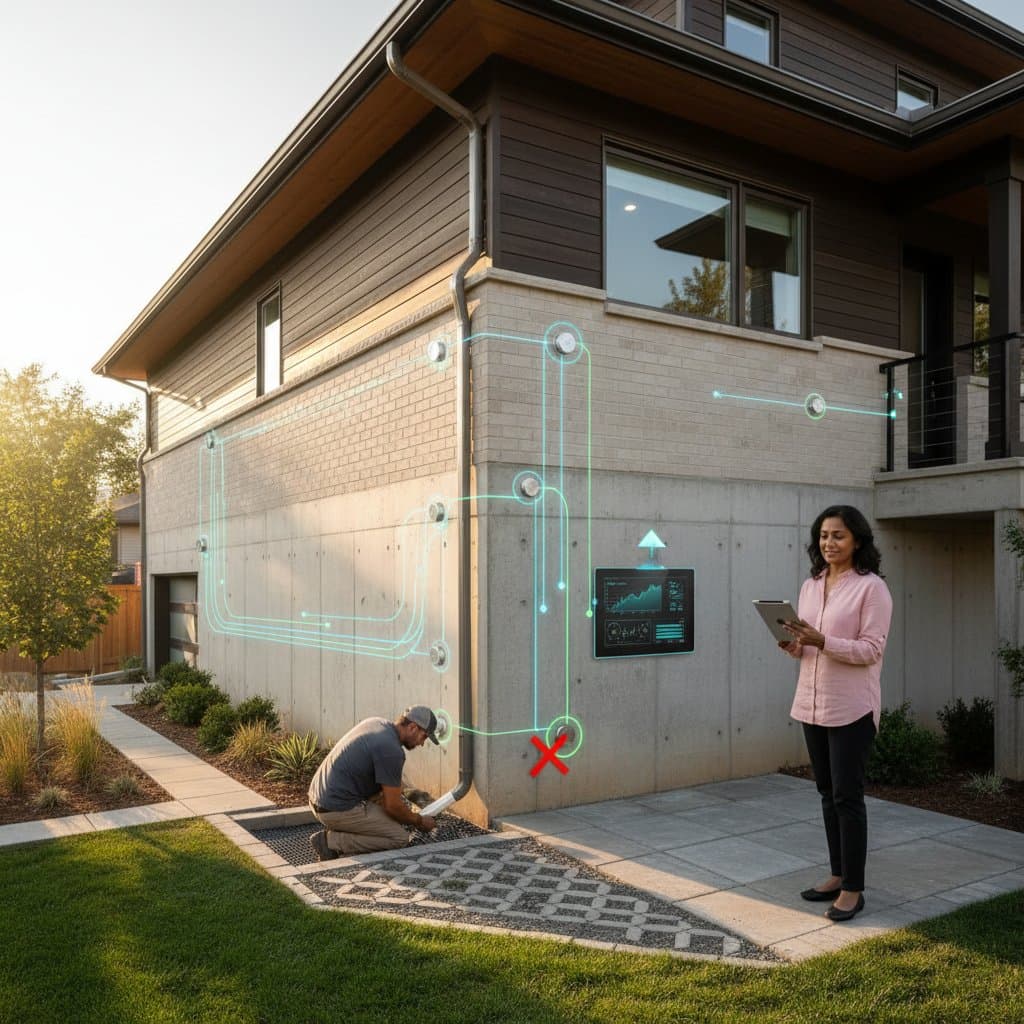
Foundation movement often begins imperceptibly and escalates to substantial costs. Initial shifts may create gaps in framing, fractures in finishes, and misalignments in doors long before obvious signs emerge. IoT sensors provide real-time tracking of these changes, notifying homeowners in time to intervene affordably. Primary expense factors include drainage improvements, soil stabilization, and structural adjustments, where proactive monitoring proves essential.
Essential Homeowner Checks
Homeowners identify many early indicators through straightforward visual and physical assessments. Sensors enhance this process with precise data, yet initial evaluations rely on direct observation.
- Examine the exterior and roofline for level alignment. Dips or bulges near valleys or eaves suggest uneven load distribution.
- Inspect siding lines or brick joints for straight, uniform patterns. Gradual waves or tilts indicate underlying shifts.
- Test floor levels by rolling a tennis ball across multiple rooms. Consistent directional drift reveals developing slopes.
- Review trim edges and door frames for seasonal gap variations, which signal foundation movement or framing strain.
- In basements or crawl spaces, look for hairline cracks that widen or narrow over time.
- Note fresh stains or efflorescence around corners or bulkheads, indicating water paths that could erode soil.
These observations establish a reference point prior to sensor installation. On-site findings retain primary importance.
Critical Warning Signs
Certain indicators reveal accelerated or severe movement that amplifies repair expenses.
- Step cracks in masonry that expand toward a specific corner.
- Door frames twisted to the extent that latches fail to engage.
- Soil that feels soft or remains damp near downspouts or crawl space vents.
- Repeated failures in prior patch repairs at identical locations.
- Slab floors elevating or sinking beyond a quarter inch.
- Ongoing musty smells adjacent to foundation walls.
Such signs necessitate immediate structural assessments and investigations into moisture sources.
Common Remedies and Approximate Expenses
IoT sensors identify issues but do not resolve them; they direct focused actions. An entry-level system with four to six sensors typically ranges from several hundred to one thousand dollars, plus annual fees for data access. These devices attach to foundation walls or framing, transmitting data on tilt, vibration, and humidity to a user dashboard.
Upon confirming movement, solutions vary by root cause. Regrading surfaces and redirecting gutters often costs a few hundred dollars and resolves numerous settling concerns. Installing French drains or sump pumps incurs higher fees yet serves as preventive measures rather than full structural overhauls.
For deeper issues, options like helical piers, underpinning, or slab jacking may surpass several thousand dollars per installation. Costs escalate with site access challenges and soil types. Expansive clays or elevated water tables heighten both complexity and price. Superficial treatments, such as mortar repointing or interior crack sealing, mask symptoms temporarily but fail under repeated environmental cycles.
Projects expand when related elements like plumbing or insulation require attention in the same zones. Effective planning sequences these elements to minimize redundant efforts.
Stabilization Over Full Replacement
Foundation elements seldom warrant complete replacement; the focus lies on securing stability versus rebuilding.
- Windows: Retain and realign if frames shift minimally and square up post-leveling. Replace solely if decay or seal failures continue after stabilization.
- Roof: Address substructure shifts that warp valleys and flashing. Reapply flashing and optimize drainage prior to any roof overhaul.
- Foundation: Prioritize grading and drainage corrections. Advance to piers or pins only if settlement persists following moisture management.
- Basement Finishes: Postpone until sensor data verifies stability through at least one seasonal cycle.
Sensor insights validate when shifts cease, preventing investments in unstable upgrades.
Assembling the Right Team and Workflow
Engage an inspector experienced with aging structures prior to sensor deployment. This professional selects optimal monitoring locations and highlights vulnerable areas. A structural engineer or architect then analyzes data and defines alert thresholds.
Involve a general contractor early for accurate cost projections once remedies emerge. For probable structural work, coordinate engineer and contractor input upfront to sidestep later modifications. Sensor providers offer setup assistance but defer to experts on repair strategies.
In intricate or valuable properties, dedicated project oversight adds ten to twenty percent to budgets yet curbs unexpected expenses. Prompt team alignment ensures responses match the pace of sensor alerts.
Prioritizing High-Impact Actions
Target interventions that yield the greatest returns first. These safeguard assets and ensure subsequent enhancements endure.
- Manage surface water via gutters, downspouts, and proper grading.
- Seal cracks in the foundation only after stability verification.
- Enhance air barriers and attic insulation post-dryness and firmness.
- Hold off on aesthetics until sensors and checks affirm consistency.
- Avoid marginal alterations like relocating walls or completing moist basements.
Retaining historic stone or brick foundations proves feasible with effective moisture control. Material swaps occur only when load-bearing integrity fails.
Budgeting and Phased Implementation
Initiate every plan with water management. Address drainage and runoff before structural contact. With dryness achieved, secure sagging or displaced components. Next, refresh critical systems such as electrical and plumbing strained by prior shifts.
Efficiency measures like insulation and sealing follow stability. Proceed to interior completions like kitchens and bathrooms only after envelope and systems solidify. Sensors monitor throughout phases, verifying intervention effectiveness.
A streamlined sequence includes:
- Halt water intrusion.
- Secure the structure.
- Upgrade safety features.
- Boost energy performance.
- Complete interior spaces.
This progression prevents dismantling recent work due to overlooked foundation needs.
Sustaining Structural Health
IoT sensors deliver ongoing vigilance beyond visual reach. Months of consistent humidity and tilt readings enable confident advancements.
A Midwest builder noted, “We used to guess where settlement started. Now we track it by millimeter and fix the drainage first.” Such accuracy conserves resources and funds.
Homeowners contribute through vigilance. Clear gutters regularly, preserve slopes directing water from walls, and examine sensor updates monthly. Document changes with photographs.
Blending hands-on checks, targeted fixes, and digital oversight renders foundation threats foreseeable rather than abrupt. This integrated method shields both legacy buildings and modern constructions on challenging soils.