
Hempcrete Foundations: What Homeowners Need to Know
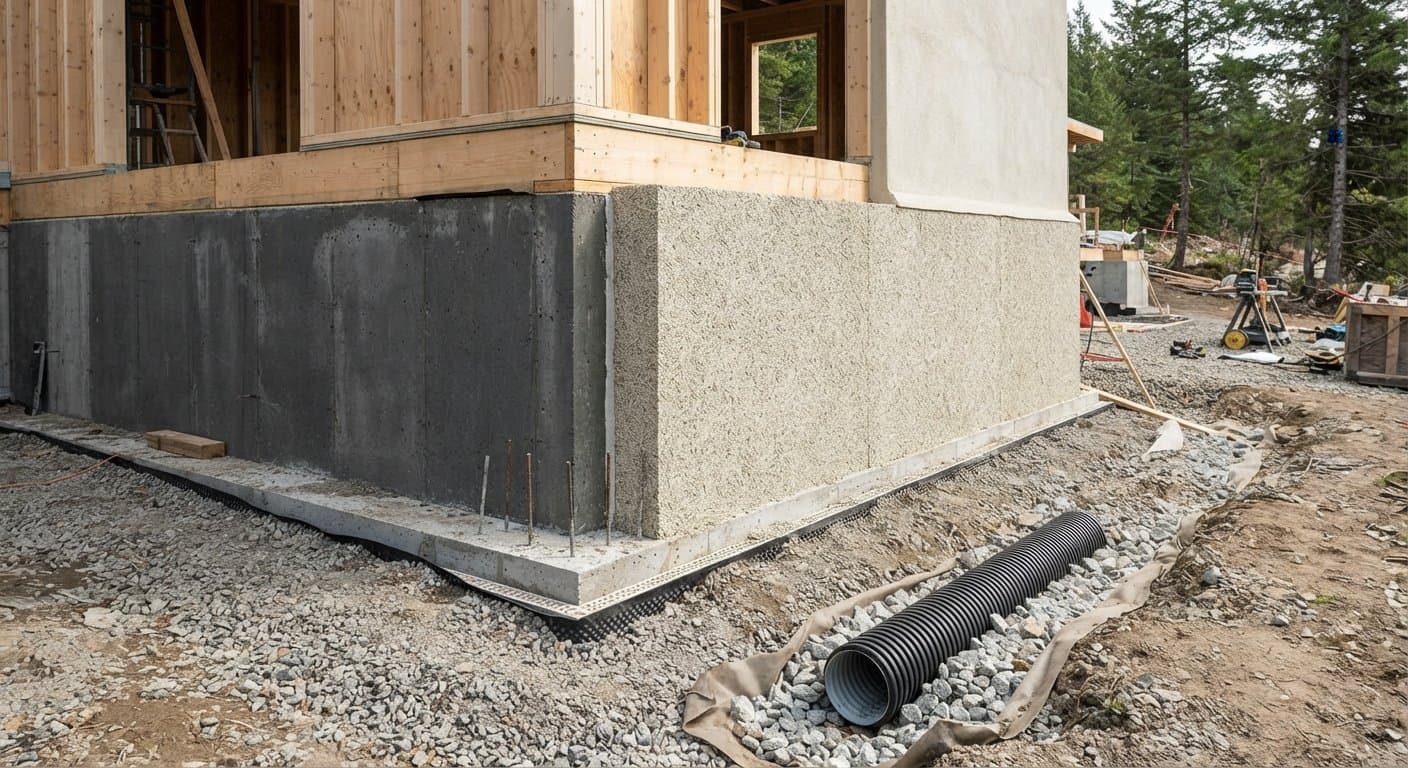
Hempcrete is a lightweight building material made from the woody core of hemp plants mixed with a lime-based binder and water. It can help insulate walls and manage moisture, but standard hempcrete is not a structural foundation material. In most homes, it belongs in above-grade walls or as insulation around a separately engineered foundation.
That distinction matters. A foundation carries the weight of the house and resists soil pressure, water, and frost. Hempcrete usually does not have the strength or approvals needed to do that job alone. Before treating it as a foundation option, ask a local structural engineer and building department what assembly is permitted.
Potential Benefits
Hemp hurd stores carbon while it grows, and the lime binder can absorb some carbon as it cures. The material is vapor-permeable, which means water vapor can move through it instead of becoming trapped in a sealed wall. It provides insulation and can help moderate indoor humidity when detailed with compatible finishes. Lime-based mixes resist fire and pests, though the full wall assembly still needs suitable fire and moisture protection.
Limitations
Hempcrete has low compressive strength compared with concrete or concrete masonry, so it generally cannot carry foundation loads. It is not waterproof. Persistent soil moisture or standing water can damage the material. Local code acceptance, trained installers, and supply may be limited. Thick walls take up floor space, and installation and drying can take longer than conventional concrete work.
Costs and Service Life
Hempcrete material and labor often cost about $20 to $45 per square foot of wall, depending on mix, thickness, access, and local supply. A full installed foundation wall assembly can run roughly $35 to $80 per square foot, but this figure depends heavily on the structural wall, waterproofing, drainage, and insulation included. A conventional poured-concrete foundation may cost about $15 to $35 per square foot of wall before some finishes and site complications.
Ask for an itemized quote that separates the load-bearing wall, hempcrete, exterior protection, drainage, and interior finish. Costs rise with remote delivery, hand-built forms, complex geometry, engineering, and difficult excavation.
There is no reliable service-life figure for hempcrete used as a structural foundation, since that is not its typical role. A properly protected hempcrete wall assembly can last for decades, but moisture detailing and workmanship are decisive. Check for leaks, damaged render, cracks, and blocked drainage. Clean with a soft brush and repair compatible lime finishes promptly. Do not apply an impermeable coating unless the designer specifies it.
Specs to Confirm
Request written details for the complete assembly, not just a product brochure. Confirm the hemp hurd source, lime binder type, mix proportions, and installed density. Check the tested R-value for the actual thickness. Confirm vapor control, capillary breaks, waterproofing, and drying direction. Ask whether the proposed assembly has local approval and relevant fire, moisture, and strength test data. Lime render and other vapor-open finishes usually suit the material better than sealed coatings.
Do not rely on a generic claim that a mix is foundation grade. Have the engineer verify the loads, soil conditions, and permitted use.
Planning and Installation
Start with a soil report and a foundation design. The plan should account for groundwater, slope, frost depth, seismic conditions where relevant, and the path for roof and surface water. Call the local utility location service before any excavation. Check permits, setbacks, and homeowners association rules before ordering materials.
A common approach uses a conventional concrete or masonry foundation for structure, with hempcrete placed above grade as wall infill or insulation. A designer may also specify it outside or inside a structural wall, but the assembly must keep it away from persistent ground moisture.
Typical steps include:
- Excavate and build the engineered foundation, including its footing and any required reinforcement.
- Install a capillary break, which blocks moisture from wicking upward, and the specified waterproofing.
- Grade soil away from the building and install footing drains where the design calls for them.
- Set forms or framing for the hempcrete section, then place the mix in lifts according to the system instructions.
- Allow adequate curing and drying before applying compatible breathable finishes.
- Inspect transitions, penetrations, and the top and bottom edges for gaps where water could enter.
A practical drainage target is a slope away from the house of about six inches over the first ten feet, where the site allows it. Local rules and site design may require a different detail.
DIY or Hire a Pro
Hempcrete is a poor choice for a first-time foundation project. A small nonstructural garden wall or test panel may suit an experienced DIYer, but a home foundation needs engineering, permits, excavation, drainage, and precise moisture detailing.
Hire a structural engineer and an experienced contractor for any load-bearing work, basement, retaining condition, sloped site, high water table, poor soil, or frost-prone location. Ask for nearby project references and a written curing and protection plan. Cutting or mixing dry materials can create dust, so use suitable eye protection, gloves, and a properly fitted respirator. Follow the binder supplier safety instructions.
Common Problems and Climate
Damp or crumbling areas often point to leaks, splashback, poor drainage, or an incompatible finish. Find and stop the water source before patching. Replace damaged material only with a compatible mix. Cracks can result from movement, poor curing, or a structural issue. Fine finish cracks may be repairable with lime plaster. Widening cracks or cracks in the structural foundation need professional review.
In freeze-thaw regions, keep hempcrete protected from repeated saturation and freezing. In hot, dry climates, plan curing so the mix does not dry too quickly. Coastal salt, wind-driven rain, and intense sun also call for assembly-specific protection. Breathability helps a wall dry, but it does not replace waterproofing or drainage.
Alternatives and Next Steps
For a load-bearing foundation, compare poured concrete, concrete block, insulated concrete forms, and engineered masonry. Concrete often has broad code acceptance and high strength, while hempcrete can add insulation and moisture buffering when used in a designed wall assembly. Compare each option by installed cost, strength, finish durability, upkeep, and repair method.
Before choosing, ask your designer to show the structural section, drainage path, moisture layers, and code approval in writing. If hempcrete is not approved for the foundation itself, it may still fit as above-grade insulation or wall infill, where its low-carbon and breathable qualities can be used without asking it to carry loads.