
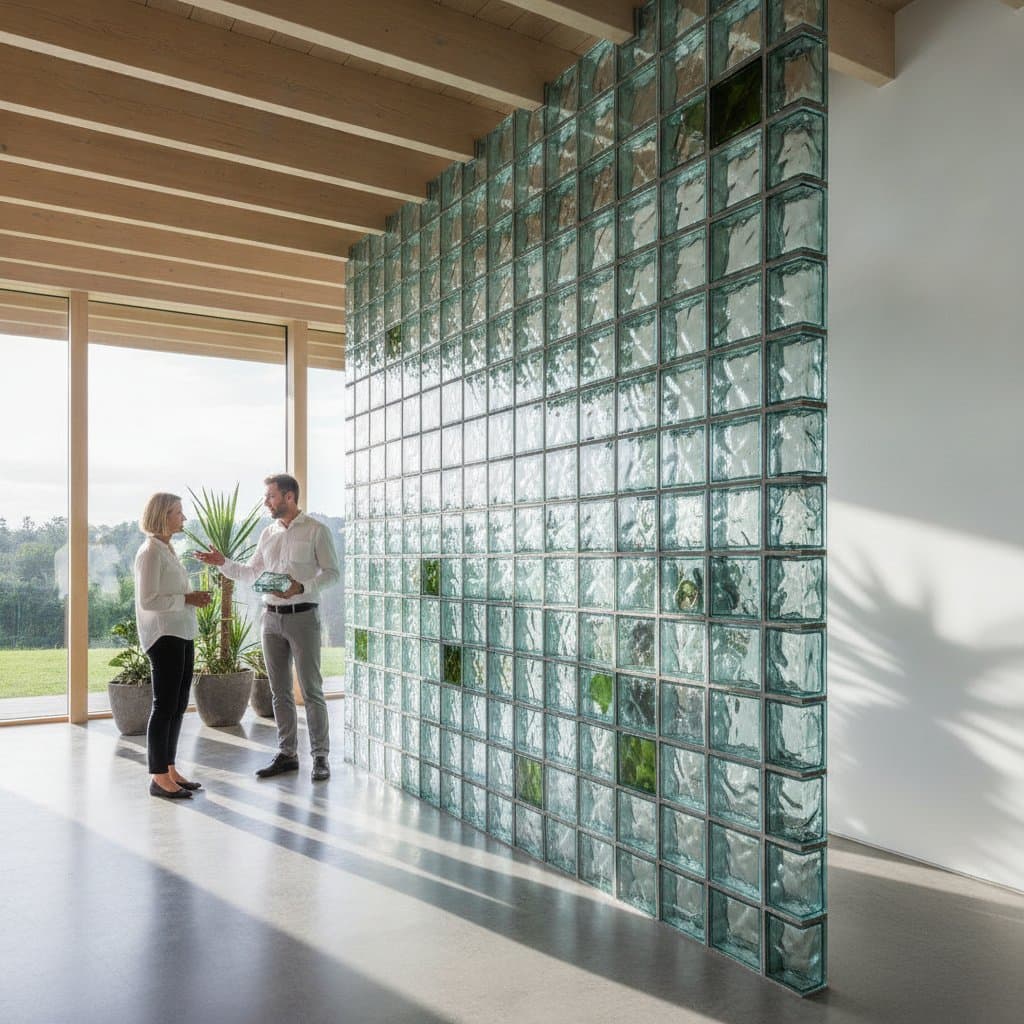
Recycled Glass Bricks Bring Light and Sustainability
Skill level: Intermediate
Helper needed: Optional for lifting and alignment
Safety rating: Moderate, with gloves and eye protection required
Building with recycled glass bricks brings light, color, and sustainability into homes and garden structures. These translucent blocks combine masonry durability with the reflective beauty of glass. The result creates walls, partitions, and facades that shimmer while reducing resource waste. Homeowners can use them for garden walls, interior dividers, or accent features.
Project Expectations
This project requires several days for planning, preparation, and installation. The skill level remains moderate because careful alignment and precision matter when handling mortar or specialized adhesive. Physical demands vary with project scale. Lifting heavy boxes of bricks and working at height can strain the back and shoulders. A helper proves useful for positioning bricks and cleaning joints.
Planning Your Recycled Glass Brick Project
Careful planning ensures the wall looks professional and lasts for decades.
Site Assessment
- Confirm the floor or foundation can support the weight of the glass wall.
- Avoid areas with direct water exposure unless waterproof mortar and sealant are in place.
- Position walls to capture natural or artificial light for maximum visual impact.
- Verify airflow around interior glass to prevent condensation buildup.
Key Measurements
Measure the total wall length and height. Select brick size and joint thickness, typically 0.25 inches for mortar joints or spacer systems. Calculate the number of bricks by multiplying wall area by bricks per square foot, then add a 10 percent buffer for waste and cuts. Mark opening locations for doors, windows, or pass-throughs before starting.
Environmental Considerations
Glass expands and contracts slightly with temperature changes. Leave control joints every few feet on larger surfaces to prevent stress cracks. Outdoor installations require UV-resistant sealant to avoid discoloration.
Handling Challenges
Glass bricks are slippery and can chip if struck. Keep the workspace free of grit and handle each brick with gloves. Avoid hammering or prying. Always use plastic or rubber spacers.
Tools and Materials
Hand Tools
- Trowel for applying and smoothing mortar.
- Rubber mallet for gently tapping bricks into alignment.
- Level to ensure each row remains straight and plumb.
- Jointing tool for finishing mortar joints neatly.
- Tape measure and square for consistent layout.
Power Tools
- Wet saw with diamond blade for cutting glass bricks cleanly. Rent one if necessary.
- Drill with mixing paddle for preparing mortar batches.
- Orbital sander or grinder for smoothing edges when needed.
Materials
- Recycled glass bricks with a 10 percent overage.
- Mortar mix or silicone adhesive depending on the chosen method.
- Plastic spacers for alignment.
- Reinforcing rods or anchors if structural support is required.
- Sealant for perimeter joints.
- Cleaning cloths and mild glass cleaner.
Finishing the Installation
Apply sealant around the perimeter after the mortar cures. Clean glass surfaces with a mild solution to remove residue. Inspect joints for uniformity and repair any gaps promptly.
Maintenance Practices
Wipe surfaces regularly with a soft cloth. Inspect sealant annually and reapply as needed. Avoid abrasive cleaners that could scratch the glass.