
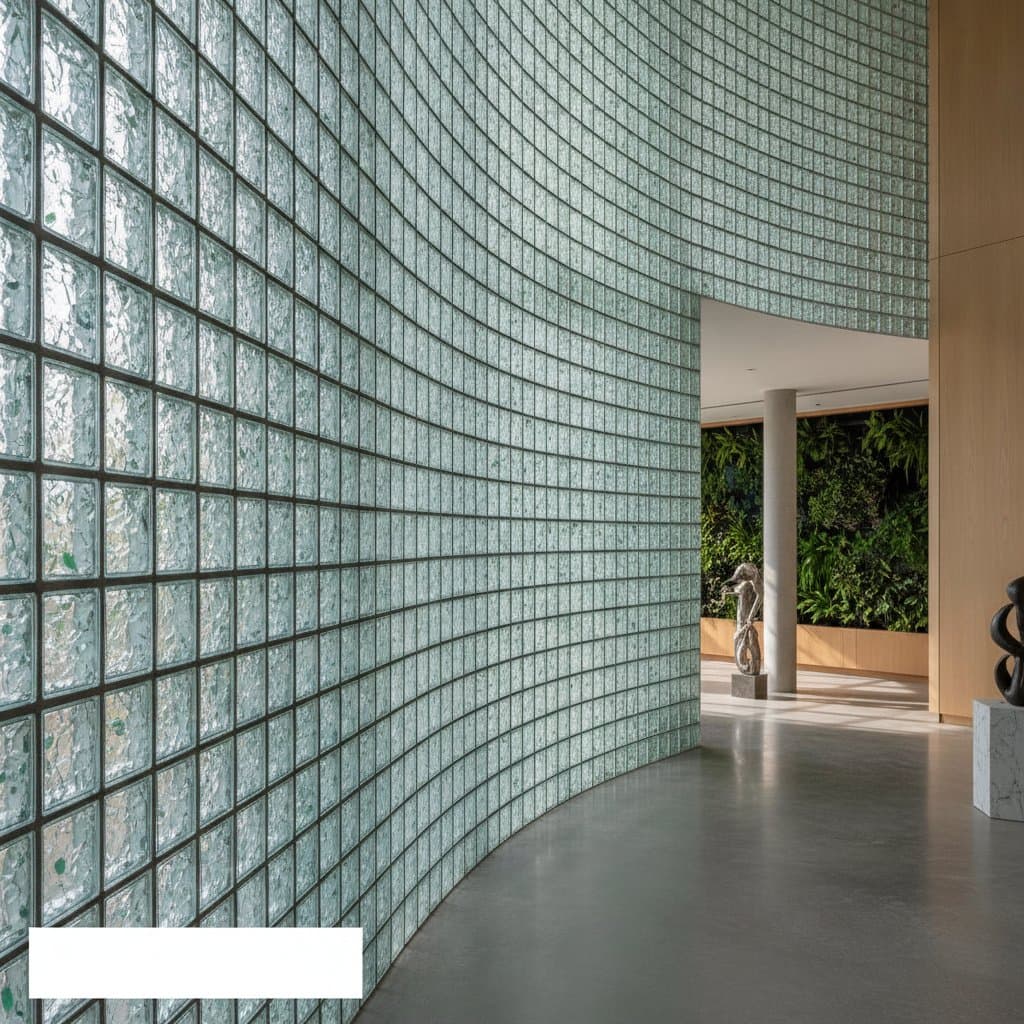
Recycled Glass Bricks: 2026's Hottest Eco-Masonry Trend
Recycled glass bricks combine strength, light transmission, and environmental benefits. Manufacturers crush post-consumer glass, melt it, and form the material into solid blocks. These units suit both structural walls and decorative partitions. Homeowners gain a modern material that reduces landfill waste while allowing natural light into spaces.
Pros and Cons
Pros
- Sustainable material made from post-consumer glass diverted from landfills.
- Light transmission that filters daylight while preserving privacy.
- Durable surface resistant to moisture, rot, and insects.
- Low maintenance because the non-porous finish cleans easily.
- Modern aesthetic that fits contemporary, coastal, and minimalist designs.
Cons
- Higher cost driven by specialized production and careful handling.
- Greater weight and brittleness that demand precise installation techniques.
- Limited color options compared with ceramic glazes.
- Reduced thermal insulation because solid glass lacks internal air pockets.
- Cutting difficulty that requires diamond tools and dust control.
Costs
Material prices range from 10 to 25 dollars per square foot based on thickness, finish, and transparency. Installed costs typically fall between 25 and 60 dollars per square foot depending on layout complexity and site access.
Factors that increase cost include custom colors, curved walls, load-bearing requirements, remote locations, and special reinforcement. Prefabricated panels can lower labor expenses for walls under 8 feet high, while custom masonry work requires additional time and skill.
Lifespan and Maintenance
A properly installed wall lasts 50 years or more with routine attention. The glass itself does not degrade, yet mortar joints and framing need inspection every few years. Clean surfaces with mild detergent and water. Avoid abrasive pads that dull the finish. Reseal joints with silicone only in wet areas such as showers or exterior exposures.
Inspect regularly for cracked joints, trapped moisture, and impact damage. Replace individual bricks with matching mortar or clear structural adhesive when defects appear.
Specs to Check
Confirm compressive strength meets or exceeds 2500 psi for structural applications. Verify a minimum 45-minute fire rating. Standard units measure 3 to 4 inches thick, while decorative panels are about 2 inches. Weight ranges from 10 to 15 pounds per brick. Thermal expansion must match the chosen mortar to avoid cracking. Colors should be fused into the glass rather than surface applied. Request confirmation of 70 to 95 percent post-consumer recycled content.
Planning and Prep
Provide a stable, level base and weather protection. Exterior walls require proper drainage at the footing and weep holes in mortar joints. Interior partitions often need steel or aluminum framing to support the load.
Account for site access, frost depth, expansion joints every 15 to 20 feet, foundation slope, and sun exposure that may create glare. Check local building codes for structural glass block use and obtain engineer approval when required.
Installation Overview
- Plan the layout with chalk lines and dry-fit the first course.
- Set the base course on high-strength, non-shrink mortar.
- Insert joint spacers to maintain consistent 1/4-inch gaps.
- Butter each brick with mortar and press it into place.
- Add horizontal reinforcement every few courses as needed.
- Wipe excess mortar before it hardens.
- Install aluminum or vinyl channels at vertical edges.
- Tool joints smooth with a rounded tool.
- Allow full cure, then apply clear silicone sealant in wet zones.
Cut bricks with a wet saw and diamond blade while wearing eye protection, gloves, and a respirator.
Patterns and Options
Common patterns include stack bond for modern symmetry, running bond similar to traditional brick, and diagonal or herringbone layouts for accent walls. Mixed clear and frosted blocks create varied light effects. Opaque or sandblasted finishes reduce glare. Select UV-stable tints for exterior use.
DIY vs Pro
DIY work suits small interior walls or garden features under 50 square feet. Required tools include a level, trowel, wet saw, and spacers. Expect a full weekend for a modest project.
Hire a professional for structural walls, heights over 8 feet, reinforced framing, difficult access, or curved patterns. A mason ensures proper spacing, alignment, and long-term performance.
Common Failures and Fixes
Cracked joints result from thermal movement. Grind out damaged mortar and repoint with flexible material. Loose bricks often stem from poor adhesion. Remove and reset with fresh mortar. Moisture haze requires improved ventilation and breathable sealant. Polish light scratches with cerium oxide paste. Replace deeply cracked units rather than patching.
Regional and Climate Notes
Cold climates need frost-rated bricks and flexible mortar. Hot regions benefit from glare-reducing tints. Coastal projects require non-corrosive reinforcement and sealed joints. High-humidity areas call for vapor-permeable sealants. Maintain drainage and avoid soil contact in every climate.
Alternatives
Concrete masonry units cost less and insulate better yet transmit less light. Ceramic blocks offer durability but add weight. Acrylic panels are lightweight yet scratch easily. Reclaimed clay brick provides rustic texture. Glass block panels simplify small non-structural openings.
Pro Tips for Success
Order 5 to 10 percent extra material to cover breakage. Verify consistent tint across pallets. Keep mortar joints slightly flexible. Allow full curing before cleaning. Protect finished surfaces from construction dust. Shade the work area during installation and schedule exterior work for mild weather.
Maintaining Your Investment
Wash surfaces with soap and water once or twice yearly. Inspect corners and joints for cracks. Renew exterior sealant every few years. Ventilate any hazy sections before resealing. Store spare bricks from the original batch for future color-matched repairs. With proper installation, recycled glass bricks deliver decades of service while bringing light, durability, and sustainability to the built environment.