
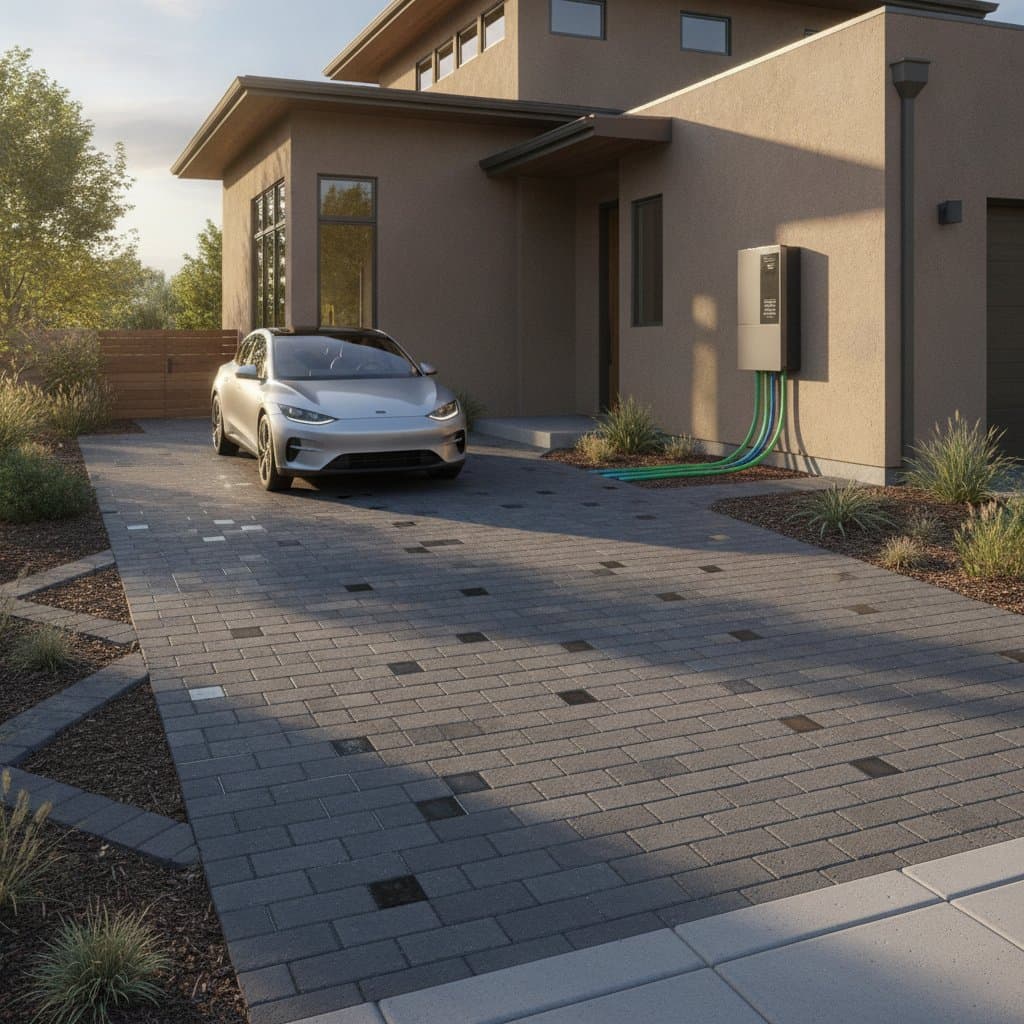
Solar Pavers Transform Driveways Into Home Power Sources
Homeowners are no longer limited to rooftop solar panels when looking to generate renewable energy. A new category of hardscape technology, solar pavers, turns ordinary driveways and walkways into energy-producing surfaces. These specialized pavers combine the strength of concrete or stone with embedded photovoltaic cells that capture sunlight and convert it into electricity. The result is a driveway that supports vehicles and your home power needs while enhancing curb appeal.
This guide explains how solar pavers work, what you need to plan for installation, expected costs, maintenance requirements, and how to decide whether a solar driveway suits your property.
Key Takeaways
- Cost range: Expect total installation between $65 and $120 per square foot, with materials accounting for 55 to 65 percent, labor around 25 to 35 percent, and electrical integration 10 to 15 percent.
- Power generation: Typical solar pavers generate 5 to 10 watts per square foot, enough for small systems to offset 10 to 20 percent of household electricity use.
- Installation timeframe: A standard two-car driveway of 400 to 600 square feet takes 5 to 9 days including electrical connection and curing time.
- Structural depth: Solar paver assemblies require at least 8 inches of compacted base material plus 2.5 to 3 inches of pavers for long-term durability.
- Decision factors: Sun exposure, driveway slope, local building codes, and budget all determine viability and return on investment.
Planning Your Solar Driveway Project
Before investing in solar pavers, evaluate your site conditions and system requirements carefully. This stage determines whether the project will deliver meaningful energy savings.
Assess Sunlight Exposure
Solar pavers perform best on flat or gently sloped surfaces with at least 5 hours of direct sunlight daily. Driveways shaded by trees, neighboring homes, or tall structures will produce less electricity. Use a solar pathfinder tool or app to measure exposure before committing.
Evaluate Surface Area and Energy Potential
The total power output depends on driveway size. For example, a 400-square-foot driveway producing 8 watts per square foot can yield roughly 3.2 kilowatts of capacity. This could offset 15 to 25 percent of average household energy use, depending on local sunlight conditions.
Check Local Building and Electrical Codes
Most jurisdictions require permits for solar installations that connect to a home electrical system. Some also regulate driveway materials, runoff management, or vehicle load ratings. Always confirm with your building department before ordering materials.
Budgeting and Cost Factors
A solar driveway is a premium upgrade. Costs vary by brand, system complexity, and site preparation requirements. Expect materials at $40 to $75 per square foot, labor at $20 to $35 per square foot, and electrical integration at $5 to $10 per square foot. For comparison, a traditional concrete driveway costs about $10 to $15 per square foot. The higher initial cost of solar pavers can be offset by reduced electricity bills and potential tax incentives in some regions.
Step-by-Step Installation Process
Step 1: Layout and Alignment
Mark the driveway boundaries using string lines or chalk. Confirm slopes for proper drainage, ideally one quarter inch per foot away from structures. Dry-lay several pavers to confirm pattern alignment and color matching.
Step 2: Placing the Solar Pavers
Begin at one edge, placing pavers tightly together. Avoid gaps that could allow shifting. Each unit should interlock mechanically or connect with clips depending on manufacturer design. Ensure each paver electrical connector aligns with the adjacent unit. Use a rubber mallet to seat pavers without damaging the surface. Periodically check surface level using a straightedge.
Step 3: Electrical Connections
Connect the paver circuits in series or parallel as specified by the manufacturer. Use waterproof connectors rated for IP67 or higher. Route cables through the conduit installed earlier to the inverter location. Only a licensed electrician should complete final wiring and grid connection.
Step 4: Edge Restraints and Finishing
Install concrete or metal edge restraints to lock the field in place. Sweep polymeric sand into joints to stabilize the surface and prevent weed growth. Lightly mist with water to activate the joint compound.
Step 5: Testing and Commissioning
Once wiring is complete, test each circuit for continuity and voltage output. The installer or electrician will verify system performance before connecting to the home main electrical panel. Record baseline readings for future reference.
Troubleshooting Common Challenges
Uneven output across sections often stems from shading or loose electrical connections. Trim overhanging branches, inspect connectors, and clean surfaces to resolve the issue. Surface cracking or movement usually results from inadequate base compaction or frost heave. Recompact base layers, improve drainage, and repair affected sections as needed.
Water infiltration into connectors arises from compromised seals or improper installation. Replace damaged connectors with waterproof-rated replacements and reseal junction boxes. Reduced efficiency over time typically comes from dirt accumulation or micro-scratches on the glass surface. Clean surfaces regularly with mild detergent and soft brushes.
DIY or Professional Installation
A skilled homeowner with paving experience can handle excavation, base preparation, and physical placement of pavers. This approach can reduce labor costs by 25 to 35 percent. However, the electrical connection and inverter setup must always be performed by a licensed electrician for safety and code compliance.
Professional installation is recommended when the driveway involves complex slopes or drainage, the local jurisdiction requires licensed solar installers, the system ties into battery storage or grid interconnection, or the property has challenging soil conditions. When hiring, verify credentials such as contractor licensing, liability insurance, and manufacturer certification. Request documentation of previous installations and warranties on both labor and materials.
Long-Term Benefits and Energy Independence
Solar pavers provide more than aesthetic appeal. They help homeowners generate clean energy from previously unused surfaces, improving sustainability and reducing reliance on external utilities.
Assessing Your Readiness for Solar Pavers
Transforming your driveway into an energy-generating surface is an investment in both technology and sustainability. By understanding site conditions, planning carefully, and working with qualified professionals, you can create a driveway that supports your home power needs while maintaining durability and style. Start by assessing your sunlight exposure and budget, then consult with certified installers familiar with solar paver systems. Whether you choose concrete-based or composite models, the result is a hardscape that works as hard as it looks, turning every sunny day into free, renewable energy for your home.