
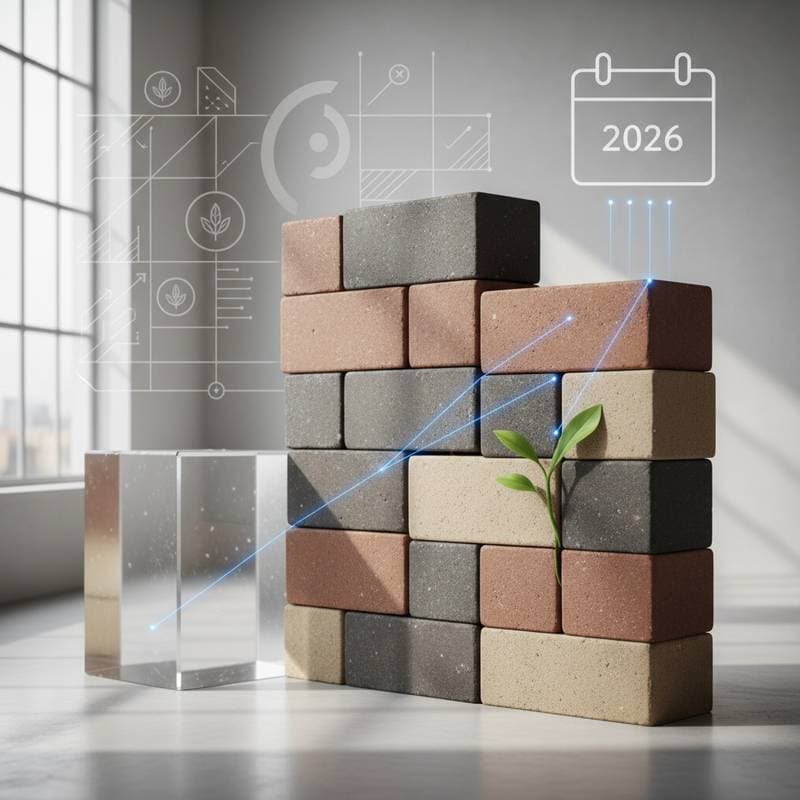
Geopolymer Bricks: Cement-Free Future of Masonry
Geopolymer bricks represent an innovative masonry unit that substitutes industrial byproducts for traditional Portland cement. These bricks employ aluminosilicate materials, such as fly ash or slag, which undergo a reaction with an alkaline solution to create a robust, stone-like binder. The outcome yields a resilient, low-carbon brick that closely resembles fired clay or concrete masonry in appearance and functionality.
Pros and Cons
Pros
- Low carbon footprint. Manufacturing processes eliminate the substantial emissions associated with cement kilns, significantly lowering overall environmental impact.
- High strength. Compressive strength frequently equals or surpasses that of concrete blocks, supporting demanding structural applications.
- Thermal stability. These bricks maintain performance during temperature fluctuations and elevated heat conditions.
- Chemical resistance. They withstand acid and sulfate exposure more effectively than traditional cement-based units.
- Fast curing. Select formulations achieve full design strength in as little as one or two days.
Cons
- Limited availability. Suppliers remain scarce, and material variations occur by region.
- Special handling. Alkaline activators possess caustic properties that demand careful management.
- Variable appearance. Colors and surface textures fluctuate based on source materials.
- Code acceptance. Certain jurisdictions necessitate engineering validation for structural implementations.
Costs
Material expenses for geopolymer bricks typically fall between $2 and $4 per square foot, influenced by proximity to local sources and the specific binder formulation. Installation costs range from $7 to $12 per square foot, aligning with those for premium concrete blocks or clay bricks. Expenses increase in locations requiring long-distance transport of fly ash or slag. Factors such as bond patterns, mortar selections, and site accessibility determine labor costs.
Lifespan and Maintenance
A properly constructed geopolymer brick wall endures for 50 years or longer with routine maintenance. Regularly inspect joints for cracks or movement, particularly in areas prone to freeze-thaw cycles. Employ mild detergents and low-pressure water for cleaning. Steer clear of acid-based cleaners, as they may erode the surface binder. Penetrating sealers prove useful in regions exposed to salts, though resealing occurs infrequently.
Specs to Check
- Compressive strength: Target at least 5,000 psi for load-bearing walls.
- Water absorption: Ensure levels remain under 10 percent for outdoor applications.
- Freeze-thaw rating: Verify compliance with ASTM standards or comparable testing protocols.
- Unit size: Standard modular sizes measure 8 by 4 by 2.25 inches, with options for custom configurations.
- Color consistency: Obtain samples from production batches to confirm aesthetic uniformity.
Planning and Prep
Geopolymer bricks require a firm, level foundation for optimal performance. Design footings for walls in the same manner as for standard masonry, incorporating drainage systems to direct water from the base. Scan for underground utilities prior to excavation. In regions with cold winters, extend footings below the frost line. Store materials in dry conditions until installation, since premature moisture exposure can impair the alkaline activation process.
Installation Overview
- Establish the layout and mark guidelines with chalk lines.
- Prepare mortar or adhesive specified for geopolymer bricks.
- Apply buttering to joints and position bricks along a straight reference line.
- Verify level and plumb alignment after every few courses.
- Tool the joints to enhance weatherproofing.
- Permit adequate curing duration prior to imposing loads or applying sealers.
Wear safety glasses, gloves, and long sleeves during activator mixing or unit cutting. Implement dust suppression measures for dry cutting operations. On extensive projects, utilize mechanical mixers equipped with sealed covers to minimize exposure risks.
Patterns and Options
Available bond patterns encompass running bond, stack bond, and Flemish bond. Running bond provides superior structural integrity for walls, whereas stack bond suits veneers or ornamental panels. Certain manufacturers produce interlocking designs that minimize mortar requirements. Surface finishes vary from smooth to textured, mimicking natural stone. Color selections derive from the mineral composition of raw materials.
DIY or Hire a Pro
Individuals with essential masonry tools and experience can manage small-scale projects like garden walls or pathways. Engage a certified mason for load-bearing structures, expansive areas, or installations involving structural connections and lintels. Professionals ensure adherence to local codes and oversee curing processes to guarantee enduring performance.
Common Failures and Fixes
- Efflorescence: This appears as white salt deposits from moisture movement. Remove by brushing and enhance site drainage.
- Cracking: Such issues stem from differential settling or inadequate mortar thickness. Repoint or reconstruct compromised sections.
- Soft surface: Improper mix proportions cause this defect. Replace affected areas instead of attempting repairs.
Regional and Climate Notes
Opt for bricks with verified low absorption and enhanced durability in freeze-thaw environments. Choose salt-resistant variants for coastal settings. In arid, high-temperature areas, cover curing bricks with plastic sheeting to retain moisture and avoid premature drying.
Alternatives
When geopolymer bricks prove inaccessible, consider compressed earth blocks, units from recycled concrete, or lime-stabilized masonry products. Each option advances the reduction of cement dependency while preserving reliable structural qualities.
Embracing Geopolymer Bricks in Your Next Project
Geopolymer bricks present a feasible route to sustainable construction that retains essential strength and visual appeal. Expanded production will likely decrease costs and broaden regulatory approvals. Homeowners contemplating walls, patios, or exterior facades should evaluate this material for its environmental and performance advantages.