
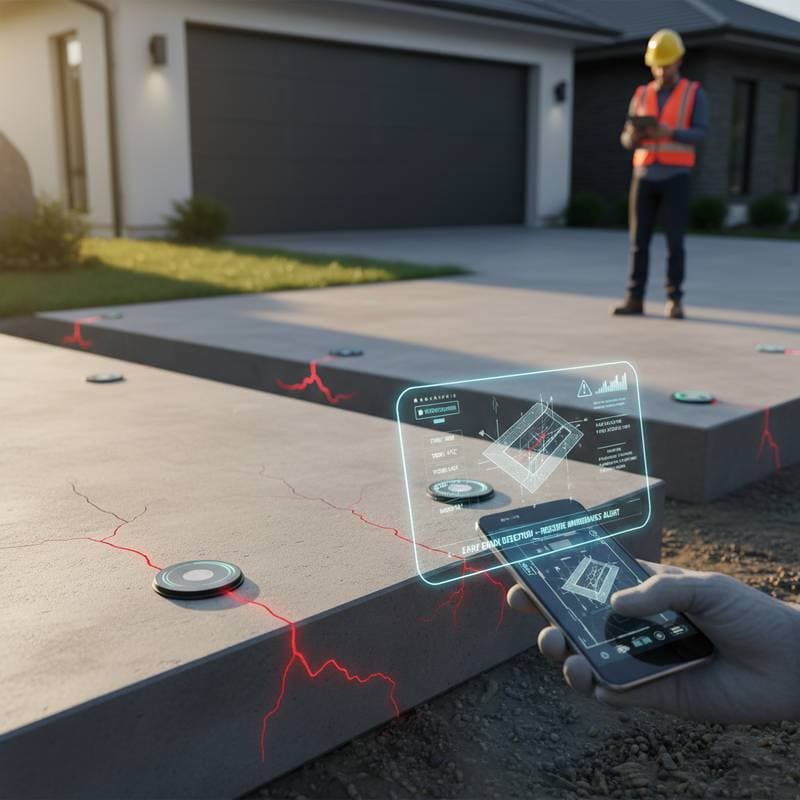
Prevent Concrete Cracks with Early Phone Alerts
Concrete structures provide essential strength and stability, yet they remain vulnerable to environmental stresses. Temperature fluctuations, moisture variations, and applied loads often initiate invisible damage that leads to visible cracks over time. Smart sensors offer homeowners a proactive solution by monitoring these factors in real time. These compact, wireless devices integrate into new concrete installations or attach to existing surfaces, delivering instant notifications to your smartphone to enable timely intervention.
Early detection through such technology minimizes repair expenses and extends the service life of driveways, patios, foundations, and other slabs. Homeowners gain peace of mind knowing that potential issues receive attention before they escalate. This article explores the mechanics of smart concrete sensors, their benefits and limitations, installation processes, and practical considerations for effective use.
How Smart Concrete Sensors Work
These sensors employ advanced microelectronics to measure key indicators of structural health, including temperature, humidity, and internal strain. Embedded within the concrete or mounted externally, they collect data continuously and transmit it via low-power wireless protocols to a central hub or directly to a mobile application. The system analyzes incoming information against predefined thresholds; deviations, such as sudden strain increases or moisture spikes, trigger immediate alerts through push notifications, emails, or texts.
This process relies on precise calibration during setup to account for local conditions. For instance, sensors detect micro-movements caused by thermal expansion or settling soil, providing data that correlates with crack formation risks. Integration with cloud-based platforms allows for historical trend analysis, helping users predict and prevent failures based on patterns observed over months or years.
Pros and Cons
Pros
- Identifies stress indicators and potential cracking at an early, invisible stage.
- Lowers the need for reactive repairs, saving significant costs over time.
- Enhances overall durability for residential slabs, driveways, and foundational elements.
- Delivers real-time alerts to mobile devices, eliminating the requirement for routine physical inspections.
- Verifies proper curing processes in freshly poured concrete, ensuring optimal strength development.
Cons
- Involves an initial investment for sensors, hubs, and professional installation if required.
- Performance hinges on accurate sensor placement to avoid false readings.
- Depends on reliable Wi-Fi or cellular connectivity for consistent data transmission.
- Certain platforms charge ongoing subscription fees for advanced data storage and analytics.
- Retrofitting options remain limited for aged or heavily reinforced concrete structures.
Typical Costs
Sensor pricing for residential applications typically ranges from 20 to 60 dollars per unit, with most models falling in the mid-range for basic functionality. A standard driveway or patio project requires 2 to 4 sensors to cover critical zones adequately, based on dimensions and load expectations. Total installation expenses, encompassing labor, calibration, and materials, generally total 150 to 400 dollars for smaller areas.
Advanced setups with enhanced real-time monitoring or cloud integration may incur additional monthly fees of 5 to 15 dollars. Factors such as slab thickness, irregular geometries, or areas with signal interference necessitate extra hubs or boosters, elevating costs. For budget-conscious users, entry-level Bluetooth kits suit compact spaces like garage floors, bypassing recurring charges while providing essential alerts.
Lifespan and Maintenance
Durable construction allows most sensors to operate effectively for 5 to 10 years, often matching the concrete's service life. Sealed designs protect against corrosion and ingress from water or chemicals, ensuring reliability in harsh environments. Battery-dependent units require periodic replacement, typically every 2 to 5 years depending on usage intensity.
Routine upkeep involves monthly app reviews to verify signal strength and data flow. Position hubs in protected locations away from moisture and debris, and maintain clear lines of sight to sensors to prevent connectivity issues. Firmware updates, available through the app, further extend functionality by addressing evolving environmental challenges.
Specs to Check
Selecting the right system demands scrutiny of technical specifications to match your site's demands. Ensure the temperature operating range spans at least 0 to 150 degrees Fahrenheit to handle seasonal extremes. Moisture sensitivity should cover conditions from full saturation to bone-dry states for comprehensive monitoring.
Wireless transmission distance varies from 30 to 100 feet, influenced by barriers like walls or dense rebar; opt for models with extenders if needed. Power options include long-life replaceable batteries or solar-assisted variants for reduced maintenance. Alert mechanisms must support app notifications, SMS, or email delivery. Finally, verify compliance ratings, such as IP67 sealing for submersion resistance, and certification for embedding in concrete.
Planning and Prep
Effective deployment begins with detailed site assessment for new pours. Sketch a layout identifying high-risk areas, such as edges prone to heaving or centers subject to uniform loading. Position sensors 2 to 4 inches below the surface to capture subsurface changes without surface exposure.
Steer clear of direct adjacency to steel reinforcement, as metallic interference can disrupt signals; maintain at least 6 inches of clearance. For retrofits on existing slabs, select adhesive-backed models compatible with surface mounting, ensuring they adhere securely to weathered concrete. Consult manufacturer guidelines for spacing, often 5 to 10 feet apart, to balance coverage and cost.
Installation Overview
- Survey the area and designate sensor locations based on structural vulnerabilities.
- Prepare the subbase and formwork following standard concrete practices.
- Secure sensors onto provided plastic or foam mounts to prevent displacement.
- Proceed with pouring and vibrating the concrete, confirming sensors remain oriented correctly.
- Allow initial curing for 24 to 48 hours before activating the hub and pairing via the app.
- Customize alert parameters for strain, temperature, and humidity to align with local norms.
Installation demands no specialized equipment beyond a smartphone for setup and basic tools for positioning. Adhere to depth and orientation instructions to guarantee accurate readings from the outset.
Common Patterns and Options
Strategic placement targets specific stress concentrations within the slab. Install sensors at corners to monitor edge lifting from freeze-thaw cycles or heavy traffic. Mid-span locations track uniform expansion and contraction across larger areas.
Along control joints, sensors validate that intentional cracks develop as designed, preventing random fracturing elsewhere. Tailor configurations to primary risks: foundation sensors focus on settlement detection, while driveway units emphasize load-induced strain. Modular systems allow scalability, adding units as needs evolve without full system replacement.
DIY or Pro Setup
Homeowners comfortable with basic concrete work can handle DIY installations for modest projects like walkways or small patios. Follow step-by-step app tutorials for pairing and testing, ensuring straightforward integration. This approach suits those pouring their own slabs, combining sensor placement with the pour process seamlessly.
For expansive foundations, commercial driveways, or setups requiring precise calibration, engage certified contractors. Professionals incorporate sensors with complementary tools like vibration monitors or environmental loggers, delivering comprehensive performance reports. Their expertise minimizes errors in signal optimization, particularly in challenging terrains.
Common Failures and Fixes
Intermittent data loss often stems from depleted batteries or exceeded wireless range; replace power sources promptly and reposition hubs accordingly. Rebar shielding frequently causes signal attenuation—test placements pre-pour or use low-frequency transmitters designed for dense materials.
Excessive alerts may arise from overly sensitive thresholds; fine-tune settings post-installation to filter environmental noise, such as minor diurnal temperature swings. Recalibrate after significant weather events to restore baseline accuracy. Regularly audit app connectivity to confirm live feeds, addressing any discrepancies through manufacturer support channels.
Climate and Regional Notes
Performance varies by locale, with sensors in cold climates benefiting from frost-detection features to preempt heaving cracks. In humid regions, prioritize models with robust moisture sensors to identify water ingress leading to spalling. Arid areas demand emphasis on thermal monitoring to counter rapid drying and shrinkage.
Coastal installations require corrosion-resistant casings to withstand salt exposure, while seismic zones favor strain-focused units for earthquake precursor detection. Select systems pre-tested for your region's extremes, ensuring resilience against local hazards like heavy rains or intense sun.
Alternatives
Traditional methods, such as visual inspections or embedded fiber optics, offer crack detection but lack real-time alerts and require expert interpretation. Acoustic monitoring systems detect sounds of forming fractures, though they demand more complex setups and higher costs. For budget options, passive indicators like crack gauges provide basic tracking without electronics, suitable for low-risk applications.
Emerging technologies, including self-healing concrete additives, complement sensors by repairing micro-cracks autonomously. Hybrid approaches combine sensors with drone-based thermal imaging for periodic overviews, balancing proactive monitoring with occasional manual checks.
Steps to Strengthen Your Concrete Investment
Begin by evaluating your slab's vulnerabilities through a simple site walk-through, noting exposure to weather and usage patterns. Research compatible sensor brands via their specifications and user reviews to match your budget and needs. Schedule installation during new construction or opt for retrofit kits if addressing existing concerns.
Test the system thoroughly post-setup, simulating stresses like temperature changes to validate alerts. Monitor trends over the first few months to refine settings, building confidence in the technology's reliability. By integrating smart sensors, you safeguard your property's integrity, avoid unexpected disruptions, and ensure lasting structural performance.