
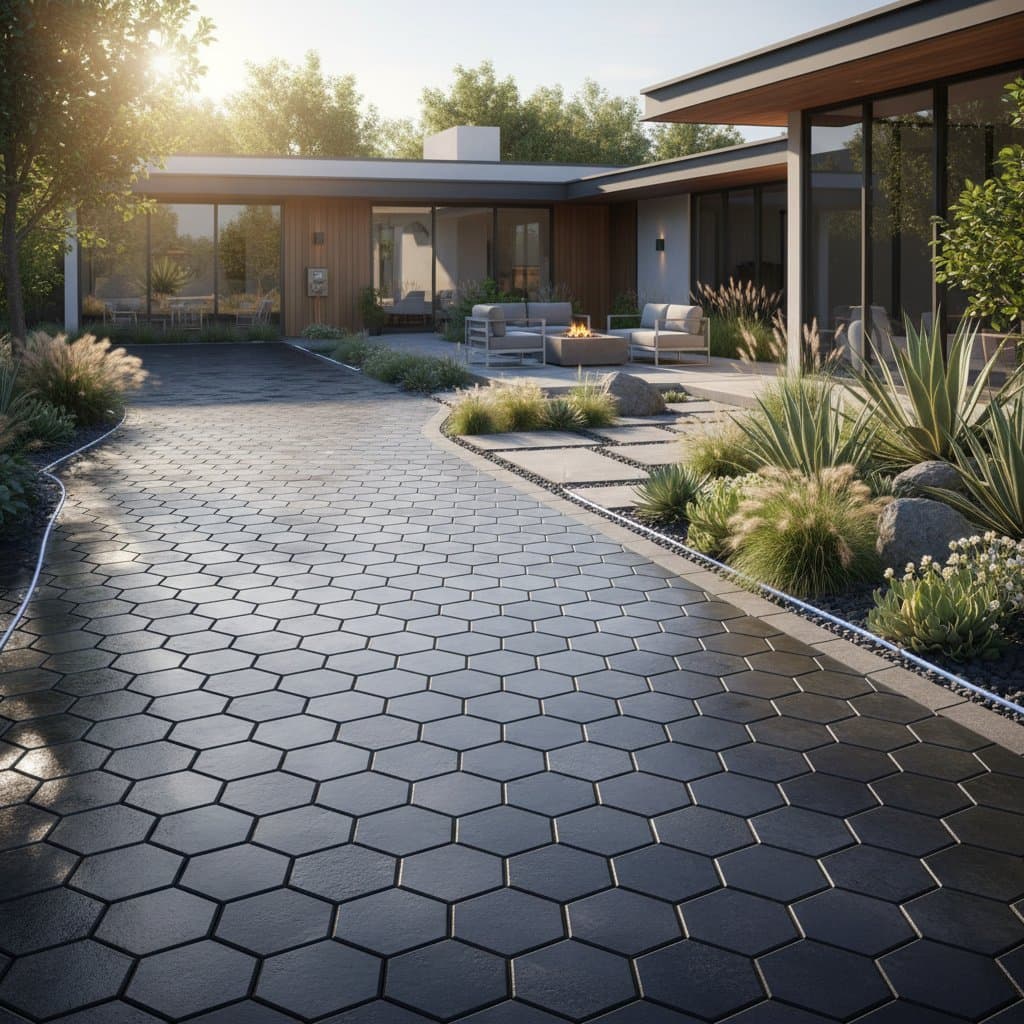
Solar Pavers: Driveways Powering Homes Sustainably
Solar pavers function as paving stones embedded with photovoltaic cells. These cells capture sunlight and convert it into electricity for home use or grid feed-in. The design mimics traditional pavers, combining aesthetic appeal with energy production.
Pros and Cons
Pros
- Produce renewable electricity from underutilized driveway or patio space
- Lower reliance on grid power and reduce utility expenses over time
- Maintain a sleek appearance akin to contemporary pavers, avoiding visible panels
- Integrate with battery systems for reliable off-grid support
- Enhance property value for buyers prioritizing sustainability
Cons
- Involve higher initial investment than conventional paving materials
- Offer fewer choices in colors and textures because of the solar components
- Experience reduced output in shaded areas or when obscured by debris
- Demand specialized repairs involving electrical expertise beyond basic masonry
- Require adherence to local permitting and inspection standards
Costs
Material costs range from 18 to 30 dollars per square foot. Full installation, including wiring and preparation, typically falls between 30 and 50 dollars per square foot. Factors such as project scale and site conditions influence the final price.
Expenses increase with intricate designs needing custom cuts, extended wiring distances to inverters, or additions like batteries. They decrease for straightforward layouts, combined projects with existing hardscaping, or sites with optimal sunlight minimizing extra infrastructure.
Over time, generated energy recoups part of the investment. Homeowners often combine solar pavers with roof-mounted systems to maximize output.
Lifespan and Maintenance
These systems endure 20 to 25 years with regular vehicle traffic. The tempered glass surface resists slips and withstands wear.
Keep surfaces clean to ensure maximum sunlight absorption. Monthly rinsing with a hose or gentle sweeping removes buildup. Steer clear of abrasive cleaners that might damage the protective coating.
Monitor electrical connections for sudden performance dips. Replenish joint sand as needed to protect underlying wires. Apply only photovoltaic-compatible sealants, following manufacturer recommendations.
Key Specifications to Verify
Select pavers meeting these standards before committing:
- Load rating: At least 8,000 psi for vehicle-bearing driveways
- Slip resistance: Tested traction on wet surfaces
- Ingress protection: Suitable for outdoor elements and freeze-thaw cycles
- Output per paver: Between 5 and 20 watts
- Connectors: Compatible with your inverter, either plug-and-play or hardwired
- Color options: Neutral tones to control glare
Driveway models measure 2.5 to 3 inches thick; thinner versions suit walkways.
Site Planning and Preparation
Map sunlight patterns across your property first. Position pavers in areas with full daily exposure, away from tree shadows or buildings.
Review local regulations for zoning, permits, and utility connections. Engage licensed professionals for grid-tied setups.
Prepare the base like any paver project: clear vegetation, excavate for stability, layer and compact crushed stone for drainage, and slope at 1 inch per 8 feet. Install protective conduits under the base prior to final compaction.
Installation Steps
- Outline the layout and wiring routes using string lines.
- Excavate and prepare a 6- to 8-inch crushed stone base for driveways.
- Lay conduits and electrical leads before compacting.
- Add a 1-inch bedding of coarse sand, leveled evenly.
- Set pavers from a straight edge, ensuring uniform joints.
- Secure weatherproof wiring connections.
- Apply edge restraints against shifting.
- Fill joints with polymeric sand.
- Verify system voltage prior to use.
- Clean surfaces and document initial performance.
Disconnect power sources during wiring tasks. Use insulated tools and comply with electrical codes.
Design Patterns and Variations
Available in square or rectangular modules, pavers support various arrangements:
- Running bond: Offset rows ideal for driveways
- Stack bond: Grid pattern for patios
- Basket weave: Paired orientations for pathways
Opt for darker shades to aid snow melting or lighter ones where glare poses no issue. Blend non-solar pavers to cut costs while preserving uniformity.
DIY or Professional Installation
Skilled individuals can handle small-scale projects like patios, using tools such as compactors and multimeters. Basic electrical knowledge proves essential.
Professionals handle vehicle-rated surfaces, complex drainage, or home panel integrations. Regulations often mandate licensed electricians.
Consider a combined effort: prepare the site yourself and outsource electrical work.
Troubleshooting Common Issues
Address low output by cleaning surfaces and removing obstructions. Persistent problems may stem from shading.
For non-performing units, inspect connectors for damage and replace with approved components.
Cracks signal inadequate base support; excavate, reinforce, and reset affected areas.
Prevent water accumulation through regrading or added channels, as pooling impairs efficiency.
Stockpile matching spares, as product variations occur over time.
Climate Considerations
In freezing regions, prioritize freeze-thaw rated pavers and salt-free deicers on well-drained bases.
Hot climates benefit from ventilated bases to mitigate heat-induced efficiency loss.
Coastal installations require corrosion-proof materials against salty air.
Desert sites demand frequent dust removal to sustain performance.
Alternative Solutions
Shaded or sloped sites may suit:
- Rooftop arrays: Superior efficiency with simpler upkeep
- Solar carports: Dual-purpose shading and generation
- Ground mounts: Adjustable angles for peak sunlight
- Conduit-ready permeable pavers: Future-proofing for solar additions
Solar pavers excel in sunny, renovation-ready spaces.
Steps to Implement Your Project
Evaluate sunlight and drainage on-site. Obtain detailed quotes from hardscape and solar specialists. Project annual energy yield to gauge return on investment.
Design for easy wiring access in maintenance. Prioritize safety throughout the process.
Solar pavers repurpose essential surfaces into energy assets. Thoughtful execution yields enduring clean power alongside enduring curb appeal.