
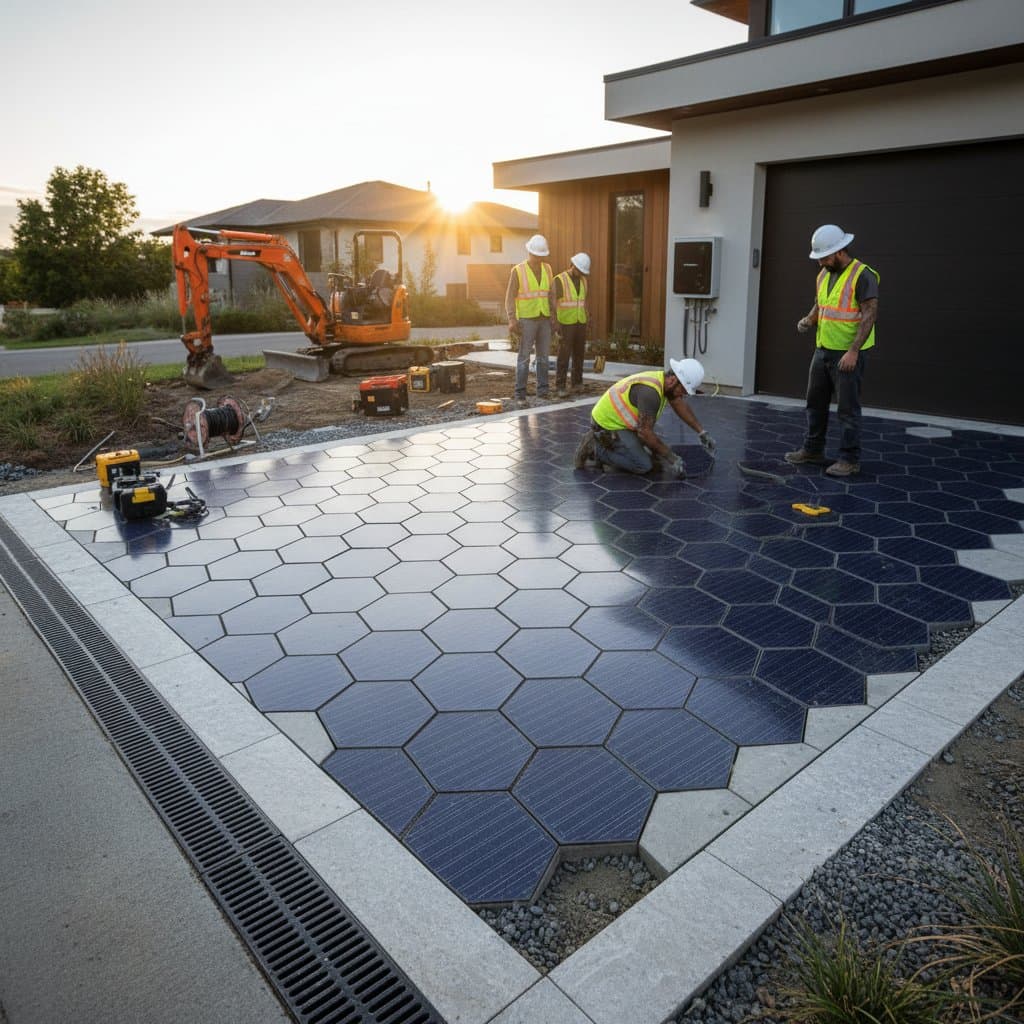
Overview of Solar Pavers
Solar pavers integrate small solar modules within robust, load-bearing units designed for driveways, patios, and walkways. These installations capture sunlight, convert it through an inverter, and deliver electricity for home use. Key challenges include preventing water infiltration, ensuring secure wiring, and maintaining structural integrity under vehicle loads. Expenses hinge on site preparation, trenching requirements, and desired power output capacity.
Site Assessment Essentials
Conduct preliminary observations to determine feasibility before engaging professionals.
- Sunlight Analysis: Observe the area from early morning through late afternoon. Record hours of unobstructed sunlight, accounting for shadows from trees, buildings, or vehicles.
- Drainage Evaluation: Identify current water flow patterns. Areas prone to pooling can compromise embedded electrical components over time.
- Subgrade Inspection: Test soil stability by probing edges with a tool like a screwdriver. Unstable or shifting material indicates the need for subgrade reinforcement.
- Electrical Routing: Identify the location of your main electrical panel and potential outdoor pathways. Straightforward routes minimize trenching expenses.
- Current Surface Review: Examine existing pavers by tapping them. Hollow echoes or instability suggest underlying voids that require remediation prior to solar integration.
Indicators of Potential Issues
Certain conditions signal increased expenses or reduced performance.
- Extensive shading covering over half the area during peak daylight hours.
- Surfaces affected by repeated freeze-thaw cycles or persistent water accumulation.
- Cracked sections that shift under vehicle traffic.
- Absence of accessible paths for electrical conduit to the panel.
- Suppliers reluctant to provide documentation on load capacities or waterproofing standards.
- Claims of energy production exceeding typical rooftop solar efficiencies.
Addressing these early can prevent expenses from doubling or systems from failing prematurely.
Installation Approaches and Cost Estimates
Replacing existing hardscapes with solar pavers typically costs 60 to 100 dollars per square foot. Retrofitting over solid slabs may elevate prices due to necessary demolition and cable burial. A standard single-car driveway installation ranges from 25,000 to 40,000 dollars, with larger setups surpassing 60,000 dollars based on material finishes and wiring distances.
Primary expense factors include:
- Excavation and Foundation Work: 5 to 10 dollars per square foot to achieve proper compaction and stability.
- Conduit Installation: 1,000 to 3,000 dollars, varying with the length of the trench.
- Inverter and Controls: 2,000 to 5,000 dollars for grid-connected configurations.
- Paver Units and Connections: 35 to 70 dollars per square foot.
- Installation and Waterproofing: 8 to 12 dollars per square foot.
Inferior overlay methods, which adhere thin panels to existing surfaces, often degrade quickly as moisture penetrates the adhesive. Opt for fully sealed modules engineered for vehicular traffic, featuring gasketed connections. Neglecting foundation preparation or drainage invites issues like uplifting edges and fractured panels soon after completion.
Projects combining solar integration with broader landscaping can expand scope unexpectedly. Maintain separate focus on electrical and paving elements to manage budgets effectively.
Options for Existing Surfaces
Choices depend on the driveway's material and state.
- Concrete Slabs: Sound structures may not justify replacement for energy returns alone. Rooftop or carport solar arrays often provide superior value. Proceed with pavers only if the slab shows deterioration or resurfacing is already planned.
- Interlocking Pavers: These facilitate targeted upgrades. Remove sections, reinforce bases, and embed solar units in sun-exposed areas while retaining standard pavers in shaded zones.
- Asphalt Surfaces: Full replacement becomes necessary, as solar pavers do not bond reliably to flexible asphalt.
Stable foundations support partial upgrades, concentrating solar elements near high-use areas like garages. Unstable bases or inadequate drainage necessitate comprehensive replacement. Verify grading and runoff effectiveness before any solar surface application.
Coordinating Professionals and Steps
Initiate with a solar specialist or electrician versed in distributed energy systems. This expert verifies compliance with codes and determines inverter specifications. Follow with a hardscape professional skilled in permeable installations and precise compaction. Seamless collaboration ensures aligned trenching, conduit placement, and joint accommodations.
For drainage modifications or regrading, involve a civil or landscape engineer to design appropriate slopes and retention features. In multifaceted projects, a project manager or general contractor orchestrates timelines, adding 10 to 20 percent to costs but averting expensive revisions amid permitting and inspections.
Select teams concurrently rather than sequentially. Request three local references from each, emphasizing comparable site conditions and regional climates, to align designs, quotes, and schedules.
Prioritizing Project Elements
Focus on elements yielding the highest returns.
- Address drainage and foundation stability prior to electrical work.
- Secure the shortest, most direct electrical pathway to the panel.
- Limit solar paver placement to consistently sunlit sections.
- Incorporate monitoring or storage solutions as budget permits.
Defer lower-value additions.
- Intricate designs blending multiple paver types excessively.
- Integration with snow-melting systems, which can diminish overall energy production.
- Expansive layouts on partially shaded properties.
Retain compatible existing pavers to integrate seamlessly and reduce outlays.
Phased Budget and Implementation
Structure the project sequentially to control risks and expenditures.
- Grading and Drainage: Establish clear water flow and adjust slopes away from structures.
- Foundation Preparation: Build and compact layers to resist settling or heaving.
- Electrical Infrastructure: Install conduits and boxes before surface work.
- Paver Installation: Position modules under dry conditions and inspect connections.
- Finalization and Verification: Test electrical output, then seal joints and perimeters.
- System Activation: Link the inverter, enable monitoring, and validate grid connection.
Withhold finishing touches or adjacent landscaping until approvals are secured. Incomplete seals risk water damage to electrical elements.
Upkeep Guidelines
Solar pavers demand minimal maintenance yet benefit from routine inspections. Clean accumulated dirt and residues quarterly using gentle water pressure. Clear joint debris to prevent moisture retention. After winter events, check for fractures in panels or displaced fittings.
Utilize integrated displays or applications to track generation. Gradual output reductions over days may indicate growing shade or connection problems. Sudden drops post-rain suggest seal breaches; engage a qualified electrician for diagnostic testing rather than personal intervention.
For snow and ice, employ tools with non-abrasive edges to protect surfaces. Steer clear of corrosive deicing salts on metal components. In cases of heavy ice, apply warm water and ensure rapid clearing to avoid prolonged exposure.
Enduring Advantages
A properly executed solar driveway offsets significant household electricity demands, particularly alongside energy-efficient appliances or EV charging stations. It expands generation options beyond rooftops, beneficial for properties with orientation constraints or preservation requirements. Permeable designs further enhance water management by minimizing surface runoff.
Steps to Proceed
Evaluate your site by simulating water flow with a hose and measuring peak sunlight duration with a straightedge for evenness. These assessments determine viability. If drainage functions effectively and sunlight prevails throughout the day, collect soil samples and consult an electrician and installer jointly. Otherwise, prioritize site improvements or explore alternative solar placements like rooftops.